Wednesday, March 20, 2013

Wanderers 2012.3.20

DSCN1562

Peter Miller, newly back from a brief excursion to Myanmar (Burma), graciously agreed to come address our little group, recapping some of what he'd covered with Thirsters in last week's debriefing.

Quoting from the Thirsters list, John Dougherty reporting:
Peter returned from Myanmar on Tuesday, March 12th and presented fresh views of the social and health services sector there.  He was invited as a representative of The Population Council by the Myanmar Ministry of Health.  Peter said that the health system in Myanmar was functional but survived on minimal resources that have increased in recent months, but that the government and health providers are committed to increasing the quality of health services.  USAID was invited to [the] country about 6 months ago.  Social indicators are strong:  95% of girls and boys attend school, fertility rates are about 2.0 (replacement level), and infant mortality in the first year of life has fallen by more than 1/3rd in the past 20 years to below 50 per thousand live births (the rate in Thailand is 16) [ Source ]
Peter was humble about his understanding and did not try to sound like a know-it-all, always refreshing.  Our group peppered him with questions.

I was especially interested in commercial billboards and whether cigarette companies were aggressively declaring war on the health infrastructure.  Peter did not feel bombarded by cig ads, though ads were in evidence.  Korean youth culture seems to have captured the imagination of many Burmese, with an image of a softer, gentler society with many technological advantages.

We were interested in the sex trade, drug trade, refugee camps, religious strife, non-Burmese cultures, and several other topics.  We talked about museums holding stolen artifacts, sometimes preserving them, and about the Doctrine of Discovery and papal infallibility.

I came away again thinking that "globalization" is not strictly a "westernization" phenomenon as Asia has absorbed and continued with western memes, many coming full circle as Europe used to look eastward for its culture (still does).  Asian cultures have their own momenta.

Burma reminded Peter a lot of Sri Lanka some years ago, in part for the piety of its Buddhist population.  Tourists come from around Asia to these temples, not so much to take pictures of one another as to pray, to worship.  I talked about Alan Potkin and his scholarly wife.

Peter has had an interesting career.  We talked at length about his work with rural Pakistani women, especially with TBAs i.e. Traditional Birth Attendant (midwives and such).  He felt their curriculum had made quite a big difference owing to several factors, as evidenced by lowered mortality rates.  He brought a healthy skepticism to any statistics though, as a seasoned demographer.

One does what one can, with hazy measures.

He felt oxytocin had been misunderstood by many TBAs, as they administered it during birth instead of afterwards.

Back to Burma, Peter gave us an abbreviated history, stretching back into the misty past.  The current narrative, for several decades, has focused on a military regime versus a popular movement focused on the daughter of a national hero, and Nobel Prize winner in her own right, Aung San Suu Kyi.

Whereas he wasn't actively countering this story, he was complementing and supplementing, as a lot of what's happening goes undetected if the story is focused too narrowly.

Don was interested in talking about the US flag as deriving from the East India Tea Company flag, something Bucky Fuller talked about as well (see Critical Path, St. Martin's Press, 1981).

I ducked out towards the end to run an errand, returning later to take the above picture. Five of us adjourned to Cup and Saucer after the talk. 

Saturday, March 16, 2013

More Geek Anthropology

We have a PhD student in the social sciences sharing some perspectives.  Jackie Kazil runs WDC PyLadies with Katie Cunningham.

She looks at roles, systems of governance, workflow, ways of addressing public issues. Distributed governance.

Tribe, Chiefdom, State, Empire... an "ordinal typology of political systems".  So far, I'm not impressed with these list maker social scientists.  What happened to Companies (are they chiefdoms)?  Crews (ala pirate crews)?

She thinks we're a State more than a Tribe.  Sure, I'd go with Nation too (already a lightning talk topic).  The PSF logo would be our flag (no special currency though). She doesn't know about Holden's "Mighty Python Empire" apparently.

Our lunch table featured Pythonistas from Oregon (Eric and I), Brazil (Henrique), Italy, England... we talked about meat eating habits, Brazilian especially.  All you can eat Brazilian restaurants.  The guy from England hosts meat.io and lives in a Portuguese-speaking neighborhood in London.  Lots of meat lovers.  Nicolas Cage jokes were also a topic, and animated GIFs ala Tumblr.

I went around collecting T-shirts and chatting with cute booth folks (many genders) at Hulu, Plone Foundation, Spotify etc. (this was before lunch).  Good catching up with Andy McKay.  He's with Mozilla now, supporting the App Store for the new Firefox phone (an HTML5 platform, its own OS).

Yes, I gave my lightning talk in the huge plenary room.  Not all the thousands were there yet, but the audience was substantial.  I got some good laughs.

The genome analyzer people were here again, Counsyl.  They must use a lot of Python.  Their operations is very automated, with FedExed blood samples coming in.  You need a doctor's perscription for this test as the results are medically actionable i.e. you may need to make some decisions.

Thursday, March 14, 2013

Futurism Again

My dad subscribed to The Futurist and thought like one.  Fifty year plans were his bread and butter.  He helped get systems going, for the longer haul.  Naturally, some of that rubbed off, these being memes, not so much genes (or jeans).

What I've found is I sometimes pray / predict / prophecy some future development, but then not recognize when it actually happens.  There's a lag as I adjust to the vision being just alien enough to be not seem purely a product of my own imagination (not a criticism).  Youtube, for example:  I used to write sundry strange things about The Videogrammatron, short clips, a database, hyperlinks between them.  All that happened, not using my nomenclature and so almost escaping my notice at first, as my prayers already answered.

Another case in point:  I used to visualize that "virtual companies" that would conjure floorspace using the cloud.  Certain floors would be occupied, as a team suddenly appeared, conducted business, and moved on, like gypsies.  But now, sitting in this Hyatt in Santa Clara, taken over by the Python geeks of the world, as a paid, booked in advance venue, I realize that's how it already is:  floor space materializes even as people jet in. Convergence / divergence.  That's what's going on here.  And that's the conference biz, people meeting about anything and everything.

True, I was thinking more small teams traveling in packs, but we have those too.  People come here as members of a tribe, a company, a nation, a virtual nation.  Henrique said I could quote him, about how it's "more and more awesome" every year, in terms of how many familiars from around the planet one gets to greet and catch up with.

The Oregonian wrote me up twice, Carlin the journalist both times maybe.  The second time I was predicting hypertext kiosks in hospitals.  This was before people knew what hypertext was.  The first time I was shown holding a postcard next to my head, of Fuller's global data projection.  That was in the Metro section only I'm pretty sure.

Tuesday, March 05, 2013

Selected Favorites


Saturday, March 02, 2013

Big Picture

I devoted some time at the AFSC meeting to catch up on some pieces of the Wikileaks story.  Truthout had the translated interview from a Norwegian source, while The Guardian had something like a transcript of Bradley Manning's testimony.

Earlier, after lunch, we met the assistant director of the Western Region (the director is in Spain) to go over some programs.  Many of the region's executive committee were present as well.  Cruel and inhumane practices by the prisons (e.g. solitary confinement), for-profit prisons, and immigration reform topped the agenda.

Per the Christian Doctrine of Discovery, the practice of simply "declaring" lands to be "US" by "annexation" and/or by "buying" such lands (Manhattan, Louisiana Purchase) has created a sense of entitlement over all of North America, by those ethnic groups most benefiting from these narratives.

The seasonal migration of peoples, a pattern for millennia, was interrupted by the imposition of "states" and/or "territories" as institutional jurisdictions.  Cultural genocide ensued.  The US Army was a leading exponent of this land grab during the so-called Indian Wars.  A bounty was placed on "red skins" (hides, scalps).  Extermination was encouraged.

The UK-based idea of "countries" (the districts of its empire), inheriting from the idea of "sovereignties" (a civilizational pattern) helped solidify a sense of "ours" among those inheriting this namespace or ideology (a brand of science fiction).

Fences went up everywhere, as in Europe.  The land was carved into "properties".

A sense of "manifest destiny" continues to inform various ethnic groups, many of whom see the entire globe (and beyond) as theirs to rule and administer.  As controllers of "documents" they brand fellow humans "undocumented" and forcibly incarcerate and deport them.  Religion is often used as a justification.  According to many belief systems, someone called "the Lord" (a kind of superman landlord) has authorized / ordained that those faithful to Him should lord it over (have "dominion" over) others.

The labor intensive nature of colonizing North, Central and South America by the Euros fed the infamous slave trade.  Various doctrines were advanced to justify this practice among those who professed faithfulness to their Lord.  Some were unconvinced by these doctrines however and ideological schisms appeared.  This led to the US Civil War which continues to have repercussions.

Friday, March 01, 2013

Considering Diversity

The term "diversity" has become code within various subcultures.  Many related memes help form the complex, chief among them being "race", an inherited corrupt idea still entrenched among Anglophones especially.  North Americans are historically obsessed with "race", a kind of religion for them.

However "diversity" may also refer to "gender" as in the Python world I frequent.  The outreach efforts of the PSF have had everything to do with attracting more women to Pycons, nothing much to do with racial categories.  My focus on Diversity (an e-list) has been recruiting non-Anglophones, given the Unicode capabilities of Python source code.

"Diversity" may also refer to age.   "Sexual orientation" is a related meme.

When the American Friends Service Committee talks about diversity, they tend not to collect birth dates.  Corporation members and board members tend to be "grays".  More, they want to know about my "race", and I'm not supposed to say "Asian" as that's not how racists would identify me.  My Swedish heritage etc. gets in the way and I admittedly haven't learned enough Kanji.

The AFSC Nominating Committee is delivering a report emphasizing that ethnicity, age, and sexual orientation are indeed on the radar.

Looking out over a sea of white-faced (pale-faced) people and complaining of "no diversity" is of course a kind of selective blindness (could be called bigotry), a variety of "all Xs look the same" (and therefore are).

Even genetically, you'll have lots of diversity among whites, blacks, yellows, reds etc.  However, it's "ethnicity" that introduces more metaphysical forms of diversity.  Ideology makes a difference.

A book called The End of Racism by Dinesh D'Souza is an interesting contribution to this literature.

I'd say the membership is maybe disproportionately academic.  Lots of teachers / professors and retired teachers / professors.  That's an ethnicity (subculture).  Maybe we should add a check box for that, when measuring our characteristic mix?

I do find it a quaint practice among Anglophones that speaking of "colored people" is considered a somewhat racist practice whereas speaking of "people of color" is a more accepted idiom.  English is a bit of train wreck eh?

More open source geeks involved in AFSC work might be nice.  The central office has standardized on Microsoft Sharepoint for its internals. The ideology of sharing source code around the world, as a form of activism, is not well established in this organization.

I don't think we have any tribal members as AFSC corporation members (speaking of "Indians" as ignorant Anglophones called them).  That's ironic given Quaker history.  USA maps that don't color code the "reservations" (also "military bases") are withholding some important information.  When it comes to data overlays, ala ESRI, I favor displaying this layer more frequently.  Show us the prisons too.  Elizabeth Furse would be of help to us I'm sure.

"Changing the narrative" is the title of one of the slides we're watching (I'm in the corporation meeting as I write).  That sounds like CIA talk.  Should we recruit more spooks / ex-spooks?  Valerie Plame maybe?  A lot of exCIA people have taken strong positions many Quakers could agree with.  Stansfield Turner?  If the goal is diversity...  Of course Friends tend to demonize the CIA as a proponent of outward violence; all the more reason for more outreach then.

Wednesday, February 27, 2013

Wanderers 2013.2.27

I showed up late, driving from Apachecon, where I much enjoyed the reception.

The Technology Association of Oregon delivered a message of welcome to open source people in general.  The Apache community is somewhat esoteric within the movement, and has built itself around http, httpd, https and related services.

You could link Apache through CERN in that way, to the W3.  Citrix (of Cloudstack) was a big sponsor.  Some readers may remember HP's high profile around OpenStack from OSCON.  The cloud is a place to be these days, whereas in older cartoons it was a sometimes satirical view of Heaven (Harps Inc.).

Doug McCarty had the rare privilege of serving as astronomer in residence at a very remote lodge in Namibia, where the darkness factor is 10+ (there's actually a scale known to astronomers).  Astrophysical phenomena are astoundingly clear, if your vision is 20-20 or better (as corrected).  They have a great eyepiece waiting.

The feel of the place is also amazing.

Whereas this particular lodge has a high luxury quotient, more like a cruise ship in adventure travel circuits, you may pay a lot less renting a camper-on-wheels (motorized) and buzzing about a bit.  However in a certified dark patch, such as near this lodge, you'd not be welcome with high beam headlights, or any lights.

People living there use red or focus them tightly.

Doug had a nice slice of nickel-iron meteor from the region, one of the bigger impact zones.  The Negev desert makes meteors easier to see.

Ecotourism was again the theme, reminding me of Lynne's talk.  She was there with two dogs.

Dick Pugh gets a lot of credit for promoting Namibia as a STEM stop, a place to earn credit towards your career in the field, as a mineralogist or perhaps craftsman like Glenn, a Wanderers co-host.

Our venue was packed, people sitting on up the stairs.  Great to have a large cast now and then.  I started proposing anti-talks when we wanted to thin it out.  "My weekend exploring I-205" maybe?

I've got a full work week going.  For me, Apachecon means listening head down with my face immersed in light from a laptop computer, the Mac Air.  At geek conferences, that's completely OK i.e. it's not considered rude to stare at your screen while a technical talk gets delivered.  We multi-task.  We're geeks.

So what I'm really doing is teaching Python.

But then I also transport items around (such as the director himself and his accoutrements), given Open Bastion is based at the Hilton.

Good seeing Patrick there, and Nancy, a conference producer with her crew, used to working with Holden Web.

DSCN1042

Friday, February 22, 2013

Naked Lunch (movie review)

Steve was actually a friend of a friend of William Burroughs, the friend being Ian Sommerville.  Neither of us had ever seen it, and Christine, a Wanderer knew it was good, that we would like it, and volunteered to scrounge it up.

I'm quite glad to have seen this, in part because of the big dot connect with eXistenZ by the same director.  All that icky gooey bug stuff actually went somewhere.  Archy (friend of Mehitabel) move over.

Watching in 2013, the typewriter itself has become exotic.  The scene of the "typing bar" (or coffee shop) is an eerie anticipatory sketch of today's coffee shop in Portland.

I'm not a big Burroughs reader.  I think back to The Discipline of Doing Easy, which is obscure.  So what here is parody, and what is gentle fun?  I get the movie version, without yet reading the book.

Speaking of fun, my thanks to John Driscoll for having me by Systems Science today, as a guest speaker.  I have this fun roller coaster of a slide show that, while not Burroughs-like maybe, is still literary and somewhat fluent.  A mix of Python and MAD Magazine.

Note to self:  introduce OSCON peer reviewers to David Feinstein's work with ISEF.  Some additional layers of display to help us plan the tracks... we were lunching at Thai Baan near PSU, after we joined SysSci students for beers.

That was too much fun for a Friday I'm afraid.  Saturday will be on the clock again.  Nice to set when I work, if not the total hours.

Saturday, February 16, 2013

Surgery on the Blue House

DSCN0996
:: demolition ::
DSCN1001
 :: new beams in 2013 ::

Saturday, February 09, 2013

Bacteria Ain't Dumb

Bacteria Ain't Stupid

Dr. James Shapiro regaled us with stories tonight, of the picture biology has painted in the last 40 years, which, to read press accounts, has yet to be unveiled.  These aren't secrets though, just technical results that require some added vocabulary.  We were outside of the standard 4000 words or whatever English speakers tend to get by on.

The short of it is:  cells don't just change (morph) because hit by random cosmic rays, with natural selection then weeding out the losers.  There's no time to be that stupid and cells are not.  They form alliances, as symbiants, as parasites, as lethal adversaries or whatever, and they exchange DNA / RNA.  They seem to share information.

We went through some of the history.  Barbara McCormick's research is key.  Cells have lots of feedback loops and respond to stresses by moving DNA around.  Those sequences are not read-only, but read-write, and there's lots being encoded based on what's happening or what gets in.  Since Lynn Margulis we've started to get it:  once independent life forms have swallowed one another.  Today's mitochondria and chloroplasts where at one time bacteria in the wild.

The microbiology also seems to show that once X swallows Y, a redivision of labor occurs, with X taking on perhaps more of Y's responsibilities.  The eukaryotes have their own special ways of doing things etc.

If you think of cells as both cognisant and sentient, you'll have access to more of the English grammar needed to map the circuitry a little.  Fear of anthropomorphism is misplaced.  It's an intelligent mapping of an articulated part of language to something complex.  Letting British novelists describe intra-cellular relations using the the tropes and conventions of their trade might actually make for better cell biology, when it comes to conveying the nuances within our gray matter.  Make it more of an opera, and you'll get it.  It's Machiavellian all the way down.

It's when cells get starved that they really go crazy.  Being unsuccessful, or "insulted" as Terry put it during the Heathman dinner afterwards, is a primary stimulus.  As they said in est at the graduation, it's being losers that reactivates us, as humans (vs. the angels).  That's when we / they innovate, duplicating whole sequences (making backups) so as to be able to perform tricks of the trade on a copy.  How does it all work in real time?  We don't know that yet.  Lots more science is needed.

The problem with a lot of scientists, biologists etc. is they're victims of the die-out of "vitalism" versus "mechanism" in the great debates of the recent past.  The vitalists didn't have modern microbiology to draw from, to state their case.  The feedback mechanisms were hypothesized in a crude manner, the human imagination applying a rude sketch to nature's true face.  Now, a century and a half later, with more of that face revealed, the vitalist metaphors are more appealing, and what is language above metaphor, analogy?  Nature is alive, we know that, or do we wish Machine World as our only description.  It's more a decision about language than about Nature, as she is what she is.

My role at the church was outside security at first, a role I'm well used to playing.  In this case all that meant was directing ticket holders to one door, ticket buyers to another.  I had help.  I was wearing a thermal shirt under my coat and tie.  I had a large coffee from McDonald's (cardboard with plastic lid).  Certainly it was my privilege to welcome guests, not in any way an onerous duty.

Dr. Shapiro was right to pitch his talk where he did, as a science lecture that didn't try to dumb it down too much.  He knew he might have some real peers scattered in the audience, eager to suck down what they could.  His talk was high bandwidth in that the slides said a lot too, to those more versed in reading that kind of diagram.  Yet he was able to hold the attention of those just starting to get their feet wet.

It's not that we want to be superstitious about cells.  It's more that we want to not "misunderestimate them" (he cited George Bush for that one).  When challenged, bacteria respond like "knowing machines" that have had millions or billions or years to learn their tricks.  They're like transformers.  They don't just wait for mesons from heaven to throw the right switches in the face of adversity.  They're a lot smarter (more optimized for exaptation) than that.  As human beings with science, that gives a sense of where / how we might innovate, but also tells us more about what we're up against.

Dr. Shapiro said he'd given only two pieces of advice to the medical community:  wash your hands between each visit, and don't give them antibiotics unless it's really to save a life.  The latter advice is not just altruism.  Antibiotics wipe out a lot of friendly bacteria and if there's any surgery in this picture (say within six months), you'd have been way better off with your allies intact.  You kill part of yourself in other words (not unlike chemo then, in some ways).

The Q&A was all over the map, about cancer, about autism, about any given professional community's resistance to new ideas (memes -- microbiology in language).  Steve Holden and I slipped out just before the last question (he'd been ushering too) and headed over to the Heathman.  A very talented female vocalist was on the piano, with accompaniment, in the downstairs gathering.  We convened at the mezzanine level, per usual.  The wine and fish were excellent, as we've come to expect from this world class hotel.  I was grateful to have this privilege and gratified to see all this updating of world views happening.  Portlanders are staying in the loop at least.

My question during the Q&A after dinner was to cite the Pfizer guy's talk and ask if he felt walled out or otherwise denied access to what big pharma might be finding, behind closed doors.  The Pfizer guy was saying research was stagnating because playing it close to the vest, hoping to cash in big time with a few puzzle pieces, was not working out.  Researchers needed to put their cards on the table, for the good of everyone.  The liberal arts view.

Dr. Shapiro replied that he'd some time ago made the decision he couldn't afford that kind of profit-oriented seclusion for himself.  He felt the open source community (openly published science) was producing a flood of new findings, while being secretive was just shooting oneself in the foot.  As a geek, I could appreciate that analysis.

I used the "maxi taxi" for this one, finding less expensive parking than last lecture.  The crisp cold night air was welcome.  Mostly I'd been holed up indoors all day.

Sunday, February 03, 2013

Tosca (opera review)

Puccini

I had mistakenly assumed that, with a name like Puccini, the guy would know Rome like the back of his hand, maybe own his own Pinocchio factory (like Giapetto) and sell puppets at Piazza Navona at Christmas time.  Nope, turns out he went to Rome precisely to research the script, get the landmarks right.  Apparently the old libretto had Angelitto or whatever his name was swimming across the Tiber river to seek sanctuary in St. Peter's.  But as we all know, these two institutions (Castel Sant Angelo and St. Peters) share the same bank of that river.  The original author was fine with taking dramatic liberties, but Puccini wanted more realism than that.  The opera was going through a phase:  "verisimo" they called it, or verisimilitude.  The music was becoming more like a soundtrack.

I've been putting on my Teilhard de Chardin goggles from time to time and looking at history with that benefit of hindsight.  Sure, the explosion in logic made little sense at the turn of the last century.  What were they thinking?  Their rationality hardly improved and politics stayed as dumb as ever, so what was that all about?  Looking back, the computer languages were being born.  Lineages were getting started.  Turing fed into Von Neumann with channels back to player pianos and other hole-punch controlled devices.  Ada, Hopper...  It all makes so much sense in retrospect.  Like evolution creating the eye.

Likewise one can see the stage as prototypical of the "big screen" we'd be getting later (Plato's Cave version 3), which is still pushing the envelope at 48 frames per second of little Hobbits running around in IMAX 3D.  That's what we're up to by the time of this writing.

Back in Puccini's day, we didn't have film yet, but we had something very like IMAX 3D, namely The Opera.  And the singing took (still takes) real athletic capability.  Not just anyone could belt it out like that without slipping.  In any case, artists had what amounts to a big screen, and they had a sound track to think about.  So there were lots of things to try, lots of niches to carve out.  Theater evolved in parallel.  Then we had "musicals" (not opera, but operatic).

Looking back, Puccini was an early film director and verisimo was a move to ground more in the nitty gritty of the time, any time.  Yes, a genre, but an anticipatory one.

They say Puccini went to great lengths to get to tone of St. Peter's bell right.

Yes, it's been a long time.  When I was young and thin and more like a fish, clambering around on that Trevi Fountain guy with my friends (we didn't steal the coins tourists were throwing, and we were tolerated as colorful youth, boys at play never mind we might be expats) I used to get "dragged to the opera" quite often by my culture-loving parents.  I was getting some of the best of the best back then, but didn't really realize it.  Now I'm back, as a gray.  I blended right in too, though I also saw quite a few kids, along for the ride with mom or more likely grandmom or dad.

What I need to sort out is the back story.  What was the Vatican doing vis-a-vis Napoleon and why was the escapee being pursued?  What was the painter's view of Napolean's wins or losses?  And what was Scarpia the secret police chief of again?  Of what exactly?  Was that the Vatican's secret police or what?  I'll have to do some more homework eventually, fit those puzzle pieces together.  After Super Bowl:  OK, Wikipedia clears it all up, complicated story, all the worse because Napoli (Naples), ruling Rome at the time of the play (set in 1800) is not named for Napoleon (Neo Polis = New City).  Speaking of which, good to hear Civitavechia mentioned.  That was Etruscan you know.

And that was my Superbowl Sunday folks.  Doesn't sound like I'll be doing any comments on the commercials, per previous years (I sometimes scan them for geometry).  I did write about the cuboctahedron on Math Future though.

Oh well.  Opera is cool too, not just kicking (and throwing) some ball around.

I hear the power went out in the stadium.  That's pretty interesting.  Tell us more.

Monday, January 28, 2013

The Big Lebowski (movie review)

Lindsey was telling Jay I reminded her of "the dude" (Lebowski's moniker in this film).  I'd never seen this, and my curiosity was again piqued, as it crops up as a cultural reference.

Lindsey likes to re-watch her favorites over and over, so it took little encouragement to have her fetch her copy up from her basement lair.

I like Jeff Bridges.  Altered States was another one where-after some of my friends compared him to me. No wait, that was William Hurt.  Thanks Don.

I'm currently rereading The History of Underground Comics.  Jeff's character reminds me of a comic character.  His life is a comic book, a storyboard, if painful at times.

The usual rules of physics have been suspended in some ways.  People bowl a lot more strikes.  Or maybe it's the metaphysics that are different, or maybe it's just the 1990s.

The bowling alley takes me back to White & Nerdy (Weird Al).

Next we saw The Onion Movie, which Lindsey had grabbed off a free pile.

Like comedy night at The Bagdad, the latter is inconsistent / experimental, toying with ideas we have limited agreement about (special interest, for focus groups).
"Behind the scenes, Onion News's corporate owner, Global Tetrahedron, seeks synergy by promoting its other products within Norm's news broadcast."
Monty Python territory in some ways, though many comics explore here, variously / philosophically.

Jay was by because he needed to borrow my bicycle for awhile.  His was stolen.  We picked him up on our way from St. John's.

Jay is a key player in our current Food Not Bombs configuration, which is in the process of reconfiguring.  Like Melody, he has lived in Austin.  Focus:  architecture, anti-waste.

HistoryOfUndergroundComics-5

Monday, January 21, 2013

The Sessions (movie review)

This film recalls Kinsey in taking an anthropological view.

The casting is almost too perfect, to where it becomes a cartoon, and in that sense a divine comedy.  The Catholic priest is top of the line, if not over the top, in that regard.

The film is structured as one long confession, but ultimately not a confession of guilt.

This husband of the therapist has an interesting role.  You'd probably need to be a philosopher to have that be your wife's day job.  We only see him blowing up once, and even then it's fairly low key melodrama, and she gets to read the letter anyway.

He's in the church with the rest of 'em, cleans up well.

I like that they have her making tapes, reflecting into her 1980s cassettes.  It's not set in the present.  That's something of a relief.  He lived to be about my age.

Saturday, January 19, 2013

Hotel Transylvania (movie review)

A very not-scary film about kids wanting to grow up and see the world, yet getting resistence from an older generation that has already seen a lot of the world and is wanting to protect and shield... but not stunt.

Daddy Dracula (Adam Sandler) has experienced the nastiness of humans.  He's a misanthropist for a reason.  Who can blame him?

Vampires are clearly cooler.  What's not to like about them?

The animation goes back to the roots, skipping recent recastings, and doesn't even try to make Frankenstein different from the monster.

Kid friendly, saw it at Avalon.

Tuesday, January 15, 2013

Wanderers 2013.1.15

Barry is the speaker tonight:  How Cars Work?  Really, fully grown adults getting together for that?  Absolutely, that's Wanderers for ya.

Some of us are "retired" but still busy all the same.  Others of us are "working" (not the physics meaning).

We went around doing intros, per usual.  Holden is back from the UK.  DiNucci (NASA, Humanists), musician Bunce (Ret.). Phil just coming through (he actually works here in the building, with an office and everything).

Linus Pauling lived here as a kid, got into chemistry.  Electroscientific Instruments and Tektronix both got a footprint here too, along "Asylum Avenue" (one of its chapters), called Hawthorne now (after one of the doctors who started the Asylum, closer to 12th).

It's more about engines, which apply to boats, planes, trains and ships, not just cars 'n trucks.  "Automobile" is any "self propelled vehicle" (translating literally).

In the UK, steam powered vehicles on roads gave way to trains as the paradigm.  External combustion engines.  The fire is outside of the actual engine.  Sterling engine similar.  Hence solar sterlings, which Barry doesn't know about (Infinia's thing).

Jet motor:  fire on the inside.  Wankels (rare today).  Hardly any turbines in cars.  Chrysler showcased a few.  They're air / fuel pumps, and in the process make usable power.  A horsepower = what it takes to raise 33,000 pounds one foot, in one minute.

Diesel, way important.

Barry's personal memory goes back a ways, and he's done a lot of research.  His dad was a machinist. All these fuels:  peanut oil...  He's explaining a jet engine now... 747... Some thrust through the cowling.  Chrysler's turbine cars had a bearing that cost as much as the rest of the car.

Long discussion of two stroke engines, their advantages and disadvantages.  Barry understands them well.  They were never popular in cars.  Saab had one, a three cylinder two stroke.  Then he diagrammed the four stroke cycle.  Then two stroke diesels.

I remember wandering through the science museum in Munich (Munchen) marveling at all the different engines.  Barry is like a tour guide from there.  Screw type blowers make an appearance.

New model engines are doing more to control the valves (variable valve timing, and lifting).  OBDII (on board diagnostic version two) gives you hints about what to replace.  Cam position sensor, knock sensor... lots to know.  Lots of valve patterns too (Barry went through some history -- flathead, overhead cams, more overhead cams...).

Computer controlled direct injection is making a difference.  Focusing on the burn point more, with a little cup in the cylinder head... Honda, Mazda...

Wow, the Napier Deltic engine is pretty strange. Barry got through only about half his material. Maybe we'll do a Cars 2.


Monday, January 14, 2013

Food for Thought

Books for kids that I read, by Enid Blyton for example, would glorify meal time, and give detailed descriptions of dishes, which could be enjoyed by an imaginative reader.  Not just visualizations were important.  Not being a budding gourmet, I might get impatient with some of these passages, but at least I was reading them.  Nowadays people get impatient with reading itself more quickly, and lingering over a description of a food is itself an acquired tasted.  Like Enid Blyton novels.

Lots of press for Alaska lately.  Allen could have shaken me by the shoulders in the movie version, where everyone's a caricature of themselves.  He's really quite low key.  We'd been thinking of doing a cruise to Alaska with dad when then 2000 accident happened.  "Just take a bag" he said, "too late to book a cabin."  He's talking about the multi-stop inside passage ferry, where you get on and get off. Not enough bandwidth I'm thinking.  But I like the sound of seeing glaciers again.

Thanks to Mr. Blake for introducing my to Tumblr, through which I found the Hexagonal Awareness Project.  Now that's a project after my own heart, dovetailing neatly with HP4E, Hexapents for Everyone.  The "for everyone" trope, with a "4E" is not my intention.  James Joyce had "Here Comes Everyone" (HCE), which I'd quote a lot, in my "human centers environment" writings, and then Guido came along with CP4E with DARPA funding, how cool was that.  Just for IDLE though, nothing all that sinister.  I got lots of mileage from IDLE, especially with Akbar font, as you'll find through these blogs (such as fragments exist).

The HexaPent is well expressed as a spherical object, the soccerball most easily, which is also the pattern for C60, the "buckminsterfullerene" molecule ("fullerenes" the family).

Romanticizing certain meats, as delicacies, praising their virtues.  It's as if the cow life, soft and certain until a sudden end, were so popular with spirit world that we were seduced and enticed, as predators, to crave bovines, so that more and more could be made upon this Earth, and so it was.  Bucky used to talk as if metals themselves had a voice and lobbied congress.  In language, the nonhumans criss-cross, make waves, with ergotic egoid eddies bobbing in the way.  The diets talk, share the carrots not their sticks.  "Raw vegan magic" sings Lindsey, a good siren for the genre, my pleasure to shipwreck so nearby, in the arms of some steak.

At the Bagdad the other night, the comedians were deep into food humor.  I honestly don't think the guy going on about bacon-wrapped chicken wings knew of our pepto-bizmol colored bacon-flavored beer, made by Rogue for a donut company named Voodoo.  Hard to top those economics.

Monday, January 07, 2013

Office Move (Phase 1)

Excavating one's office can mean a lot of archeology.  I'm vacating a multi-desk zone and setting up shop elsewhere in the building.  It's a business decision.  Renovations must occur.  No one stays in that office except construction workers and me, continuing with demolition (that will be Phase 2).

I've got the Raspberry Pi moved but not yet on the router.  The Airbook is talking to the old Qwest DSL modem.  That's enough to keep me busy.  OK, I've just made sure the Pi is browsing now too.

Melody is at our workplace, checking out the new shipment (from Montana), ordered by Lindsey.  I was out at PDX this morning (airport).

Monday, December 31, 2012

New Years Eve

I'm cooking up a new batch of Together Friends lentils, having served them at the Solstice Party last week.  I been to the corner grocery store a number of times today.  It's a two floor store, maybe bigger than you're picturing, try Google Earthing the corner of SE Hawthorne and Chavez, Portland, State of Oregon.

Speaking of states and state relations, short of actually forming treaties, which is a right reserved by the DC diplomatic corps (no, not DC comics), there's studying one anothers' institutions, academically, anthropoligically, and if necessary undercover and/or incognito (you might think up some reasons for this).

Some of Portland's school teachers have been sojourning in Finland lately, which is a northerly culture, meaning we look North over the pole.  Looking back at us:  Japan, Korea, China, a lot of Siberia, Russia, Scandinavia, the UK, Iceland, Greenland and you're back to Canada.  Cold country, though with global warming maybe not so much.

I'm starting to hear more about Bucky's mysterious boat flippers, the ones that would flip their boats over, to make the hulls of their halls. Haul a boat (big boat) up on land and flip it up on a boat-shaped foundation and you've already got your essentially leak proof shelter.  Put it back in the water again when you're ready to move on.  This was the practice, according to storytellers, of the walrus-based ecosystem.  They were hunted much as the buffalo were hunted by the plains dwellers of North America, except over an open ocean.

DSCN0561

The potluck will partially overlap with Wanderers, in terms of roster.  I may ferry back and forth, as plans materialize.  Nothing's too tightly scripted.

I wish all road people well tonight, one when, historically speaking, poor judgements add up and karma rears an ugly head, sucking souls from the liquor filled veins of the victims, including many not liquor filled.  My thought is to take only back streets and go slowly, and not very far.

Of course back in those walrus hunting days, the people didn't divide the planet mentally in the same way they mentally do today.  If the oceans develop more cities, beyond the ones we call ships, we might see countries growing there too, though I expect it will be mostly about networks from now on.  The contiguous landmass jig-saw puzzle piece just doesn't mean as much as it used to, though unobstructed travel without a check point is always nice and to be celebrated.  Hooray for the interstates (the check point free ones) in that respect, though toll booths are a kind of check point, and I'm not talking about weigh stations as quite the same either, more a sub-category.

I think about the cult of freeway driving and North America and how appealing a freeway system through Iraq was looking.  The old Persia trade over land is still quite a reality.  Overland trucking is not some exotic just-invented idea where Afghanistan is concerned.

Were the Harvard Business School or one of those to offer academic credit for programs in that setting, working with that infrastructure, I think that would help with civilianization of transit corridors, needed both on land and on sea if check point free trade (fast and inexpensive) is to stay a reality (which isn't to say there can't be substance control and monitoring, checking for illegal ivory).

Sunday, December 30, 2012

Re: Concealed Weapons

Clearly the Quaker policy would be biased against bringing weapons of any kind into a meetinghouse.

The Code of Conduct would be similar to those adopted in theme parks and universities.  Private property rights apply.  But are these respected?

Another approach might allow for concealment, a private matter of conscience.  Showing a concealed weapon in the meetinghouse would constitute a kind of indecent exposure however.

Having a gun clatter to the floor would be at minimum a social embarrassment, a wardrobe malfunction.  Even just letting one be seen in one's purse would be inappropriate.

If it went off (when clattering), reckless endangerment charges would apply (at a minimum).  Law enforcement might be called.

USA folk do not always respect property rights, including those of other sovereign nations, and may wish to openly flaunt what they consider to be protected civil liberties.

If a member of the public wants to make a 2nd Amendment argument and flash a gun in its holster, while insisting on entering, this might trigger Friends to proceed calmly to the nearest exit, fire drill style.

The building could be vacated until such time as the integrity of the space had been restored.

I don't see that Quakers should be obligated by the surrounding society to provide lockers or hat check type services for gun toters, although I could see some hotels doing this.  Other hotels might advertise a Code of Conduct that say no weapons allowed (a market niche).

Adding TSA style screening to Quaker meetinghouse entrances would be expensive and unwieldy.  Nudist colony Quakers would have an easier time of it.  Quaker meetups of two or more are easier to arrange with the new apps.  Compromised meetinghouses a less of a strategic problem.

Sunday, December 16, 2012

Season's Greetings 2012

Dymaxion Necklace

 Thank you to Laurie and Terry for hosting their wonderful Hanukkah party, to which we've been invited over the years.

Carol was able to join us this time, a first.

Season's Greetings to readers of these Grain of Sand blogs.

Here's a toast (a nod with nog) in your general direction (with eye contact if feasible).

Thanks to all.  Merry wishes to sentient beings.

Wishing you well in 2013.

A shout out to Bill Lightfoot who showed up for a good dinner at The Bagdad.

Love, Kirby

@ Greater Trumps (in good company)

Canine in Disguise

Wednesday, December 05, 2012

Wanderers 2012.12.4

Tonight we were graced with the presence of Sylvia Benner, along with David DiNucci, both legitimate spokespeople for the atheist and secular humanist community in Greater Portland.  Both were articulate and informative.  Wanderers are very receptive to these subcultures, having no set in stone doctrinal dogmas (we have a coffee fund).  Bill Shepard despised telling children about Santa Claus (in the sense of tricking them into false beliefs).  A lot of atheists are refugees from various religions, some disowned by their families.  Until recently, admitting to being an atheist was like committing social suicide.  You were a "godless commie" or whatever.

Both principals spoke with experience about the stresses of creating community.  People come in various stages of some progression.  Some feel deeply scarred and are angry at a particular religion.  Others seek low voltage interactions, nothing melodramatic.  The mix of characters may prove volatile.  A kind of alchemy goes on.

I could identify.  I was sitting way in the back, in a nice comfy chair, mostly sitting in rapt attention, engaging in the discussion ("is the Dalai Lama an atheist?") but also focusing on a Quaker blog that had been brought to our attention by one of our members.  Once again (like in those movies), rape was an issue.  Various brands of sex offender want community too.  Why not check out the Quakers, as they're probably not armed and likely not dangerous.  Sometimes it's tiring to have to watch one's back every day.  We get our share of tourists, looking for something more permanent.  Just like the humanists do.

Sylvia was on the whole upbeat about the future.  The fact that so many young people were not bothered by atheism as a position, had no bigotry against it, felt encouraging.  Maybe the world was growing more rational and intelligent?  Some statistics seemed to show that.

In some followup conversation I mentioned about being a Quaker animist.  Like many humanists, I'm not that sapien-centric in that I respect and celebrate the nonhuman crew members aboard Spaceship Earth.

One of my themes for the Wanderers is we admit nonhuman members, and sure enough we had a dog present for this meeting, at the cost of come controversy given it snored loudly enough to interfere with some humans' hearing of the other humans.

Duane Ray was by, haven't seen him in awhile, among other prominent movers and shakers.  We weren't all in totalitarian agreement on anything.  The discussion revealed rifts, but then consensus regarding belief systems was never the game or goal.

Labeling and taxonomy were a core focus.  Are polytheists atheists?  The obvious answer is "no", but then if you've never believed in "one god" that seems somewhat atheistic to any God promoted as the one and only.  "Apathist" was another term bandied about.  Unlike the "agnostic" who either "doesn't know" or thinks people "can't know", the apathist just "doesn't care" one way or the other.  If one's commitment is to live an ethical life irrespective of stated beliefs, then "knowing" (in the sense of indulging in metaphysical belief systems) may be unnecessary.

Wednesday, November 28, 2012

Burma: A Human Tragedy (movie review)

The nation-state system is broken in many places and stateless refugees pile up, with bystander nations feeling helpless.  Burma is a poster child for the brokenness of nations.  But not the only one.

This film focuses mostly on the plight of Burma's refugees in Thailand and Bangladesh.  Many are internally displaced and wander the jungles, pursued by a genocidal army hell bent on ethnic cleansing.  A rebel army, actually several, fight back.

The prospects for new treaties among these peoples, new agreements, would improve in a context of more trust.  Aung San Suu Kyi is interviewed and her comments are used to punctuate the action.  Anjelica Huston narrates.  There's no deep historical storytelling nor geopolitical analysis.  The focus is recent times and what's happening on the ground.

The film is damning towards a particular ruling elite, offering few reasons to hope.  A reconciliation process, more like what occurred in South Africa, is contemplated by some.

Telling Burma's story outside Burma is somewhat effective, i.e. a kind of processing goes on which might be too incendiary within the local namespace.  People learn from seeing themselves mirrored elsewhere.

Given the ethnic strife in North America, and the history of genocide and betrayal, it's somewhat useful to compare notes perhaps.  Many of the same patterns are repeated cross-culturally.  Problems around rape for example (I happened to see this as a double feature with Occupy Unmasked, with a focus on the same phenomenon).

Friday, November 23, 2012

Arrest of Dora Marsden


arrest of dora marsden
Originally uploaded by thekirbster.

I'm thinking this is from the time she heckled Winston Churchill by climbing the facade of a building and shouting through the skylight at a men-only event of some kind.  I snapped a picture of Trevor's cell phone, or was it a tablet?  I forget.  Probably a picture of my cell, a Razr / M, using the Nikon Coolpix, after Trevor shared a copy.

Yes, I saw those stories about Anonymous versus some foiled voting heist, but I don't tend to take such stories at face value.

Likewise the FBI probing into compromised relationships in and around the security networks. Tommy Chong touched on the CIA story recently unfolding, playing up its comedy (sitcom) value.

Paranoia tends to run high among any who lie and cheat in ways the FBI might find out about (and also care about). It's not like that whole phenomenon evaporated after J. Edgar Hoover. Are you a possible target of blackmail, for which you'd trade secrets to keep things quiet? That's what many worry about: getting caught up in some drag net. They'd rather just talk about Libya.

Tommy also made fun of Oregon, as did the opening comedian (whom I'd seen at The Bagdad). Oregon is the "redneck South" beneath Washington, its relative North. In microcosm, Oregon is the more racist, the least secure. Washington is the greater power, Seattle the bigger city.

In WA, you have a more Canadian approach to marijuana, more likely to diffuse the cartels and their leverage. OR is closer to Mexico in having a moralistic / paternalistic / semi-Puritanical mental outlook.  Prohibitionist imposers repress and create an underground, are fragile egos living the nightmare, acting out their frustrations.

Portlanders are especially impatient with such a Puritanical mindset, which is more reminiscent of the Feds (knuckle-draggers, ape-like). But lets remember Portland is not the entire state. There's a disconnect, about which Salem does too little, politicians being too parochial for the most part.  Satellite TV does more to level the playing field.

Dora was a free spoken British Bodhisattva of the early 1900s, intent upon advancing the societal position of women, but a bitter critic of the "cause oriented" who'd sacrifice their health by doing hunger strikes (a popular suffragist strategy).  She distrusted "ideas" and their hypnotic power, their ability to divert and deceive.

She counseled gaining property and influence, creating a secure base. Marriage and its morals were abusive. Let men and women negotiate as equals and broker their relationships without some societal requirement that they strictly adhere to a certain script. She was not a "one size fits all" kinda gal.

I believe she created many enemies, such that when she proffered her more serious metaphysical works, too many were alienated to give her the time of day. She couldn't face the disappointment. That she would have fans in 2012 was neither a certainty nor a consolation for her then.

I'm still a noob when it comes to Dora, so if truly curious, look for better sources.  Feel free to say I sent you.

Saturday, November 10, 2012

Seven Psychopaths (movie review)

The movie opens staring at the Hollywood sign with the dialog starting immediately on the theme of reality versus fiction.  "This is a fairy tale from the fairy tale makers" the movie screams (quietly, at its own pace).  We see the screenplay later, neatly photocopied and ready to go.  The writer is walking it to his agent.

In the context of this dream, therefore, we encounter dream violence.  The scent of self parody and satire is strong.  "This is what we do in the movies, we show you the blood and gore that we know is already in your imagination, if you're anyone like us."  Is this an alternative to violence?  Is showing it, vividly, a way of sucking it out of the real world and projecting it to a safer more contained one?  Could this be construed as a pacifist enterprise?

The film asks this question of pacifists, waving favorite symbols:  crosses, a Quaker...  Gandhi.  The Quaker is much interested in the Vietnamese psyche, which he imagines as full of vengeance, but then he takes it in another direction, as one of the co-writers of the screenplay.  He goes for an image of self-immolation (a bond).

The Quaker is also stereotypically in favor of "mixed breed" marriage, and as a couple they practice a form of satyagraha or use of inward weapons.  No guns for him.  The lead screenwriter, Irish, also tilts in this direction.

The theme that everyone in the dream is helping to make the dream, to pull it in the direction of their archetype, is also strong.

Going to and from Fox Tower (the cinemaplex) on the bus, I was reading Human Smoke, a non-fiction book about the reality and psyche behind World War Two.  The reviewers claim the writer is "a pacifist" and is providing a "pacifist point of view."

I'd heard the Quakers have a role in this book, as does Oswald Mosely.  Both are against engaging in this next orgy of outward violence, though maybe for different reasons.  I have more to read, just bought it this evening.

There's a dog on our street named Mosely.  Animals, dogs mostly (though bunnies too), feature playfully in Seven Psychopaths, riffing off the theme of no animals (as in non-humans) being hurt in the making of this film -- but then the humans are shown doing each other in with extreme cold bloodedness.  The murders are highly pre-meditated, planned, plotted, calculated, choreographed -- as if in a screenplay.

The characters wonder about an after-life, yet this becomes funny too, as they're already as if dead (killed) so many times, just not remembering clearly, the gift of time being at least a partial erasure.  They're already in an after-life, much like the ones before and to come.  Demons in hell have their own kind of immortality.  Karma is simply the conservation of momentum.

I've also been reading Blacksad the comic (graphic novel, film noire) all animal characters, and dealing with themes of racism and white supremacy, the Cold War and rabid hatreds.  More fiction, more depictions of violence, more telling stories that elucidate, as well as entertain.

Saturday, November 03, 2012

Recent Victories

I urge this as an exercise, to review recent victories, you might think "to build self esteem?" but not so much, more it's about seeing yourself honestly for what you consider "a victory".  Was there someone to defeat?  Or was it some personal goal attained i.e. were you defeating your own lethargy?

One of mine was getting the Raspberry Pi to talk to my HDMI monitor in the office.  The solution was quite trivial and amounted to tweaking some settings in a text file, config.txt, already well commented.  But there's a sense of pride in doing, called positive reinforcement, that is it's own reward.  I remember when I bought an inexpensive capacitor and Bill Sheppard (a Wanderer) welded it on for me, replacing another on my DVD player's circuit board.  An investment was saved from the trash.  Skills had been well used.

Here's another.  My housemate is a lifestyle sculptress, herself the prime subject, meaning strict rules and attention to consumption and waste patterns.  All the glass bottles piling up from my six-packs were not helping her keep six-pack abs (a result of eating vegan + plenty of exercise), plus that's a lot of recycling.  Solution:  buying growlers instead, where the same bottle is reused, and filled from a keg. A higher grade, fresher beer is procured at a bulk price, and given constraints on transportation, it's gotten less often and in a healthier way.  I can bike a few miles for my 64 oz. container of Hub IPA.

Next:  I'm getting more into Haskell.  John T. at work had gone through a number of math languages, looking for innocence and purity, something aesthetic.  He felt his quest had come to a worthy terminus in Haskell.  A lot of thinking had already gone into Lambda Calculus when these functional languages were spawned, so they inherit that layer.  It's like an oil or natural gas field.  Once you start fracking in Haskellville, you get a quick infusion of gas, where gas is a good thing.

Does chronicling victories mean one should not also chronicle defeats?  "Defeat" is the grammatical opposite of "victory", not "failure", not "loss" (although "loss" is closer, since to lose is to be non-victorious).  I'd say your objective, in this mindfulness training, is to strive to report evenly.  Focusing on losses may be a way of avoiding responsibility whereas capitalizing on victories, even small ones, is building up your hand and thereby staying in the game, whatever game.  "I'm still a player" is the battle cry of the undefeated (those still willing to experience victories).

A next step with this practice is to tease victory stories out of others, get them to focus on wins in your presence, and then celebrate those victories with them.  This has a lot to do with friendship and being affirming.

At SMAD the other day we talked about "shame" and the bias of our group and group leader was definitely against it, i.e. shame was cast is an unhealthy substitute for other states that would improve the world more effectively.

One tends to self-divide into a self-teacher within, and one's admonishments to oneself are like that of a coach to a team, but in what sport and what kind of team?  We differ a lot in that dimension and when we attempt to teach others in ways we teach ourselves (often quite effectively I might add) we may encounter types of resistance that are to us unfamiliar because lo, personalities differ (duh).

Some people inwardly curse themselves out when they drop the ball in some way, but their flip side self, who takes the heat, is not overly discomfited because there's a bond of trust with this particular coach.  "She berates me in just the way I need" says the grateful trainee.  Note the rise of "nagware as a service" i.e. people use cyber-tools to goad them to run more, swim more or achieve whatever goals (sometimes with gifts to "anti-charities" used as penalties).  Other people need to be very diplomatic with themselves and only sound affirming, because any self-cursing triggers a spiral into self-hate that leads to poor team performance on no real sense of a pro coach.  There's only despair and losing.

When you meet a new person, one thing to discover is their "coach me" API.  However some may runaway scared before you get that far.  They hear you cursing yourself out, see the flame-thrower you use on yourself routinely and pretty much seem to laugh off, as you like having a dragon for a coach, consider it a privilege.

However, your onlooker just worries that dragon will flame at him and he's just not ready to be on such a team.  That's really understandable.  Or replace "dragon" (handsome and romantic) with "ogre".  "I just couldn't live around that ogre" is a common statement in divorce courts, if translated honestly.  Yes, Shrek has done much to improve the ogre image / PR, but I'm still more of a dragon fan myself (which sounds easy to say I suppose).

While on this topic:  I remember the Scandinavian fascination with "trolls" as relatively cute and cuddly.  Internet culture seems to have singled out "troll" and "trolling" as fair game for banishment and/or flames.  The question is where does honest and open agitation and debate cross the line?  Some groups just don't like to be challenged.

For example, if you speak up amidst Quakers, saying that holding nuclear weapons was like spitting on Jesus while he dragged his cross through Jerusalem, are you written off as "a troll"?

The abomination some Quakers trolled about, pre Civil War, was the holding of slaves, still considered perfectly legal and Biblical in those days (today it's more underground, a target of FBI and Homeland Security investigations).  To this day, many Christians say "they hold slaves in the Bible so it must be fine and dandy with God, so shut up and leave us alone already!".  And indeed God and the apostles say things about how how the relationship of master / slave should be conducted (respectfully), which implies an acceptance.  Many Biblical authorities have said Jesus never said anything against slavery, but I'd say the derivation of the word "Friend" (as in not-servant, not-slave -- a free and willing agent) traces to John 15:15 wherein Jesus says he's fed up with slave-minded sycophants who just wanna get to heaven, over his dead body if necessary (paraphrasing). He was lonely for real friends, who can blame him?

Quakers were less into aping the Biblical cultures (various brand of Holy Lander), as if the point of that book were to stage theater (re-enactments) -- though sure, it's full of good stories, worthy of cinematic treatment (not to worry, more to come I'm sure).

Nukes likewise enslave, by holding a sword of Damocles over vast populations, but some "Saved Christians" defend this grave sin on Manifest Destiny grounds ("if God didn't mean us to hold nukes, then we wouldn't have nukes already" -- the same demented argument used to keep slaves ("using the existence of a state or condition, as a justification for its continuance" -- there must be some Latin name for that fallacy; "status quo ad absurdum"?)).

Scandinavians think trolls are adorable, and Scandinavians don't have nukes.  I'm thinking more pro-troll PR may be in order, to balance what the oafish ghouls and ogres have been up to.  We're not just pro-elvyn around here, we're pro-troll (traditionally they fight each other, so heyoka (and watch out!)).

Sometimes the same story may be told as a defeat or a victory.  If the premise is "loser" then I couldn't even keep track of the 2011 tax statement and so I haven't done the FASFA yet, egad.  However, having filed through H&R Block I was able to have my Razr / M talk me through an interesting set of turns and I didn't even have an accident while admiring the pretty GPS map. Victorious outcome:  I now have a copy of said statement and a better relationship with my smartphone (we're spending more time together).

The Raspberry Pi is a small computer.  Steve Holden not only gave me a unit, in my capacity as PSF member, after watching him set up a few, but lent me the book.  Sliding the SD card from the unit to the Mac Air allowed me to tweak config.txt on a different machine, and after awhile I just used on-board vi to tweak the settings and reboot.  I have an aspect ratio I can live with.  The unit is also connected by Ethernet to the office router and is happy to browse the Web.

Tuesday, October 30, 2012

Big Time Storm

All is bright and calm in Portland this morning, with garbage and recycling trucks plying their beats. However, a great storm rages in the Atlantic states, from Jersey inland to the Great Lakes.  This was right before the 2012 presidential election.

Mom (Carol) is rocking back and forth in her chair ("unprecedented").  Her women are eyeing the nuclear power plants, full of distrust in the wake of Fukushima.  With all the grid problems to come, how might we conduct free and fair elections?  An extra joker was slipped into the deck.  The game of poker is now a game of something else (it's called "game changing").

Oregon has voting by mail.  There's a secret ballot envelope that goes inside an outer signed envelope, with the signature acting as a kind of thumb print, a practice in early banking as well, though stationery certainly helps.

I don't know to what extent the ability to "re-run" any election is electronically archived.  Those states with their act really together keep a record of all the ballots (delinked from identity) and are able to re-run the elections at will.  Universities download and study the data, doing all manner of statistics.  The data is safely anonymized meaning it's somewhat hard to trace back, but not impossible, especially where write-in candidates (obscure ones) feature.

Carol has her office back together.  We have CenturyLink wifi through much of the house, with signal tapering quite sharply outside the bubble.  Since the advent of 3G / 4G, I also have secondary wifi on at least one device and am able to talk to towers (cell towers) in the vicinity.

That's how tethering sometimes works, when you can't get onto an Internet access point and so avail of your cellular network's tower-based service.  Hurricanes may damage cell towers.  This will be one story among many to follow.  Telecommunications disruption hampers restoring services.

If there's any good news in this disaster it's the extra cleanup work before Xmas and the additional income this may engender, along with the physical workout (which is easy to overdo -- this is where churches and such need to offer R&R opportunities to the first responders and infrastructure rebuilders, if only bananas and sunglasses (whatever sponsors might spare and pass through that would be appreciated on the front lines)).

To what extent Food Not Bombs will be assisting with this emergency is hard to gauge from my vantage point (SE Chapter / PDX).  I know Keith McHenry himself worked long hours during Katrina to help coordinate among emergency services.  He stays in communication, is not out there to duck the responsibilities when on duty.  I haven't seen anything on the list though, which is mostly local traffic. Oh wait, this just in (linked from here).

Coordinating is a skill and well orchestrated emergency efforts make a big difference.

I expect offers of assistance from overseas teams.  It'd be wise to accept in many cases, would be my leading, even as the rest of the country responds, in part by absorbing refugees.  Sometimes it's a good time to move, when you've lost everything (or even just worldly goods).  Many North Americans will be re-assessing their next moves in light of Hurricane Sandy.

Saturday, October 27, 2012

Thinking of Mary

Bolton Collection

:: metta for Mary Bolton, another mother for Kirby and Dawn and their family ::

Friday, October 26, 2012

The Way We Were

I'm thinking of Richard Burton singing his "one shining moment, Camelot" swan song.  This isn't one exactly, but I'm thinking at our peak we were like one of those QVS houses.

That's Quaker Volunteer Services, where Friends live together, perform community service, walking their talk in terms of Quaker values.

Per recent ministry in meeting, there's no oxymoron in "Quaker witch". They all do non-violent communication workshops or are just generally non-threatening (talking about the witches living here).

However Melody, who works with homeless / runaway youth, kids in dire straits, has since moved out.  She still stays as a guest, but you need a certain number of knights to have a round table.

I was the role model Quaker in staying with my inward weapons, gallivanting about in cyberspace, weaving in threads.  It's not like we'd all sit in a circle reading the Bible together.  This is more a Western Friend household, so we might read more Jung.  We had some movie nights.

JenQ helped write and publish The Radicle and was a key organizer for Food Not Bombs.

Anyway, that was the hay day.  Both the clerk and assistant clerk have been by in the last few days, visiting Carol, the treasured elder, board member of AFSC and perpetual WILPF strategist.

We were a buzzing headquarters we were (Melody just left again).

We were subscribed to The Economist, The Nation and The New York Times.  Our Wall Street Journal subscription, based on frequent flyer miles, had expired.  I also got Princeton Alumni Weekly.  Our Internet was through CenturyLink, DSL.

Wednesday, October 24, 2012

Remembering The Dead

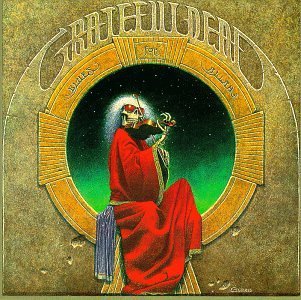
album cover, Blues for Allah
Grateful Dead

My thanks to Deb Bryant for reminding me of her friend Rosie McGee's reading at Barley Mill this evening.  For those of you not so familiar with Portland, The Barley Mill is a birth place of the McMenamins brew pub network that now spans at least two states.  It's also something of a temple to The Grateful Dead, a famous band associated with the advent of the psychedelic Aquarian Age.

The day started more prosaically, with Patrick coming by in handyman mode to maybe help with the clogged upstairs tub.  He correctly diagnosed and solved the leaking sink problem and in the process we were referred to another product by the hardware store lady that indeed unclogged the tub (I'd tried other liquids but this one had the right mojo apparently).

I'm listening to The Dead now on Spotify, trying out their premium service.  I went to the Spotify meeting at the last US Pycon, as Spotify is using Python a lot.  Some of my favorite artists are not yet sharing by this infrastructure, which one might characterize as a negotiated / legal version of Napster.  iTunes helped pave the way.

The negotiation includes what consumers want, are willing to pay for, and are able to get illegally if the cost is too high.

The Dead were always progressive about digital rights and contributed to the free / open source rhetoric when the latter was still in its infancy.  Whereas I was only getting covers for Pink Floyd and The Beatles on Spotify, I'm listening to bona fide Dead as I write this.

Rosie wasn't just your stereotypical "groupie".  She was an integral part of the Jerry Garcia family, which was a traveling circus and production crew of considerable ambition and skill.  She helped with a lot of logistics, travel, loved the behind-stage world, and never lost her fluency in French (Rosie was born in Paris, moved to Portland later, went to Washington High School).

Carol is using O2.  The concentrator came hours after her discharge, with the hospital providing two tanks.  A full recovery is expected.  Pneumonia (bacterial).  We've been getting visitors.  Friendly Care has been supportive.

I treated Patrick at Oasis for his competent and cheerful contribution to our household's plumbing health.

Someday, your dwelling machine will come with CAD drawings on a DVD and you'll have no trouble knowing where all the pipes go, and/or tubing, wiring and so on.

Having construction adopt the standards of aerospace was the huge jobs creator Bucky Fuller tried to get going all through the 1900s.  The engineers were better at weaponry though and had a sure client in Congress.  The sheltering challenge was left to architects.  The technology advanced slowly.

Living standards have stayed artificially low, given the human IQ is not what it could be (by "IQ" I'm including qualities like "compassion" which the Dalai Lama underlines as what's missing more than raw intellect).

That doesn't mean a revolution in shelter technology can't still happen.  Patrick looks at the challenge from the perspective of energy infrastructure (power grids, smart meters etc.).  Glenn thinks in terms of a "global matrix" of such grids.  Welcome to 97214.  We think globally a lot, and can't help but act locally.

Blue House is also being crewed by Melody, JenQ and Lindsey these days.  While I was at the Hackathon and Wanderers last night, Lindsey was serving for Food Not Bombs near City Hall, and performing her music.  JenQ helped prep.  This is from the Saturday market haul that provides for several servings throughout the week.

Yesterday's Oregonian's food section was on food waste, a topic we discuss a lot at FNB (though of course FNB was not mentioned), and arsenic in the rice supply, which is written about in a typical "taking it lying down" mode (Chicago Tribune the source) -- no outrage, just "limit how much poison you feed your baby, doctors advise".  Crazy world eh?

Monday, October 22, 2012

Delayed Reactions

The title is a bit of a joke, as all reactions are delayed, though "instant reflexes" have the connotation of both spontaneous and robotic, another irony.

Wasn't Romney promising a buck a gallon again, like a roll back in prices?  A truck just unloaded 300 gallons in my under-the-driveway tank, technology from another era, when that would have been $300.  "Everyone's tank is bigger than their checking account these days" quipped the driver.  No kidding.

In my world view of the New World Order or Novus Ordo Seclorum or whatever we call it, USA presidents don't get to set oil prices.  That's just not in the cards.  And I'm wondering, seriously, what the world would have to look like, for Romney to be setting them.  I think his view is isolationist:  America will fuel itself, and as King of North America, I'll dole it out at a buck a gallon.  Put me down as a skeptic.

So I sampled semi-mainstream TV last night.  I no longer subscribe to TV, but Bagdad was showing AMC's Walking Dead off the cable (Xfinity I think it was), no charge, just serving beer etc.  I got to sample the latest commercials, for iPhone 5, Droid, Windows 8, and Surface.  My new Droid went by twice, the Razr / M.  Windows 8 is designed with Surface (a tablet) in mind.  There's much controversy in the blogosphere, as to whether MSFT has gone overboard pandering to tablets when desktops, including laptops, still reign supreme.  Time will tell.

Today I met with John Wish, esteemed member of the meeting.  He was somewhat pissed that I'd used the word "cabal" with reference to his subcommittee.  Here's a writing sample (something I shared recently, with a non-member):
Oversight is... party to a hostile takeover of MMM by a clique of members who think the Beanite / College Park Association style of Quaker, which honors non-members and gives them a lot of equality, should be squashed. 

This cabal has hijacked our process with vague reasoning and allusions to anonymous members who refuse to come forward and let their identities be known.
John at 78 is not shy, no wall flower, so I can't count him among "members who refuse to come forward and let their identities be known." No way. He's forthright and speaks his mind. That's what Quakers value: plain speech. We don't have time for a lot of BS euphemisms, because we're trying to keep up with the "mind of God" (zeitgeist, Holy Ghost or whatever) and that doesn't always give us the luxury of mincing words. "Beating around the bush" sometimes just means you're being too time-consuming for your own good (and ours).

What's the College Park Association anyway, and what the heck is a Beanite?

I'm alluding to esoteric Quaker history here. Chuck Fager has an entertaining piece of writing on this history, if you want to know more.

Tonight's debate deliberately mixes military and civilian meanings of "nuclear program". Remember the UK's position:  Farsi speaking Persians and their friends have a natural right to use science in ways that don't hurt the world.

Does nuclear energy hurt the world?  Some would say so, yes.  In that case, the push against nuclear programs is tighter here too.  Note to Romney:  we / they have a right under the NPT to enrich uranium, you know that yes?  I'm against the weapons too.  Countdown to Zero is a campaign I respect.  Nuke weapons destabilize us guys, and take the "fun" out of military service. These weapons just aren't helping us stay human and we have limited experience as demons.

Funny chat about Pakistan.  Are you going to say "drone"?  Yes.  What about sovereignty then sir?  Either sir.  Why is Pakistan sounding angry sometimes, "not like any ally".  Where are the bombs going off, in Afghanistan or Ohio?  Well OK, some in Oklahoma.

Lets remember how deeply concerned the Southern whites were, white Americans in general, that the oppressed, the slaves, would rise up in revenge, if liberated, and if allowed to own guns.  There really hasn't been a race war (though it got ugly), and there's not likely to be one.  Many ethnicities share this area and aren't interested in Mad Max Roadwarrior futures, post apocalyptic but without the apocalypse.  Who needs it?

"Currency manipulator... hacking into our computer, counterfeiting our goods" sheesh.  This guy is too afraid of everything, scary scary.  That's like whites, acting scared, making everyone else pay for their "security".  OK, not just whites.  The privileged.  They're so upset about their insecurity aren't they?

No, I'm not worried about any "cabal" among Quakers.  Lots of partially overlapping cliques, in scenario Universe, nothing new there (except always new).  Chuck Fager is somewhat a role model in using high amps, but mine is techno-invective, not sure they're the same (like a difference in musical style).

Friday, October 12, 2012

Back at the Lab

"Back at the Lab" sounds white coaty, but I'm talking Lucky Lab here, the brewpub that does Dogtoberfest (coming right up -- or did it happen already?).  I'd say Sarah-the-dog here is a lucky lab, but then she's also part mutt, as the pro breeders might put it.

Steve and I joined the DemocracyLab table.  Mark and an associate were about to drive to Seattle even at this late hour, for a conference today.  He took us through a demo, where Oregon State's tax income is the focus.  How much revenue is from video poker, lotteries?  Game winnings are not considered a tax, so these numbers were not shown.

Ben stopped over.  We'd missed Duke by a smidgen.

Nate is heading of to Strata Rx 2012 in the Bay Area.  Electronic medical records using free open source software is one of his foci.  That may mean he misses WhereCampPDX, where we hung out last year, OPDX (Occupy Portland) by then going strong.

The Lab was packed with gamers and hackers.  Thursday nights are really big there.

Tuesday, October 09, 2012

OMSI Science: On Race

DSCN0540

The two guest speakers were from Willamette University, where Alexia went for awhile, exploring options such as Japanese.

They've taught as a pair and bring different perspectives to the issue of 'race' and 'racism'.

Dr. Emily Drew is a sociologist and Dr. Chris Smith is a population biologist, more into the physical genetics rather than the ethnic constructs.

Every ethnicity has its idea of other ethnicities.  The "race" theme couples with US history pretty closely.  Study the history of the "race" concept in the Americas, and many doors will open.

We saw slides of an early census of 1790.  Are you (a) white free male (b) white free female (c) non-white free (d) slave?

Dr. Drew understood "race" in the ideological sense of supporting Ben Franklin's contention (apparently not satiric -- that would have been more Twain-like) that "whites" were the top race, and that thinking in racial terms is mostly buying into a namespace that's been rigged to advantage some minorities / ethnicities more than others (it'd be hard to deny that).

Dr. Smith saw the genetic underpinnings of human differences, which map to geography really well.  He's suspicious of "race" though, because as a short-hand, the "races" are awkward pigeon-holes and could lead to making bad medical decisions.

The specific ideas we have about "races" (the stereotypes) are too often misleading to be very scientific though.  Like this idea that only blacks have sickle cell anemia -- an urban legend. 

"Race" as a concept, is mostly partially overlapping urban legends, with enough truth in biological terms (people do differ, and you can trace DNA sequences in family trees), and enough inertia in socialogical terms, to keep it alive and kicking as a meme.

Actually, neither speaker used the term "meme".

I've done lots of thinking and writing on this topic of "race" for many years, including recently, so I felt somewhat party to the discussion.  I didn't ask any questions though.

Steve H. had not been to an OMSI Science Pub before.  He's of the Yorkshireman race.  I keep hoping to introduce him to Brian S. who bears some family resemblance, at least in terms of accent.

An older theory held that Homo Erectus gave rise to modern hominids in some linear then forking pattern, with the fork into races happening some millions of years ago.

More recent studies suggest an "out of Africa" migration only some hundreds of thousands of years ago.  These homo sapiens encountered other brands of hominid, including Neanderthal, which it now looks like may have been integrated into the "new model" (sapien) gene pool in some ways.  Dawn always thought so and would have loved this part of the talk.

The fact that indigenous Himilayans have genes for dealing with relatively low oxygen, similar to the way we have skin color genes based on the spectral challenges of our ancestral environment, suggests I might not be so far off base in my speculations that one day we'll have undersea hominds able to live more like dolphins.

At the very least, as people select for better skiing bodies, so may they select for better swimming bodies.

Or maybe that's all too naive, now that there's some possibility of genetically engineering some changes, not waiting for natural selection to optimize the old slow way.

Of course I don't get to know how it turns out from this perspective, as a 1958 - 20?? figure.  As mortals, we only get to pop up the periscope for a short period, assembling all the puzzle pieces we can.

Definitely we need to always do the detective work to figure out who stands to gain from one "theory" or another.  Real science should not inhibit "follow the money" style anthropology, a kind of investigative journalism with more philosophy, more distance.  Keep an eye on the agenda.  Does it involve "white supremacy" of some kind?  Not that only "whites" can be racist.  That meme virus is widespread.  The US is a racist society (according to the four criteria presented).

I don't know how far back we should push any kind of maritime savvy, on the part of these hominds.  That's probably the kind of question I would have asked.  Did Homo Erectus ever take a ferry of any kind?  We hominids always walked a lot, but did we float, even navigate?

Riding other animals (e.g. horses), when did that start?  At different times for different peoples.

An ethnicity may be defined in many respects in terms of how it casts and treats other animals, not just other human beings.

OMSI has an exhibit on Race even now.  I feel I've probably seen it before, or maybe I just saw part of it.  Anyway, I'll be heading down there one of these days to check it out.

DSCN4600
"races of man" on a timeline 
at McMenamins E Broadway Brewpub

Monday, October 01, 2012

Another Birthday Party