Saturday, November 21, 2026

Recalling Cryptography

RSA for High Schoolers

In conversation yesterday, I got into being an "andragogue" (which comes for "andragogy" as distinct from "pedagogy"): one who teaches adults. One would think there'd be a partially overlapping toolkit with more kid-oriented techniques. Our topic: cryptography, cyphers.

The topic arose in connection with a certain TV show, set quite a while back. We started talking about Neal Stephenson, and the books by him we'd both read, including Snow Crash. In my case Cryptonomicon was influential in getting me to write more research-based code. I implemented Blowfish for example, and later RSA (public key).

So that's when I launched into the sea change significance of public key cryptographic techniques arising around the same time as the internet. The way I tell it, the NSA was leery of letting MIT publish RSA, but the algorithm was already out of the bag and individuals were already demanding secure peer-to-peer between any Bob and any Alice. The NSA knew the history: GCHQ had it first, but kept it under wraps. My account is not just my dreamed up account. I read some public sources, books you will find in the library.

Bob, Alice and Eve that is. Eve is the eavesdropper in this paradigm, whom we might imagine hiding in the eaves, the rafters, and listening in on what Bob and Alice presume (mistakenly) is a private conversation. This triangle, twixt Alice, Bob and Eve, is generic in the field of cryptography. 

What public key cryptography (such as RSA) makes possible is skipping the step of exchanging a decoder key before initiating secure communications. 

Bob and Alice each publish their public numbers (N) while holding a secret private number (d), derived mathematically, but in a way hard to reverse absent the two seed primes p, q used to create the public-private number pair (N, d) in the first place. 

If you could only factor any public number N into its p, q you could derive its d, but factoring is hard once the numbers get big enough.

You're grabbing two gigantic prime numbers out of the blue and using them to make up a public-private pair. Then you throw those two primes away. Without them, Eve will not have a way to derive Bob's or Alice's decoder number. Only Bob can decode messages encrypted with Bob's unique number.

Ah, but is Bob's number really unique? Obviously there's more to get into here. Cryptography is all about deceiving and deception. 

My former employer, O'Reilly Media, put out a pretty good book on the topic, although I'm forgetting the title. The best way to protect against vulnerabilities is to see how the exploits work. You might have all the high end cryptography in the world, but how does that help if Bob and Alice also have "secret" meetings in the parking lot, not knowing Eve has a way of listening in?

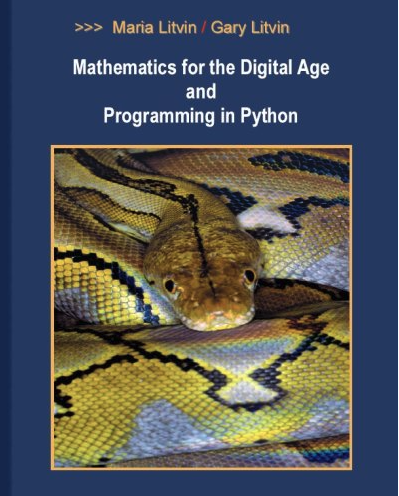
I'm going into more detail here than I did with my friend, in her 80s, quite well read. My history on edu-sig, a Python special interest group for educators using Python, was all about using an object oriented language to model "math objects" such as vectors, polyhedrons, Bob and Alice. 

I wasn't alone in having this focus. I found Phillips Academy was offering a "learn RSA through Python" course as one of their math department offerings. The better schools were already using executable mathematics languages, like Wolfram Language and/or Python and/or Haskell or one of those (Scheme, J, APL... maybe BQN today).
Math with Python

Monday, November 16, 2026

Friendsgiving

Friendsgiving

I dunno who coined the term Friendsgiving, not a Friend (Quaker) to my knowledge. I was privileged to be included in one, a large potluck at a nearby community center near Eastport Plaza on SE 82nd.

My presence is explained like this: someone I met through Quakers, Rosalie Grafe, introduced me to her weekly meetup at El Mercado, an Hispanic-themed indoor mall on SE Foster. I call it a book club as there’s an aura of libraries and library science around it, given Rosalie’s and others’ work histories. Inside Mercado, we met at El Barrio, owned and operated by bartender Chris.

What happened next, in January, 2024, is the bar burned down, owing to some random electrical fire. Chris’s reputation preceded him as the bartender to have, and when CORE, a classic food pod in the Portland style, started up near Eastport, they were quick to offer Chris a new position running the Publican. Chris leaped at the opportunity and much of El Barrio’s clientele, including our book club on occasion, followed him.

I consider myself a peripheral figure in this new scene, now that our book club has moved closer to the old location, which Rosalie could walk to. I still show up with Sydney from time to time, as Chris is a huge dog fan and bonded with Syd in Mercado days. Derek and Beth get there more often, and both were there last night, introducing me to various people. I enjoyed the conversations. I brought my signature lentil dish.

As of today, El Mercado is still closed from the fire two years ago (the damage was extensive) however reconstruction has been going on. More residential units have been added nearby. Chris isn’t tempted to go back, but it’ll be nice for the neighbors to get that place back online. 

Sunday, November 15, 2026

School of Tomorrow

Learning the Basics

Wednesday, November 11, 2026

Dymaxion Kitchens

Dymaxion Kitchen

Given my obsession with having high schoolers learn cooking by making their own cooking shows ("as seen on TV"), it's not surprising that the next question is "what kitchen?". 

Are urban high schools set up to let the students operate the cafeteria? Of course not. Paid pros do the kitchen work, considered extracurricular from the designers' standpoint.

 
Dymaxion House

However, per Project Earthala, and drawing from my experience with (a) gatherings of young Friends and (b) Food not Bombs, I'm used to the idea that the kitchen is center stage, where the action is, the logistics on both ends, time-wise, meaning trucking the food to the prep site and then, serving the food. The final stage is likewise critical: clean-up. The kitchen should be made spic-n-span for the next scheduled event.

So in this cooking show we may be showing off new kinds of appliances, along with workflows and recipes that seem exotic and esoteric to the viewing audience. Each campus village is its own subculture of partially overlapping subcultures.
 
Dymaxion House Interior

If you're one of the teachers, maybe on the fooding side, maybe on the video production side, you'll be looked to to provide context. The "kitchen debate" is an event in history to hearken back to because (a) it's about competition in livingry (not killingry) and (b) because of the Moscow dome.

 
Manga Views

Monday, November 09, 2026

Cartographic Studies

Curated Dymaxion Projection

The documentation around the H3 global grid system is explicit about the Dymaxion Projection being an influence, on the placement of the 12 pentagons most specifically. I'd say hexapent tilings have been a contemporary standard for some time now. Even ESRI has had a Dymaxion Projection option, even if it's rarely touted.

The projection method underlying H3 is not identical with the algorithm Shoji Sadao used, is my understanding. The Dymaxion is not orthognomic. Bob Gray did a paper comparing the Fuller team's projection method with the others.

One would think though, that having the Dymaxion as a dashboard starting point, with H3 superimposed, would be typical of any world game setup. So far though, I haven't found this implemented anywhere. I've used Perplexity to do an initial sweep.

Including a Fuller (Dymaxion) Projection in the classroom, as one of the exhibited artifacts, would tend to brand a school as Fuller-friendly, which most are not these days. 

There's likely some concern that displaying the map would foster student curiosity regarding the alternative geometry for which Fuller is most famous and for which he received a Medal of Freedom. This American heritage has been effectively marginalized by LAWCAP, which controls the so-called "public" schools in this post-USA chapter.

Screen Shot 2026-11-09 at 1.15.21 PM

Friday, November 06, 2026

Visiting Faculty

Quinton Prologs

A theme in these blogs of mine is me hosting visiting faculty, which doesn't necessarily mean I put them up at Blue House. Sometimes that's how it works out, but I have limited accommodations. In this case we have a party of four and an AirBnB is involved. I was not expected to do any airport pickup at PDX this time either.

Given our shared background in computer stuff, our talk turned to FoxPro's having asynchronous event loop handling long before Python, as well as superior GUI design tools, more like Microsoft's other "Visual" products, especially Visual Basic (VB) and the full Office suite which eventually included Access. 

Microsoft Access was an ambitious project to make VB the de facto cube farm standard in the corporate Windows-colonized sector. FoxPro, originally design outside of Microsoft, as a competitor to dBase (where I come into the picture, as humble dBase programmer at Project Vote). 

dBase was bought by Borland as Microsoft thought xBase (the generic name for the dBase language) probably had a bright future, hence the strategic move to bring FoxPro inhouse and turn it into Visual FoxPro (VFP), of which I became a master (given pre-existing dBase fluency).

Project Vote, in case you're wondering, was a 501(c)(3) that carefully stayed nonpartisan even as it did outreach to specific demographic groups, mainly those disenfranchised by the pay-to-play pseudo-democracy kept alive by GRUNCH engineers. The legitimacy of the District's rule to some extent depended on people buying in, so even billionaires might see a reason to help us get more eligible voters, first through registration, and then through voter turnout (registering and exercising one's right are separate acts).

That Project Vote chapter was way back during the Reagan-Mondale race, with president Reagan winning a second term. I left the District after that, my housing having been work-related, and took up a position in a major publishing house, again leveraging my skill set as computer science savvy, and curriculum aware, having been a high school teacher since finishing my BA at Princeton (philosophy focused).

My involvement with Python came later, after years working with VFP around Greater Portland, both for state and regional governments and for NGOs, as a consultant. I was at first fielded (to clients) by the Center for Urban Education (CUE), then by Ecumenical Ministries of Oregon (EMO), then by Dawn Wicca and Associates (DWA), the partnership my future wife and I set up. Dawn was a skill bookkeeper and knew how to run our business, as well as take on fund accounting clients (nonprofits mostly). I took out the DBA of 4D Solutions and continued with the xBase programming.

Through CUE, I got into working for a vast enterprise, Sisters of Providence, or the Providence System however it currently brands. My boss, David Lansky, with a data science skill set, got me helping out with the Medical Data Research Corporation (MDRC) coding FORTRAN at first, and then Visual FoxPro, as I gradually introduced them to its benefits, and advantages over tools like Access. But Providence had a difficult hybrid environment where my applications (CLAIR and CORIS) had elaborate interfaces to other products. Yet I was merely a consultant, not a Providence employee. The ecosystem was therefore fragile even before Microsoft pulled the plug on Visual FoxPro in 2015, I was starting to see the writing on the wall.

Anyway, enough about me and my somewhat boring career compared to a lot of other people's careers that I know about. The visiting professor works with very high voltages, amps too, with a whole team of graduate students. We'll probably further engage in grid talk during the visit, although this visit is not just about talking shop. 

Today I was working with the banks I transact through to get a payment ready to the City of Portland. It's that time of year, when we're expected to give back. I still do work as a consultant but since switching to Python teaching from VFP custom applications design, I've been mostly teaching people out-of-area. I was doing this well before Covid. Right before covid though, or as the pandemic came on, I was working with a startup focused on new curriculum implementation, reminding me of work at the publishing house in New York, after the Project Vote experience. 

I consider myself a curriculum designer, and have lots of experience to back that up, including as a code school faculty member with O'Reilly for some years. I go into all that in more detail in these blogs and in my photostream on Flickr.

Tuesday, November 03, 2026

A Friend

Sydney Observes

Fortunately for Sydney's longevity, I'm supposing (I'm not a vet), she suffers from LDS (Lonely Dog Syndrome) meaning when I'm working out on the elliptical, a present from Betty Boop's grandson, she sees fit to struggle up the stairs to join me, even though she's an octogenarian in dog years. 

Actually, if we go by 1 human year = 7 dog years, she's 105 years of age. Yet still climbing stairs to my 2nd floor. I'm almost 10 in dog years. Sydney is a role model. I hope to be as fit as she is in five (dog) years. Actually it's my pet ball python that may outlive me, provided he gets good healthcare.

Monday, November 02, 2026

Climate Change

Climate Change

The huboons continue blasting apart their own infrastructure, frustrated by the impasse they've reached with their perimeter zone nation-state-based jurisdictional narratives. 

World Game is chaotic. The cost of still thinking inside the box is high. Still clinging to old ways, the oldsters hang on tightly. Skeptical youngsters wonder if there’s a better way to play.