In some ways, Working Out would make more sense here, in BizMo Diaries, as it's about physical body stuff, and the "business mobile" (peripatetic action studio) works for a stand-in, metaphor-wise.
Likewise, this post, about Cybernetics, would make more sense in Control Room, just going by the relevant memes i.e. a "control room" is like a "bridge" or place to make things happen. Another type of "action studio" really (what isn't?), but relatively stationary.
Let's now turn to this meme of "last straw", which is also, presumably, the one which broke that poor camel's back. The camel was already laden with straw, one imagines, and was holding up. But that one last straw proved the tipping point and, snap, the camel's back lost structural integrity.
We tend to empathize with the camel, or in any case, if a beast of burden, now we have no animal to bear our load. Like a car broken down by the side of the road, the connotations are mostly negative, in the direction of increasing entropy. May the tow truck make it all better.
But what about critical "last straws" that, when added, open doors or otherwise lead to positive developments. What's the English language opposite of "catastrophe" and if none comes to mind, isn't that a symptom of something, about English. I've heard "benestrophe" suggested. I must've already added it to my dictionary, as so far my spell checker hasn't complained.
"To cyber" means "to steer" i.e. "cybering" is a matter of rotating a rudder, thereby repointing the craft. That may sound like a simple process but sometimes so much inertia is involved that even the rudder needs a rudder, which reminds us which principle (leverage) is involved.
Let's say you turn hard to starboard or port, and manage to miss the iceberg this time, because you had better intelligence ahead of time. You had more time to react.
Optimal responses may require cool headed thinking, and lots of it, however if that time is not now, then the usual strategy is to substitute a reflex as a next best reaction, a proxy action, an approximation, perhaps not well-thought out, but at least in the repertoire.
If you escape catastrophe, that in itself is a benestrophe. In ages past, the king or queen might have a monument, perhaps an entire church or temple, in gratitude to whatever generalized principles allowed for a freakishly and unexpectedly positive outcome, what we call "a miracle" in the vernacular.
However, we need to remain open minded with regard to even more positive positives, which are not about surmounting the relatively low bar of narrowly avoiding tragedy. These high bar events may be likewise triggered by feather-light tiny deltas, fourth derivative actions, as it were, as insignificant as the fluttering wings of a butterfly.
I have to admit my admiration for Uber's clever follow-up offer after my finally getting around to using their app and service: free meal delivered on us, $45 value; then a week later: $25 if you use it now. The sight of a shrinking asset provokes action, although in my case I'm resistant, and it helps that if I follow their offer I'm back in Atlanta (which I'm not, at the moment).
I think a lot about the delivery economy but maybe not with enough inputs, as I'm not a business consultant so much as a skills trainer in a working class ecosystem. I'll show you how pandas will give your data visualizations that professional zing that makes your cubicle a hub in whatever network you're in. I've never worked for Amazon directly, although my code school was subsidized by its outreach programs that summer, as I recall.
Anyway, the idea of fleets of flexibly routed vans delivering in high volume, versus browsers showing up in parking lots in private cars, leaves me thinking we're likely economizing in shrinking the mall culture. Yes, the web took the place of storefronts in large degree. That's ephemeralization at work, meaning as a species we're under pressure to economize, even when we'd prefer to make a lifestyle more permanent.
Derek and I were in agreement, in recent living room conversation, that better infrastructure, extending camping, for a nomadic lifestyle, perhaps on wheels, as a multimodal adventurer or whatever, would answer a need in some of our subcultures to "live outdoors" in some essential way. Dense urban living is too claustrophobic for them, or too stationary.
A nomadic lifestyle doesn't have to mean in a tent. A yurt with ample floor space in some hexagonal grid pattern (random lake shaped) would be an improvement over a phone booth shaped tiny house in my view. Electric ATVs come to mind. You might book a yurt for some months or weeks and move on to a next one, with variations in make and model.
A lot of boomers hope to retire to a mildly active lifestyle, recreational in nature, like in Florida.
I had the privilege of retiring in my teens, while going to high school while based in a mobile home park for retirees. The homeowner association might've frowned on our extended stay (me and my sister) which is why mom flew back to Bradenton and moved us into a roach motel (not that the trailer -- er mobile home -- didn't have "palmetto bugs").
Indeed, absent Yurt Villages (high tech), the Florida option still seems a good deal, not that I'm the expert or share that plan for myself. Like I said: been there done that. I'm not dissing that lifestyle, which is pretty comfortable I admit, but I'd use my stays in that trailer (I'd be back) to reinvent myself, perhaps into an airport manager (that book was interesting but I wasn't sure how to break in).
I ended up finishing high school in Manila, dad having scored a gig with UNDP. We had UN passports for the whole family. I proudly display a UN flag as part of my living room decor to this day. I also keep flags of Bhutan, Lesotho, and Republic of South Africa, right here on my desk; places I've come to feel some allegiance to and fondness for, in addition to these various states in North America (Oregon being my home base nowadays -- I'd like to explore them more, Birmingham, Alabama was fun).
Another city older folks retire to is Las Vegas, which markets itself as a destination for recreational living in general. The new MSG Sphere is open, and showing Grateful Dead, a live performance with giant screen backup. I talk about that in this blog post (in my philosophy blog), which is actually a YouTube.
I remember standing up in Meeting once, a big Meeting in Philadelphia, where AFSC corporation members and directors had convened, and sharing something philosophical-sounding, and also arguably dualistic. "The bodies" I was saying "are innocent of any wrongdoing, yet it's them that we punish".
My point was that of George Fox when he said you can't kill the devil with a gun or a sword or something to that effect. Ideologies circulate like viruses, independently of the animal bodies they haunt (infect, control). To counter an ideology effectively should not involve torturing the animals (the human animals) that express this ideology.
My view is somewhat that of medical science and its practitioners who take the Hippocratic Oath (do they do that anymore?). Treating human bodies is distinct from psychotherapy although they're intertwined. An anxious psyche is more likely to run a body into the ground by overdosing it with stress hormones. How mind and body interweave is the kind of problem Oliver Sacks liked to study.
The use of physical torture, such as by bombing and/or deliberately starving, is an expression of our weakness in the psychological realm. We have less success than we would like countering an ideology, and so take up arms against it, and attack its adherents (the infected, the blessed). Outward war, according to Quakerism, is somewhat beside the point, as what we're really trying to accomplish is metaphysical (psychological), not physical (physiological).
"Don't blame the meat puppets for crazy beliefs and the strings they pull" might be another way of saying it, "but do work on curing craziness by inward means". In Quaker jargon, "inward" is versus "outward". "Inward" is the world of psychological modeling and processing. "Outward" is the world of sticks and stones and broken bones.
Outward wars are misplaced (in the sense of inept) attempts to avoid dealing more directly with inward wars.
Does Radio Octopus only play tracks of creature noises? I just tuned in for the first time. Now we're on to bird sounds with piano. Somewhere in France.
I found myself explaining, to a newcomer at our Solstice Gathering, how Wanderers, in my book, includes the nonhumans. I'm not saying all of them. I circled Keiko in particular, better known as Willy.
After a morning "about town" I'm in my "bat cave" for the most part, occasionally bouncing upstairs to use the office. The outside temperature is down to 92 degrees Fahrenheit, was 98 earlier.
I just heard from Kerry Butson, after so many years since our co-worker days. She's in Illinois. We were both employees of a code school in California, she before me. I was brought in by Steve Holden, author of their Python course.
Since those days, I've continued to work in Python. Just today I was hacking on my Google slides about Quadrays, an XYZ-like coordinate system. I've been introducing them to UC Davis.
Dr. DiNucci gifted me with an air conditioner last year, when the original customer discovered she was disallowed such equipment by her Homeowner Association. She surrendered the unit in disgust and gave it to David to give away. It ended up in my living room.
A lot of Portlanders have traditionally gone without air conditioning, preferring to tough it out through the few truly hot days every summer. I was in that category until life made it really easy to add this perk. Central air for the whole house would make the upstairs more habitable. The ball python doesn't seem to mind the status quo.
From my bat cave, I monitor local and global conditions. I also network and telecommute. The "bat mobile" in the driveway has proved serviceable lately.
We (me 'n my dog) left Portland pretty early, like at 5:30 AM, as I was scheduled to pick up Uncle Bill (age 99) and remembered nightmarish traffic on I-5 on Thanksgivings.
This drive was a breeze, both going and returning the next day.
Since I arrived in Seattle plenty early, with time to kill, I drove down the steep streets to Pike Street Market and walked Sydney around amidst other tourists. The place was hopping. The waterfront now hosts a Ferris wheel. Is that permanent?
I really enjoyed my time with the relatives, even if Urners are an obscure branch of the Hancock family by now, so it's not like I was recognized by all or vice versa. That's part of the fun of large family gatherings.
Barb's dad was one of my grandmother Esther's brothers, Esther Person being my dad's mom. Barbara has a beautiful family, and modest, well-appointed lakeside home.
I got to overnight with Elise and Les, some of my oldest friends and Sydney's previous caretakers.
Brand loyalty is what to encourage between times of buying and/or upgrading. You're just using, and thinking ahead. Advertising to this group involves confirmation and affirmation for making the right choice. You're already the proud owner of brand X and appreciating its benefits.
Your neighbors eye you with jealousy, that productive capitalist form of jealousy that lets you go out and buy, upgrade to keep up, keep up with club membership, where "club" is but shorthand for whatever "inner circle".
A club I've broken into lately is that of the given up drinking, meaning alcohol of course. A meandering path to this topic, in my living room recently, was via the musician Jimmy Lott, who used to live two doors down from me. He sang at the Alano House that time, and I wanted to know if "Alano" was a person or what. Just a lowkey way of referring to Alcoholics Anonymous (AA), an abbreviation one could say, and other towns have 'em.
The Alano House I was thinking of is a specific mansion, huge, in NW Portland. We got it located on Google Street Views and so on. I could study the website and research my questions, looking for answers.
Back to affirmation as a genre: once you're off the stuff awhile and want free reinforcement, YouTube has any number of motivational tapes (I'll call 'em tapes sometimes, meaning recordings, no tape in sight) outlining the temptations, slippery slopes and so on, regarding life in general. That's the best time to take in Jordan Peterson, when you've already made your bed so to speak.
Portland's Alano House features in that movie about Callahan by Gus Van Sant and starring Joaquin Phoenix.
My own path was not through AA, but from throttling back on beer and then seeing the future through medical imaging, long a component in my profession of computer programming around hospitals a lot. I took a look in the mirror and decided I could turn off that spigot. That doesn't make me a drug free specimen however. I'm still pretty heavily into caffeine for example.
I'm not preachy unto others for the most part, as I'm not on the motivational speaker circuit, at least not in that sense. I'm fine with being around drinking and smoking (cigs, pipes, cigars) and still have a partially stocked bar. Help yourself to any cold beers you find. They're all for my guests. I don't regret my past addiction to Oregon IPAs and great Chard and Pinot wines.
What many Russians are officially proposing is a narrative wherein Ukraine's eastern-most provinces (oblasts) voted themselves out of the Ukrainian federation, joining Crimea in affiliating with the Russian Federation instead.
It's as if eastern Oregon decided to join Idaho. We have some Oregonians advocating for that to happen.
Some ethnicities, including many with legal backgrounds, did not recognize these referenda as legit and so never bought into the idea that Russia then moved to defend its new territories and their denizens against aggressive Ukrainians in charge of the Pentagon and other WDC circuitry.
Israelis and Ukes vie over the cadaver of Uncle Sam, feeding off his former legitimacy. Kinda gross, let's admit. Their nations are as dead as all of them. The United Nations is by now a corpse show.
Uncle Sam was already bankrupt and extinct in the 1980s but was needed by the Grunch money makers for bailout and legitimizing purposes, so they used clever funeral parlor tactics to prop him up. We've since enjoyed a series of impotus figureheads and a general dumbing down of the public to a more Planet of the Apes level status quo (an idiocracy, some called it).
The Russkies feel they have no one legit to talk with, about bringing an end to the carnage. They need counterparts but the Grunch doesn't have any diplomats to speak of, just (a) spin doctors (like me), (b) posers in fancy pant suits with lapel flags, and (c) chatbots repeating talking points.
Peter Sloterdijk, the German language philosopher, has identified "foaming" as the breakup of broad consensus echo chambers into much tinier bubbles. Broadcasting became narrowcasting. Yet we still need a consensus reality (CR) to gain traction within. A reliable physics engine (P) may not be enough, absent coherent programming (M). U ⋈ MP.
My Americans don't necessarily buy that "space is 3D" either, just to show y'all how much fragmentation has occurred. If you're in one of those mythical top schools, you probably know what I mean. You've been doing some homework maybe.
But then don't we value diversity?
Wasn't North America originally seen as humanity's best hope for a shared "live and let live" zone? Indeed.
That's why we feel safe here, even with the deep state engulfing us and tracking our twisty turns. We're one of those elites, the kind with privileges. We're quite comfortable rubbing shoulders with the so-called powerful.
And no, that doesn't make us "Caucasians" (snicker) or Ivy League (even if I personally went to Princeton, Class of 1980 -- my classmates were diversely divergent). We're just another literate group that does its homework and values debate. We're very American in our values, maybe more so than you are? Let's argue about it why not?
I bought a copy of Trevor's newest, Great Man Theory. I like his punchy style and his willingness to treat myth and history more or less on an equal footing. He's noting the skeptics along the way, tracing the history of the idea itself.
I learned a ton about Hercules, and of course Jesus figures in, how could he not.
One of those skeptics, I'd say, is Alexander Sokurov. His famous trilogy features Lenin, Hitler (Adi), and Hirohito. I just took in the last two this weekend.
He feels the "greats" get projected onto the big (shared) screen by a collective semi-unconscious with a drive to externalize some representation of "the commander in chief" or "the emperor".
The greats themselves are more ordinary people tasked with stepping into semi-publicly constructed roles. A lot of randomness enters in as they ad lib the part, says director Sokurov.
The hunters (as in treasure hunters) think the clues were pretty good this year, with their Oregon Trail theme. Barlow's route, over the shoulder of Mt. Hood, for which Barlow charged toll, featured a 60 degree grade in one section. Wagons had to be winched down the slope.
Nowadays, a section of Hwy 26, more like six degrees steep (note the runaway truck ramp), shadows that infamous place of passage, and is where the treasure was hidden.
The clues, one a day, aim to prompt human intelligence (HI), however I'm sure many hunters tried to enlist help from AI (do lowly search engines count?). The humans certainly put their heads together online, thinking out loud about the clues. My friend Dr. D. is an MVP contributor to this group process.
OK LLM people, here's my question: I really liked learning the literal meaning of "cliche", a typesetter's jargon for phrases used so often it saved time to just keep them in type. Templates. Swap in a few names to localize the more global. "Boilerplate" is another related word.
But how long might a cliche be? Don't we want to extract some of those longer strands we always re-encounter, such as how envisioning "four dimensional objects" is muy dificil. That's a cliche in our culture, that the "dimension ladder" likewise defines a state-approved meritocracy and even spirituality.
Only one or two people have ever attained the ability to visualize hyper-solids as simply and naturally as we ordinary mortals visualize solids; but a certain facility in that direction may be acquired by contemplating the analogy between one and two dimensions, then two and three, and so (by a kind of extrapolation) three to four. [H.S.M Coxeter, Regular Polytopes, Dover edition, pg. 119].
If you spend a lot of time in the library, you realize this phenomenon of "echo chambers" such as we encounter in social media, is likewise that of "lineages". Within a lineage, or school of thought, the same cliches (or call them dogmas in some cases) get recited over and over, with predictable segues to subsequent topics.
The whole of Abbott's Flatland deserves (and gets) a lot of weight in any corpus deemed to be about the LLM idea itself, because of Linear Algebra and its core apparatus: the hypercross (n mutual orthogonals).
With word2vec and doc2vec, we're mapping out what follows what, in terms of cliches of varying scope, many of them containers for more cliches inside, in a fractal pattern created by The Corpus itself.
The mystical superpowers that go with opening one's inner eye and "seeing in 4D" (or higher) are legendary in hypercross circles, and a basis for some mathematicians' professional pride (some call it narcissism).
Those inclined to join a priesthood first need to find a ladder, as upward progress towards Illumination that can't be objectively measured, much less recognized and respected, is unsatisfactory. The whole point is to be looked up to based on one's merits. Think of badges.
"The ability to think in higher dimensions" is a sought-after, time-tested scouting badge as it means you'll have that think tanker's sense of a shared "phase space" -- which might as well be a "phaser space" the way some play in it. The terrain is clearly more nuanced than XYZ or lat/long + altitude.
Lower dimensional = too coarse for comfort.
I see hope for diplomacy yet. If you want fewer boors in the room, keep to the invisible frequencies (which may be "dimensions" in some model). We're at peace with one another in our own cliquey inner circles (partially overlapping). Don't lay these endless wars at our doors, unless, that is, you wish them extinguished.
Shifting focus:
What more "meta" -- in the sense of "abstract" -- word meaning have we, than that of experience?
Think about it: what is such a word meant not to cover?
"Experience" is not a word you learn right away and despite almost everyone agreeing on the reality of prenatal experience, beyond such broad agreement, there's not much unpacking of that reality.
Except, that is, in some rarified branch of speculative psychology or wisdom tradition.
Or perhaps in meditation exercises for those seeking an experience of extreme regression -- or "rebirthing" as some call it.
Event is just as bad, in the sense of being so abstract and general as to have almost unlimited scope.
The idea that experience consists of energy events, happenings inside scenarios, has some appeal in the cinematic sense. Frames of film, discrete deltas, register any action the camera sees.
Frames of action. Action per time. Is this Hollywood style movie-making (lights, camera...) or simply physics (... action!)? E = mvv = mvd/t (Newtonian dimensional analysis).
You'll get a lot of people righteously claiming their cognitive frameworks are "experience-based" as if anything could sound less grounded, more full of fuzz and buzz. What irony.
For sure that's a tension, in terms of marketing, as the reality of an "experienced-based curriculum" (e.g. First Person Physics) may well be positively palpable vs-a-vs some subject-denying observer-erasing "god's eye view" or other form of unawareness.
Have your diplomats (truckers?) speak from personal experience, about events they participated in, versus always reciting "talking points" handed to them by handlers. A sensitive and nuanced intuition is not in need of ham-handed directives from the know-it-alls presumably in charge.
Schismatics: the (perhaps somewhat tongue-in-cheek?) study and description of the process of forming schism, and is often taken up in the course of religious studies.
Inevitably, as a school broadens to include a more diverse set of participants, among students, faculty, admin and crew, dividing lines begin to appear, logical groupings. In a healthy expected growth pattern, cell division, in terms of function, not just number, is no threat. Monoculture is closer to the antithesis of growth and form. However at the more metaphysical level, a split may be experienced as a schism and the school itself has to divide, which may feel painful on some level. The school was maybe not designed with mitosis in mind.
Along those lines, there’s a deus ex machina sect that preaches our ultimate rescue, or the possibility thereof, by ETs, off-worlders with the kinds of magic we could use. Within this sect, a subgroup believes the “ETs” aren’t from off planet, but have been indigenous since long before humanity emerged.
For example, when UAPs dart to and fro across the screen, violating all known laws of physics assuming a mass anything like that size would connote, at that distance, some faculty are excited to realize that all our energy concerns as a species might be satisfied with new physics like theirs. The fork in the road then becomes: do we learn from them directly, or use them for inspiration (they’re not talking) and develop the new physics on our own, perhaps clandestinely?
A different sect considers it irresponsible to put any eggs in the UAP basket. If the ETs were planning to assist or attack in a big way, why haven’t they done it by now? Some would say they’re helping, others that such a war is underway. These are differences in cosmology. One sect’s Hollywood fantasy is another sect’s daily reality, actively inferred by their models.
Such a schism occurred amongst those tracking R. Buckminsterfullerene Fuller while alive. His Synergetics was open to interpretation, and with Bucky himself out of the picture, a more anything goes approach could be tested. The cannibalization of Synergetics could commence. I’m guilty of it too, in treating the concentric hierarchy, with jitterbug and other dynamism, like the beating heart of the matter, with the BEAST modules then making it hard core.
I’m one of those who thinking investing in UAP technology, in the sense of getting investors to pay research costs, is not alignment with Fuller’s core program, and that Synergetics is not the new physics for abundant free energy from a zero point, as some Bucky fans proclaim. They’re in a different school of thought from mine, and I often point out that the Synergetics Dictionary has no entry under “UFO” as “UAPs” were then called.
Yes, that's a reference to Mad Max. Our party just saw the Furiosa movie. I was glad to see both Alex (visiting Portland) and Alexia (back from her Alaska cruise). And of course Dr. D., bouncing back from his latest First Person Physics adventure.
We won't be saying "goodbye" to the whole idea of fossil fuels any time soon, but we do see a change in emphasis, towards the renewables. You don't say goodbye when the emotions in charge are resentment and anger. Fossil fuels will finally fade amidst a celebration of their golden ages, and even then it won't be gone. We'll be the new fossils.
My science fiction, woven throughout the hypertext of Martian Math, features a long under-ocean chapter for the human species. I don't know what that will look like exactly. Will we bifurcate into a water-breathing species? Why bother, when we have scuba (my sport of choice)?
I know that high and low pressures and temperatures shape both our maritime and aerospace technologies. They're related. Light is also an issue. But then we have a cave dwelling past, some of us, as humans. Piping in light, using shafts and mirrors, is not a new idea, plus now we have bulbs.
Some habitats require what we might call umbilical cords, however slender. Taking refuge down a mineshaft is not a solution when the enemy simply needs to close off the entrance, entrapping the defenders. Siege is easy. Likewise if one is deep in some ocean cavern, piping in sunlight, fresh water, fresh air. If one has reason to expect vandalism, ala NS2...
We're not yet in a chapter where long umbilical cords are practical. People just don't yet trust one another enough. A colony on Mars is impractical as long as the political scene is such that Earth might lose its ability to marshall sufficient resources, both physically and metaphysically. They might get a Mars colony going, but not have the wherewithal to keep it going. Ditto under ocean colonies, but these folks would likely have more opportunities to outlive these experiments.
Perhaps humans fear that if they get along with themselves too well, that the future will be insufficiently challenging. In my view there's no danger of that. It's more like humans will never tackle certain challenges until they get their house in better order. The species is currently too dysfunctional to attempt many of its one day likely gigs. That's OK. Doing everything all at once was never going to be practical. Humans live on a geological time scale.
What have I contributed to the "great AI debates" thus far, and how to measure?
Is "AI debates" catching on as a meme?
I've stressed "mirroring" (as in "chatbots mirror an educated layman's prose"), and going forward I plan to use the word "groove" a lot more, a synonym for "rut" in a space of reduced dimensions.
In Active Inference, the quick rejoinder, that we're open to surprisingly beneficial developments in the field, is perhaps a subclass of "mistake mystique".
We really want the shortcomings in our models to be pointed out, and by definition we have trouble seeing those from the inside.
Those who claim to self-generate all these exotic perspectives on themselves are likely in the self-fooling business. You need others to be the others.
This defensive reflex has to do with our loss function, in the sense of backpropagation (ML jargon), being about measuring "free energy" as what to minimize, in favor of precision, accuracy, less surprise, less entropy.
To dampen "freedom" and "surprise" as a matter of ontological bias, as what to minimize, results in predictable compensatory actions, per our dynamical equilibrium model. We mean to minimize the energy
A pre-trained chatbot is looking to navigate the grooves in human discourse in a way that proves a next move is almost completely context determined. When we picture a tree of possibilities, we see how it gets out of hand unless vigilantly pruned, which means ruling out a lot more than we rule in.
We seek a "straight and narrow" if only because we're called upon to exercise our executive functions. Horizons broaden when the pressure to "do something" is relatively less.
I've written before how in geekdom we relish languid relaxation mode over shouting instructions, because when everything is under control, shouted instructions are for the most part unnecessary. Players will have internalized what needs to be done and will have set about doing it, perhaps in tight collaboration, but without bottlenecking through some singularity.
There's no single pipeline or narrative through the content, and where one critical path falls behind, the algorithm will find a new one, perhaps by changing the goals (hey, goals change).
New grooves form, old ones fade. The valleys may become deeper, the ridges between them higher.
I've been a Sophia-basher in some ways, not buying her (its) pretensions to AGI-hood. Her performances are scripted and her getting citizenship in a country, before Palestinians could, speaks volumes regarding how the billionaire class hoodwinks the less well-educated.
One of my chief interests, starting early (elementary school), has been computer programming.
After attending university as an undergrad, my first job out of college was that of high school teacher, of maths in particular although I taught some other subjects.
This was a small, private Catholic school and faculty capable of teaching multiple subjects were given opportunities to do so. Having just come through Princeton, and being one of the few males in a school for women, the nuns in charge could see my utility. I brought some of the latest thinking into the mix. My international upbringing was a plus also.
Much of that "latest thinking" with regard to my job as mathematics teacher, had to do with these programming languages. APL by Kenneth Iverson had taken the Princeton campus by storm, in the form of scattered terminals any student could use, regardless of what courses she or he was taking.
Within weeks of moving into Princeton Inn, I was programming battleship in APL and reading the code, character by character, to my friend Glenn Baker, from my cohort in the Philippines, then at Hampshire (later Brown).
If you've ever touched APL, you know how mathy it is. Wouldn't opening doors in computer world make maths all that much more relevant? Students kept asking "why are we learning this?" whereas programming had its obvious applications.
Also, the REPL (interactive command line) could give immediate feedback and invited simply playing around, chatting by sending math expressions to an interpreter.
So yeah, dialing back to the early 1980s, it was very clear then, as it is now, that the curriculum would be changing. Seymour Papert introduced Logo and turtle graphics. Alan Kay introduced Squeak. Children and teachers of children had become the preferred audience for many genius innovations.
Fast forward and we're finding the merger is much further along. Programmers are very "type aware" whether object oriented or functional. They tolerate abstractions in coding languages, as a path towards generality and therefore code reusability.
On the maths side: Category Theory. The mere existence of this bridge gets the zipper started, as it were, such that the two flaps (computer science and math world) come together as one.
However, CT is not for everyone and that's where more right brain bridges come in. We have our experiments with new kinds of prose in the 1900s, ala Ezra Pound and James Joyce. Writers discovered it was both OK and relevant to push the envelope, in terms of what language, the printed word especially (with embedded figures), might accomplish.
One of those prose experiments, RBF's Synergetics, opened geometrical information to experienced readers in the humanities. They wouldn't have to detour as much, into abstract linear algebra. The C.P. Snow chasm (the opening divide between different thinking styles) was countered within the realm of pattern languages.
Unfortunately, I don't think Princeton itself was able to keep up, and schools in general started falling by the wayside, as the most effective teachers came to the foreground in the University of Cyberia (a made up name signifying internet space), including from the ranks of pre-existing academies (e.g. from MIT) that contributed to the growing stash of open courseware.
We're still in this era, of Global U convergence, with CT and Synergetics both worthy entry points if you're of a comprehensivist (polymathic) bent. I recommend exploring some of the recent Codas I've been working on with the TrimTab group.
The UN declaration on human rights is a bold piece of literature, however "citizenship" as a concept has failed to extend to a critical number, which explains why we keep looking for newer solutions.
I keep hearing that diplomacy is not happening amongst the principals but that's begging the question of who the principals are. High profile celebs, other influencer talking heads, are galvanizing the public to track the issues, and the more the official diplomatic class refuses to engage, the less its influence, a tautology.
In global university terms, "diploma" and "diplomat" are closely related in that it takes rhetorical skills to stay in the ring without blowing one's top, losing one's cool or whatever the lingo. Judges take a dim view of undisciplined lollygagging. The well-trained debater is not so easily thrown off balance.
You'll have seen in these blog posts how teams could be fielded and convoyed without communicating tyrannical messages. A traveling circus is not a threat, except maybe unaware parents in sleepy towns don't know how strongly junior dreams of growing wings. The folklore around traveling circuses does tend to get ugly where abduction is concerned.
Yes, I'm talking about the trucker teams able to fly around the world and try out different road systems, sometimes always working for the same company, other times within a network of affiliates. The wrinkle is the academic credit that potentially goes with becoming a citizen diplomat. So many affordances!
The trucker, any attributes (such as pronouns) is modeled within a personal workspace (PWS) within GST. If you want a GST primer, I've got a few pithy pages at Grunch.net (a domain), or just Google it. Try "Kenneth Boulding" as a search term. It's a kind of updated Economics, a source of healthy competition for other econ models.
I'm not suggesting that only the trucker community is engaged in cross-border diplomacy, not to mention paperwork. These long haulers do have a natural edge though, when it comes to having access, by necessity, to the world's infrastructure. We're not about to lose the trucking angle.
So I'm back in propane-ville, by which I mean nomad land, except this destination trailer is very stationary and I'm not sure the propane is on. I'm fine though, with full connectivity and a heavy navy pea coat I got at Andy and Bax, the famous Portland army surplus store. Sy is fine too. She turned into a puppy briefly yesterday, cavorting and running full tilt.
They heft the bottle to see if there's propane left, which seems primitive. My evidence is that the burners don't come on, whereas on pervious visits, propane was working fine, but no hot water. The hot water issue turned out to be the in-tank heating element, and is not an issue this time. I showered yesterday after oiling all the wheel line sprinklers in preparation for replacement. Since my last visit, the farm has taken delivery of lots of wheel line segments, but "the movers" (the motors that advance the wheel line periodically) aren't here yet.
There's also a small electrical heating unit in Zone 2. However we're in burgeoning spring and a lot of heat builds up during the day. Oregon's far west climate is rainforest coastal and water intensive agricultural. This farm has water rights up to about two wheel lines at full throttle, which is not a limitation at the pump necessarily. Water is metered (measured, monitored). Not a new idea.
You might think that, as a Truckers for Peace guy (Trucker Exchange program, swap routes around), I'd be working on getting a license to drive an eighteen wheeler. However I dodged that responsibility by making the BizMo (van sized or smaller) a troubleshooting reconnaissance unit, giving real truck drivers a lot of advance notice about this or that situation, meaning opportunities and unexpected benefits, not always dangers (surprises don't have to be nasty).
My training seems more oriented towards remote base testing of stationary tech, not rolling stock. That doesn't mean I'm not on the road, but that I'm more a customer user-base driver than a construction team freeway developer, say working China to Turkey (multiple routes). The yurts I'm studying, SolarPunk projects, are off road and perhaps only reachable by electric ATV, with solar charged batteries.
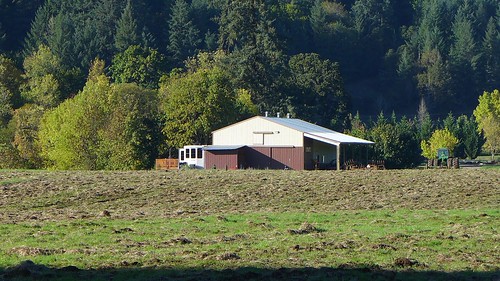
However in this case I'm very close to Springfield, Oregon, which is happy to be where the Simpsons is happening (the cartoon), you can read about whether why. I'm in a destination trailer adjoining a pole barn, but a luxurious pole barn, a museum of C6XTY and other Flextegrity items (as is my place to some degree).
Only 12 were made for a traveling science exposition.
They were originally built 1939-40 and then remodeled in 1953.
More info at:
www.futurliner.com/index.html
I haven't been as conscientious about blogging reviews of all the movies I've seen. Just this week, I took in Dune Part 2 a second time, this time with someone who knows all the books and other movie versions. A librarian in other words. From my Thursday circle. Deke and Dr. D. likewise joined the party.
For Civil War, however, I was by myself way up in the back on the 2nd level in The Bagdad (not a typo) with no food or drink this time (I've partaken self indulgently over the years). The place was crowded and quite a few folks were having their evening meal in the movie theater, a commonplace format in the Pacific Northwest, popularized by destination breweries.
The way the Press hovered closely with the troops, taking close-ups in pitched battle, seemed like a caricature, but I was willing to suspend disbelief given the circumstances. I'm thinking of The Postman here: in an apocalyptic setting, roles from the old days may get distorted and reprojected. Journalists became daredevils on steroids who like to jump back the forth through the windows of speeding vehicles, while the old school journos look on, bemused.
My attitude towards the Jessie character, which some reviewers found "unrealistic" was hey, this is fiction for kids her age i.e. this is a coming of age film and as other reviewers point out, she's our eyes and ears into a violent world to which her elders have become jaded.
These elders have evolved their psychological defenses, but are still mortals, and still crack and/or die or both. The lead character is coming to the end of her ability to take any more, and she passes the torch. There's a kind of wordless transition, as both know this is where that torch gets passed.
The film is about breaking taboos and exploring the psychology of a true militarized battle for control of the White House, although it's unclear going forward what that icon will mean. The film purposely withholds context, creating distance between ourselves, the viewer-voyeurs, more journos, and the senseless action. The premise, Texas + California united against the rest, more or less, is designed to throw us off balance.
One scene suggests a kind of racism is motivating the soldiers, but again, there's too little context to help us puzzle things out. We've fallen into a world of violence without enough internal coherence to help us find a way out of the quicksand. Sound familiar?
At first I imagined turning off the music and heading up to the office, because prompted by an idea. Then I thought: "nah, lets queue it". This is a core movement in consciousness: to put off, to delay.
We get mixed messages at this point, as "procrastination" is considered a primary obstacle to success in life. On the other hand, "think before you act" reminds us of the common criticism regarding a failure to plan, to think it through, to accurately judge consequences, before acting.
One has to think of circumstances. Chances are, when you have a great idea for something, you have to add it to the queue or stack, because right now you're on the bus or mowing the lawn or... a lifestyle based on "drop everything; I just thought of doing something else" would be interesting to study, from afar. Most of us learn to "delay gratification" except it's not always "gratification" we put off.
The brutal truth is there's no time or space for everything to develop in tandem or all at once. Events need to be queued, sequenced, timelined. That's not really a choice. Why does the hourglass narrow? What does "to bottleneck" mean?
So here I am, later, implementing my earlier idea: to write about scheduling again.
We introduce the theory, as from computer science, and the reality, as from getting out of bed in the morning, and combine them in a seamless picture of needing to treat the present like a narrow pipeline, which it is, when we're talking of an individual consciousness.
Time to date myself, meaning this blog post, by syncing with contemporaneous events. Tucker was in Russia a few weeks ago, yakking with Vlad, and has more recently been comparing notes with Tulsi. Apparently these two bots are running the same viral Kremlin app eh? Just kidding. I'm trying to think more like a "Russians under every bed" DNCer (we've seen both Qanon and Blueanon bedevil the two parties).
That Baltimore bridge was hit this week, a couple days ago, by a container ship rendered unsteerable by a loss of power, resulting in deaths and the structure's collapse.
Speaking of conspiracy theories, there's this scifi fantasy entitled The Jew of Linz, wherein Ludwig Wittgenstein, the Austrian philosopher, is really a Russian agent, diverting the good boys of Oxford from their God-ordained duties as servants to the Crown or whatever it was.
True, LW was cosmopolitan and didn't see the Brits as especially civilized compared to other peoples i.e. as likewise capable of genocidal cruelty. He did consider taking up a situation in Russia at one point, but that wasn't considered strange for a European back then, given Moscow's long term role as a Euro capital.
The main theory of The Jew of Linz is that young Adolf and Ludwig knew each other, as they both went to the same boys' school and were but a year or two apart, and that Adolf's hatred for Jews (not a religion the Wittgenstein's outwardly professed, but by heritage...) germinated around his hatred for Ludwig in particular, a hatred borne of jealousy of the latter's wealth and privileged upbringing, not to mention smarts and better looks.
The book makes more sense when you tune in the Spanish Civil War, which many don't, and link in Hemingway. Which side was he on? What is the painting Guernica about? What was the history here?
Wittgenstein, for those less familiar with his story, was indeed born within a wealthy family and he stood to inherit a hefty chunk of that wealth if he were to follow in the footsteps of his father. Actually the expectation was he and his sibs would at least uphold the family name as some kind of prodigy. He could be a great inventor or something.
He moved to England to study aeronautical engineering. Only to discover his love of Logic. He transformed himself into a philosopher instead, becoming a protege of Bertrand Russell.
Philosophy is a profession that does not require lots of money for heavy equipment, or to supply a lab. He chose freedom and mobility over comfortable establishment bourgois living, disbursing his fortune among his siblings and I presume arranging for a meager stipend. He worked as a school teacher in rural Austria for awhile.
I believe his sister paid him a commission for designing her a house (somewhat proto Bauhausy in flavor? I'm not the expert).
When duty called, Ludwig joined his Austrian compatriots to serve as an artilleryman. His understanding of language and how it works was shaped by his time in the military, with its emphasis on giving orders. Language is sometimes about commanding (it partitions into a gazillion namespaces). In these language games, those of higher rank boss those of lower rank. One ends up with an entire form of life, and not just "a grammar" in the narrower sense of the word. But in the broader sense...?
A lot of thinkers vested their intellectual capital in Wittgenstein's first pillar work, the Tractatus Logico-Philosophicus, which Bertrand Russell helped make world famous. The positivists leaned on his reputation as a rising star (like a Tulsi, a new face in social circuits), as did those vesting in the emerging field of propositional calculus, newly vogue within the English speaking world especially, but not exclusively. The Vienna Circle was based in Vienna after all.
So when LW later made a sharp turn, echoing what Richard Rorty would call the Linguistic Turn, prefigured back to Nietzsche at least, a lot of his fans felt thrown for a loop. The plot twisted. Their guy was now off on a new tack, with what would posthumously get published as Philosophical Investigations, a collection of aphorisms that chain together in various expository sections, while criss-crossing a metaphorical landscape, as suggestive sketches.
His points are hard to just say, but are amenable to showing. In this sense, his two philosophies have something in common: they challenge us to "see" in a different way (or to "breath a different air").
His new style of remarking, developed live in front of small cliques of earnest students, was remarkable, rocketing him to fame a second time, but at the cost of losing many from his first wave of early admirers. Bertrand Russell, for example, never got back on the Wittgenstein bandwagon. The new stuff was too alien, and insufficiently calculative and/or computational by his reckoning.
The later Wittgenstein wished to fork the philosophy of language, taking issue with both Nominalism and Platonism, carving out what some would call Operationalism. It's not that words point to either specifics (Nominalism) or general forms (Platonism), but that they don't point at all (despite the appeal of that image). They're closer to musical notes, but shall we say better at inspiring shared mental imagery. Kierkegaard likewise saw music and language on a kind of spectrum, the latter capable of coming closer to God (whatever that meant to him).
The word "horse" associates with what the philosophers call a horse made from "sense data", but as more sense data at the same level, not as higher or lower, not as symbol versus signified. The object points to the word as surely as the word to the object, once the connection is made and "pointing" accepted (arrows, dots and circular blobs being the essence of the "abstract nonsense" known as Category Theory, a more diagrammatic Logic than Russell's or Frege's).
We gain a psychological sense of aloofness with self referential recursivity, and Ludwig is happy to acknowledge our sense of vertigo, but only as a sign that it is language that is making us dizzy, and that's what makes philosophy "deep". It's about the grammar, and the (sometimes novel) gestalts it may induce.