Saturday, March 26, 2016

About Tauism


This Khan Academy classic is worth projecting in a classroom.  I know I would be eager to share it, if back in high school teaching, like in the good old days

I'm not suggesting I'd turn my whole curriculum over to Sal, just that I'm up for sampling choice pieces by authors I admire, Vi Hart another one (good at math video as an art form).  This retrospective by Khan, combined with a polemic at the end, seems a great high point to cite.

The math classroom of the future, in one of its many forms, casts the teacher in the role of VJ (video DJ) in a lot of ways.

Most clips might be of lesser length than Khan's average, although some teachers might invest in a full series of something, with their own time at the podium, as emcee and expert, to apply local spin, relate it to actual students more directly (personalize, make it real, take questions).

It's up to the teachers and lesson planners to glue the samplings into coherent pathways that come together to produce whole concepts.  The teacher may improvise a good portion of the presentation, yet there's a known terrain, the school's agreed-upon curriculum, what it's known for.

The fact remains that "citing video" is a lot like a VJ's job and editing video is the "anime" equivalent of doing "manga" or "stills" (picture Jupyter Notebooks with still graphics courtesy of matplotlib).

In the graphical arts, manga equals comic books, anime equals cartoons.

In mathematics, one needs both.

Sal covers a lot of ground in the above video, looking back, reviewing trig functions, radians, the whole idea of pi. 

Then comes his impassioned defense of tau (as 2 pi).  He uses tau's appearance on the stage as an excuse to quickly review the whole board once again, having set us up the first time with a critique of Euler's Formula, arguably the most beautiful in math, but having a flaw, a blemish.

I don't see any either/or here really.  Use tau in place of pi when it's prettier.  Why not?

However at this juncture it's worth mentioning another low intensity tug-o-war in which tau is involved.  Versus Phi.  There's been some debate about whether tau stands for .618... i.e. the reciprocal of 1.618... 

Some authors use tau for the latter, however the convention I'm most familiar with assigns Greek letter phi to 1.618... and tau to its reciprocal (0.618...).  In English or other romanized ("ascii-fied") texts, we may use phi in place of the Greek letter.  Then comes the low intensity debate whether to pronounce it "fee" or "fie".  A contingent says it both ways.  Maybe one should say "fee" on odd days of the week?

Quoting from Wikipedia:
Since the 20th century, the golden ratio has been represented by the Greek letter φ (phi, after Phidias, a sculptor who is said to have employed it) or less commonly by τ (tau, the first letter of the ancient Greek root τομή—meaning cut).
What I suggest coming from a liberal arts background is we remind students of mathematics that debate is a feature (not a bug) of their discipline and circle these simple examples, in preparation for investigating bigger debates in lessons to come.

When Sal comes back around again, reviewing the board, the trig functions, the unit circle, he shows that Euler's formula may be made even more beautiful.   By that time some of us are ready to vote for Sal's argument, especially with the caveat that pi is not hereby banned.  These constants do not compete so much as reinforce one another.

As for phi versus tau, I think we've pretty much settled on tau being the reciprocal of the golden mean, which golden mean is itself > 1, i.e. is 1.618... or (1 + rt2(5))/2 -- note that I sometimes replace sqrt() with rt2() as I don't want to push the mental model to favor "squares" too prejudicially, given the triangle-friendly balance of this curriculum (Martian Math inspired)).

Especially if tau is going of to do yeoman's service as 2 pi, replacing 2 pi r with tau r in many a Jupyter Notebook, all the more reason, then, to not force it to do double duty as the golden ratio as well.

That'd only add to the post Babel confusion, not that I expect any posting by me to serve as an edict.  The post Babel confusion (not everyone on the same page) is more what I'm drawing attention to, as another lens for viewing math.

Tune in the debates for a change.  Listen to arguments.

Kirby

Additional reading / links


[originally a post to mathfuture, a Google Group]

Tuesday, March 22, 2016

1-2-3 Testing


I just purchased Camtasia for Mac, a product for making screencasts especially.

The above represents my fresh out-of-the-box use of this tool, which I've used in a previous incarnation on Windows.

Saturday, March 19, 2016

Snake Escape!

DSCF3689

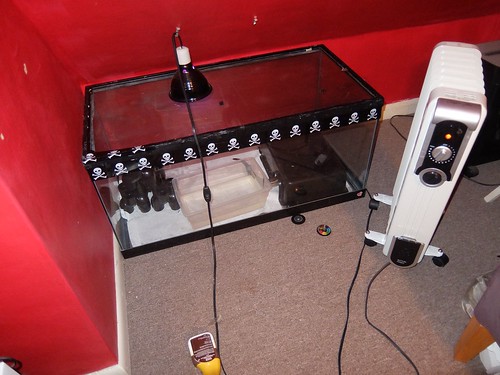
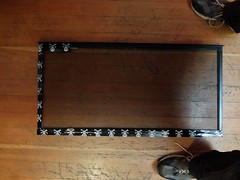
The Achilles Heel of a large snake aquarium is the lid, made of some kind of mesh with seams applied to four edges.  The other five sides are glass, but the lid has to be porous.  If a seam comes loose, good bye secure holding tank.  Barry got out.

Joel passed the news from Lindsey, staying in the Snake Room, that a python was on the loose near the deck door.  I'd cleaned the aquarium Friday before picking up Lindsey at PDX International.

Fortunately for us, I didn't have to turn the house upside down searching and had another much smaller aquarium at the ready that I could at least secure.  Tomorrow I'll need to check with the pet store on my options.  Barry can spend the night in this smaller tank.

In other news, the HTC One M9 came with Lollipop, which sent me into a First World Problem tizzy.  I was expecting Marshmallow.  Upgrading does not seem that hard.  William Brown, a former O'Reilly School student, came by and rescued me from my blue funk, treating me to 10 Cloverfield Lane at The Bagdad.

Sometimes one's karma gets heavy, like in said movie, wherein disaster is the theme.  What if the ETs do come?  They might not be friendly.  How friendly would we be if left to spread unchecked, across the galaxy?  Checking historical precedents, one might conclude "not very".

Those who specialize in the "science of worry" (risk management) try to prioritize what to fear.  Should we be defending against machines taking over?  Depends on what that means.  In many dimensions they already have.

Taking over where drudgery was the norm is not necessarily a bad thing.  But what counts as "drudgery" and so on.  Will humans be smart enough to let themselves not work at meaningless tasks, just to "earn the right" to have a life.

Engaging in useless tasks for no reason is called "not having a life" where I come from.

Lindsey was very calm about the snake on the loose.  She asked how long it had been free.  "At least a day" I speculated.  "Cool" she said.

Walker is feeling pretty weak in the meditation department.  I transferred her to friends in the FNB network for healing.  She needs to recover her strength.

Thanks to Ron Braithwaite for dropping by this afternoon and joining me on an errand.

DSCF3686

Sunday, March 13, 2016

Men's Retreat

WQM Mens Retreat 2016

I managed to overlap with the Quaker guys, plus the Great Bear Camp owners, all in one day this year.  I was rolling out of the driveway at 4:06 AM and back before midnight the same day.

Getting some time in the rain forest, seeing the cougar scratching posts, the new bridge and so on, made it worth all that driving.

Also, the Quaker men were good at telling life stories, talking about what it's been like for them to be dads, fathers, husbands, single men, boys, soldiers or whatever roles they've played.

Thanks to Carl Thatcher and Joe Snyder for setting the tone.  The theme:  Making Our Lives Count.

Tom Wittick reminded me to study the life of Houdini more.  Houdini knew Lovecraft, Teddy Roosevelt, Arthur Conan Doyle.  Tom is a font of interesting historical information.

On the way back from our hike to see the cougar scratch posts (trees whereon cougars sharpened their claws), the camp owner joked he was so off the grid that when he turned on the radio, he heard words the broadcasters took for granted, that he'd never heard.  Like "meme" (on NPR).

We talked about "memes" after that, singing commercial jingles as we emerged from the forest.  "Winston tastes good like a cigarette should".  There's no smoking at Bear Camp.

Wednesday, March 09, 2016

Sound Check


Trinkets are interactive / editable.  We're sharing about them on edu-sig this month.  Naomi and I are the new listowners.

Tuesday, March 01, 2016

Smoking Gun?

So what about taking the show on the road in a Bizmo (business mobile) and sending a heads up to the hinterlands that "code school" might be an option.  Consider a future in IT (part of STEM or STEAM).

I was ready to start with recruiting a couple decades ago at least, and started sharing my designs.   Later I started articulating the vision in my on-line journals (blogs), getting it out there.

A Control Room, or Dispatching Center, would keep the Bizmos busy.  Sounds like fun.

On the road with Global Data (or Global Matrix as the case may be).

However, the GNU Math meme (a pun on "new math") was also deeply tied to those stream-linings in spatial geometry, where we get all those pretty whole number volumes and a quantum leap in sophistication, in terms of being able to think geospatially, with more than just XYZ as a scaffolding (matrix).

We had the IVM (another matrix), we had Quadrays (different basis vectors).

Everything was published, in color, with animations, including to Wikipedia and Wikieducator.

Sources were cited, proofs were made.

Even H.S.M. Coxeter, King of Infinite Space, said the sphere packing formula as worth crowing about.  We did some crowing.

We've seen almost no interest, however, in any of the above.   Search the web, check if I'm right.  No need to take my word for it.  My fellow humans have other priorities, no time for follow-through.

I shared about Quadrays with PSU's Math Learning Center (MLC).

I delivered talks on the concentric hierarchy to any math class that'd let me in (quite a few did), as well as at Pycons, Europythons etc.

But all this flint clicking failed to start a fire apparently.  How soggy was the fuel?

Lets hope some future student of our time, maybe in a hundred years, comes up with some theories, as to why a promising future was disowned and disavowed.

I bet there's some story to unearth, maybe even a "smoking gun".

Thursday, February 25, 2016

Notes From Hyperspace

jupyter_window

Mom uses a walker, I've got some ankle problems (not too severe) and the dog can't walk at all, so our current cast at Blue House might be called a family of Hobbles (versus Hobbits), my lame attempt at some kind of joke.

I've been haunting magazine racks, the real ones, like at Fred Meyer's out by Oregon Clinic just now, where mom was getting an all clear on a lung spot they'd been watching.  Good news.

These particular magazine shelves opted out of of carrying the computer mags, other than one Tips for Windows 10 compendium.  Other Freddies have the comp mags.  Browsing mags is not a new habit for me.

Yes, I'm following the thread about Grunch locking out Uncle Sam while meanwhile planning 5G global telecomms all by its lonesome.  That's per Grunch of Giants predictions.  We used to call it the design science revolution.

Ms. Coulter and "the Donald" are right that there's a kind of "adios mentality" regarding some of the older mindsets.  They're stumping for higher voltage across national borders, more electric fences or whatever.  China goes through these cycles too.

Nationalism pushed to the extreme Coulter envisions has never been tried at the scale any future USA would need to attempt, if truly wishing to seal its borders against those without the proper paperwork.

The only reason the USA gets away with projecting itself as a global power is the hope that gives many a foreign national of one day emigrating.  The more selfish the USA becomes, the fewer the tenable bases of operation overseas.  Supranational corporations know this pattern well.

Mindsets go in and out of style, not as frivolously fast as hem lines go up and down maybe, but over much longer cycles, like Kondratiev waves (remember those?).

One of my students @ < guild /> ; introduced me to Quantopian, which I also stumbled upon while following the Jupyter story.  Jupyter is spin-off from the I-Python Notebook project, refactored to be more generalized, with the Python bits separate.  

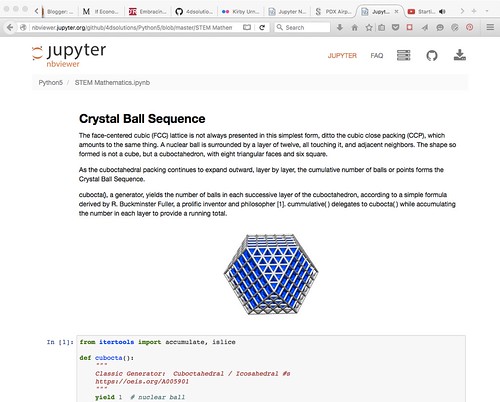
I've been using nbviewer (Notebook viewer) for it's intended purpose:  to render public Jupyter Notebooks given the URL.  I have two examples saved at Github, which I yak about more on mathfuture.

Github also renders Jupyter Notebooks natively, but with more restrictions.  For example to see the embedded Youtubes in my example, one needs to let nbviewer do the rendering.

O'Reilly, a former employer, has been jumping on the Jupyter bandwagon, supporting an Open Source project of its own called Thebe.  Jupyter is experimenting with adding workflows that would enable the kind of work cycle we enjoyed at O'Reilly School.

However when it comes to learning programming, I don't see the Notebook as a replacement for the IDE.  These are two different genres of software.  That's why the Anaconda distro comes with Spyder (an IDE) and not just I-Python Notebook.

I'm upbeat about all this technology and its Open Source foundations and share about it with my bevy of students in California, to whom I recommend the Anaconda distro from Continuum Analytics.  I also share my enthusiasm for PythonAnywhere.

I've had three posts so far accepted for publication by the CERM Academy, a risk management focused cyber-place.

Thought for the day (TFTD):  given we call it "hypertext" as in HTTP and HTML, why not start referring to cyberspace as likewise hyperspace?

We reserve hyperspace for science fiction meanings only?  As a literary device, it explains near-instantaneous inter-planetary travel.

Given we do not really have that physics pinned down, but do have the cyber-thing going, why not loosen the grip of the fiction writers and take a step towards reality?

My friend Gene Fowler, the poet / ex-con who discovered Bucky and Synergetics "on the inside" (in San Quentin), thought "hyper" really meant little more than "wow" or "gosh" and so all this hypertext talk was to his ear was somewhat immature-sounding, like "wow-text" or maybe "golly-gee-wiz-text".

I would argue that thanks to science fiction, our meaning for "hyper" had evolved to a more geometric picture, of how locales could all interconnect, by means of "secret tunnels" if you will.  That image carries over in this proposed "new" application of the "hyperspace" concept.

Anyway it's not about Uncle Sam being "locked out", only not having the right to insist on Grunch dumbing itself down just to please the District of Columbia.

DC is less powerful than Wall Street according to Bernie Sanders, who oughta know, and Wall Street watches the rest of the world in hopes of seeing its quantopian dreams coming true.

A track record of extremist, immoderate policies, both foreign and domestic, has dispelled any illusions that DC is to be given the car keys; too many DUIs, too much driving under the influence of debilitating mindsets.

Saturday, February 13, 2016

Physics Youtubes

Geodesic Sphere

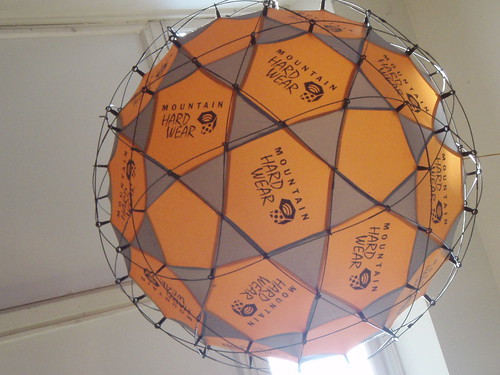
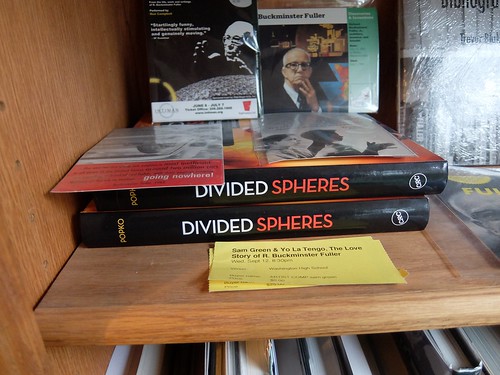
After staring at divided spheres all day, as in carved into triangles (windows), the concept of flux, charge flowing, blowing if you will, like the wind, lends itself to different pictures, than one of squares.

Squares are less happy on spheres.

The lines of latitude and longitude are not about making squares, much as we might kid ourselves.

Oliver Heaviside, same as in Heaviside-Gibbs (they collaborated), gets credit for the cuter form of Maxwell's Equations.

Charge density is the explosive content, which adds up to what emanates through all those triangles (Coulomb, Gauss).  Curl (swirl).  Magnetic flux (Faraday).

No accident early derivatives were named "fluxions" by Sir Isaac.

Here's an excerpt of something I posted to The Physics Learning Research List (PHYSLRNR-LIST@listserv.buffalo.edu), replying to my own post in this context.  One typo fixed ("tries" -> "trees").   

Date:  Fri, Feb 12, 2016 at 9:12 AM 
Re: entropy video


I think polling educators in a subject regarding publicly / freely available teaching materials on that subject is a great way to foment productive dialog.  

I know Entropy is uber-basic to the core concepts the Physics curriculum wants to communicate effectively, so why not sample specimens on that topic in particular?  


What I've noticed is that in contrast to the magnetic field concept, which starts in many cases with the whole Earth being magnetic, there's no generalization regarding the Entropy of the planet (Earth).  Is it (A) increasing  (B) decreasing or (C) the question makes no physical sense.

We've talked about photosynthesis as a means of mass impoundment i.e. the total weight of trees as fixed hydrocarbons (water and carbon both) accounts for a lot of mass in the biosphere, but then the biosphere itself is but a thin film of negligible mass. 

If one were arguing whether Earth was gaining or losing mass on balance, I'd hazard (A) gaining, because of infalling space matter, however miniscule.  More matter is coming in than leaving and that's what matters, or am I wrong?

But what about Entropy?  It's not a physical quantity but a measure in a phase space.

Clearly Earth is *not* an isolated system, quite the opposite:  it's plugged directly into a star for fusion power energy.  So there's nothing in the equations of thermodynamics that says Earth *has* to be gaining Entropy right now, at this point it its existence.  So I see where (B) decreasing *might* be a sensible answer.

In any case, the contrast is stark:  those topics with a "whole Earth meaning / interpretation" such as "magnetic field" immediately use the whole Earth as an example to anchor the concept.   The Youtube videos are notoriously silent on this question of the Entropy of the Earth, that I can find, implying (C) the question makes no physical sense.  Too bad if so.

Divided Spheres

Sunday, January 31, 2016

Code School Syllabus


I sent a memo around at work circling this forty-five minute contribution by Derek Banas as an unpretentious quick fly-through of the Python language, minus some bells and whistles like decorators and generators.

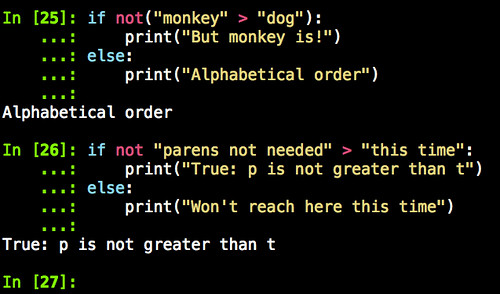
Some of those parens might come out i.e. keywords while, if and not are not callables, no keyword is, but that doesn't mean one can't nestle right up against them, parens keeping the object circled.  Two idioms one might say:

keywords_not_callable

What is and is not callable takes some time to sink in.

Good job Derek, slick editing and nice job slicing off a big helping without worrying about wrapping our minds around each and every keyword.  That would come with follow-up clips, now that we've enjoyed a quick intro.

Additionally, I'd like to recommend the clip below for it's well-thought-out and communicated views regarding what languages to tackle in 2016.  A good list to choose from, but there's really no reason to limit the field to ten, other than to keep the attention span of the viewer.  Like, Scala and Clojure are both warming waters I'd add.

Put another way:  there's room for more than one Top Ten list.  This is as good a list as any.  I like having Python in the best technical schools but yet not having to defend the number one position, stressful in any case.  I need to take a look at C++11/14 it sounds like.  Britannica's 11th was one of its best too.


Saturday, January 23, 2016

Cyberia: A Next Space

I was pleased to watch a goodly portion of this Southern Methodist University professor's lectures, on tap at the local library, Belmont branch.  He builds in the thesis that the easy availability of space for expansion is integral within the American psyche, as he defines it.  How much is that changing now?

Rather than give a facile answer, I do say we need to factor cyberspace into the picture.  The fight for land and property was often to get a bigger soap box and command of push media such as radio and TV broadcasting networks.  The way to have a voice heard was to emulate Hearst or someone equally powerful.  Cyberspace lets the hoi polloi, me one of them, short cut around all that.  We stand on the shoulders of giants.

In other words, I'm suggesting that Cyberia, which Americans (Amerikanskis) helped to pioneer is a factor, that this kind of space is still real.  People wanted a place "one mouse click away", not buried behind a few fat cats, a few hogs.  We're close to getting there.  The URLs are turning our pyramids into local anomalies within the graph, blips on the radar, no longer so overbearing or in the way of our having a voice as a people.

Tuesday, January 19, 2016

For David Bowie

for David Bowie
:: a little man who fell to earth ::

Sunday, January 17, 2016

The Berlin File (movie review)

I chose this pretty much at random from the foreign country shelves at Movie Madness.  I spent probably as much time with The Making Of.

I was maybe curious how a Korean-made film would work with Germany, but it wasn't that hard to make a seamless blend, as Korea, like Germany, has taken the full brunt of the Cold War.

I recall being in Berlin myself when the wall was still a serious obstacle to one's freedom of movement.  Our train from Scandinavia was through East Germany to East Berlin whereas our US passports granted us access to the West.  Dad liked crafting obscure itineraries like that.

Director Ryu portrays a divided Korea fighting a Spy vs Spy war against the back drop of Berlin.  The budget was about $10 million.  It's a full-blown award-winning international action thriller in style, but without the distribution of say a Miramax.  The film was made in 2012 on location (in Berlin) but also in Latvia and Korea.  Getting the weapons to match in all three places was something of an ordeal.

The director imagined the film as contemporary to the point of futuristic by a few years and didn't want any dated ordnance such as Korean audiences were already used to.

As a non-Korean, I miss a lot when it comes to catching any nuances about language and am glad the Making Of movie was explicit about that aspect of the movie. The elite / elitist spies on the North Korean side apparently spoke with an accent that signified their higher social class, reflective of spoiled brats from oligarchical families.

The paradox here is the Communist Republic is ideally class-free (the US value of "equality before the law" i.e no special rights, by dint of birth, is not that different), so having the spies wear their social class on their sleeves, so to speak, made for a more curious effect in the mind of a Korean viewer.

Apparently language usage patterns are by now different enough between North and South, that the South Korean actors found affecting realism a challenge  (the "bad guy" worried about getting it wrong).  Someone in the background was advising for authenticity.

Again, I missed a lot, though I did catch the reference to John le Carré (the book passed between NIS and CIA).  Indeed, towards the start of the film I lost track of who was who at first.

Being a spy requires keeping track of plots within plots, with the story always taking surprising twists and turns.  An inability to either hatch or follow intricate plots is a self-disqualifying trait if you wish espionage as your occupation.  Those eager for such a career path need films like this for practice.

As one of the narrators points out (the director himself as I recall), the story is about people with concealed identities struggling to find their way in a foreign country and getting left out in the cold, as the wheels turning in the home country power centers get out of sync with what's going on in the field.  Heroes are abandoned or betrayed by their own headquarters, a common theme in spy novels.

I was reminded of The Americans, the TV show, because of the married couple under cover.  This Korean couple has given birth to no kids yet however (spoiler alert).  Also, Germany is not as much a direct target of the North Koreans' spying, whereas in The Americans the host country is also the primary country of interest.

I was also reminded of Farewell, for its centering on a Cold War fought by embassies in a European capital, though not Berlin.

Saturday, January 16, 2016

From a Quaker BBS

:: "guilty dog" compilation ::
 Comment by Kirby Urner yesterday on QuakerQuaker, one typo fixed, links added:

I suppose a starting point is to what extent do we think guilt is built-in chemically, like a hormone, versus cultivated as an institution, a complex social practice, like a game.  I know people like to post Youtubes of "dogs looking guilty" however I sense some projection.  I'd say the basis for guilt is in mammal behavior but full-blown guilt is reserved for those with significant linguistic abilities.

In Nietzsche's code of ethics, any grudge-keeping, ax-grinding or resentment of any kind within oneself, is a troubling sign of mental weakness, a loss in personal power, a kind of retardation.  So in Will to Power and other works, the aphorisms and meditations are geared towards stamping out such things, as too base for a true Übermensch or whatever.

This code of ethics later surfaces in the San Francisco-based "est Training" wherein trainees were sternly warned against any "putting up with" or "trying to change".  Guilt came in for a drubbing as something slavers used to deter our exercise of true freedoms -- something like that (I went through a few of these est Trainings in the late 70s, early 80s, including with overseer responsibilities as a Centers Network volunteer -- like with Quakers! -- but each one was different; it's called The Forum today (Landmark Corporation)).

Tuesday, January 12, 2016

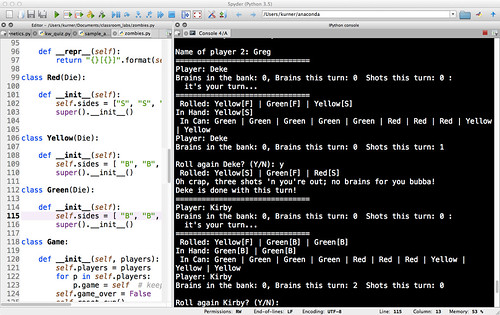
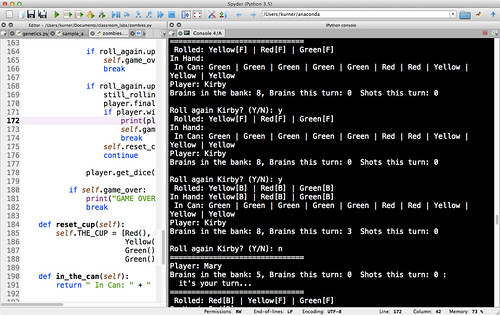
Zombie Dice

game_site

zombie_dice_2

zombie_dice

Monday, January 11, 2016

Library Science

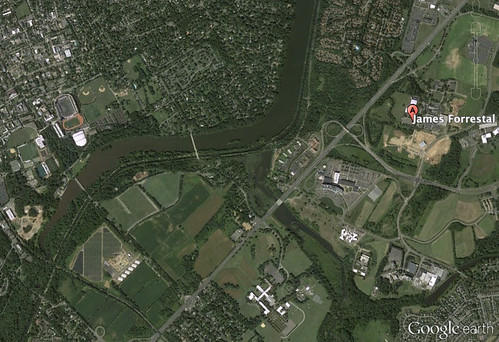
forrestal_campus
work / study site (Princeton campus left, Route 1 center, A = where I worked

Sometimes I forget how, over the years, my interest in Library Science has materialized.  I'm remembering sitting in Firestone getting trained in rules for alphabetizing the card catalog.  Reading in Knuth's TAOCP volume 3 brought that back to me; he shows some of the rules applied, for keeping publication titles in sequential order.  Not as easy as it sounds.  Finding books in a library is a skill, not deprecated, even with URIs in the picture.

At Georgetown Library, I filed Arabic language titles back to their shelves, alphabetically.  Yes, I had studied Arabic, but had not learned much more than the alphabet, enough to interpolate book titles.  I've since tried to master Hiragana and Katakana alphabets, associating them with phonemes.  My smartphone helps me.  I'm not that great a student.  Learning languages easily is not one of my gifts.  I've often wondered about what kinds of immersive videos and hands on games might accelerate the progress of an average joe like me.

Wandering through open stacks gives me a charge in some way.  A commercial bookstore like Powell's on W Burnside will do the same.  I'm not talking about mystical healing powers so much as the excitement of cortical matter, or perhaps some glandular elixir is released -- it all depends what section of the bookstore one is perusing at the time, as to the explanation for its galvanizing powers.  I've been an habitual browser of bookshelves and count myself lucky, and in good company, for that reason.  Hypertext aided my browsing with dream-come-true tools (research tools, art supplies, raw "metaphysical materials" -- cyber-stuff -- of many flavors).

So that's at least two jobs in the library.  My time in Firestone might have coincided with my 1985 return to Princeton where I ended up working in a small business back office doing clerical tasks.  H.P. Clayton's on Princeton Square.  Or was that a summer job.  I also worked as a janitor at Forrestal Campus, cleaning up around the Tokamak makers (a fusion reactor prototype; I never saw it assembled just watched workers make parts for it).  Forrestal is close to the main Princeton campus, by car at least, along Route One.  I should Google Earth it.

Saturday, January 09, 2016

Eleven Nations

DSCF2521

This Voice of America website / blog denied my comment a public presence.

I introduced myself as "third culture" (Rome, Philippines...) and finding America weird, not unlike Portland.

But no one is talking "Civil War" Marcus (real name?) or rather, we Left Coasties aren't trying to start a fight.  Like we won already OK? :-D

As a Cascadian, I was simply grateful for WDC's retreating self-importance.  Why not?  Pacific Rim wasn't born yesterday right?

Anyway, a fascinating discussion.  I'm enjoying the science fiction aspects.

Saturday, January 02, 2016

What is JQuery?

Remember the Browser Wars?

Back in the day, pre Web everywhere, I was typing odd-looking graph theory describing hypertext (the Web) and mailing it to the Library of Congress for some reason.

I was living in WDC and exploring their collection at the time, though it's hardly "open stack" like Firestone (Princeton campus), which would entail more monitoring.  I was galvanized by the idea of hypertext and not having it, felt like a palpable absence.  CERN felt it too.

A lot of us saw hypertext coming over the horizon (Ted Nelson a main avatar), but the devil is in the details, meaning W3C and Mosaic, the first freely downloadable graphical web browser, got the ball rolling on a particular implementation centered around Hypertext Markup Language or HTML.

Netscape followed shortly, with its Mozilla engine (the core of FireFox today) and the Browser Wars had begun, each vying for supremacy, though for what reason?  What was this War all about?

Zooming out even further, these types of wars boil down to whether a lead company or cabal will set the standard, leaving others to play catch-up, or whether a global standard gets established with companies agreeing to write to that standard.

Both patterns make sense, although the latter one sounds less cut throat i.e. more civilized.  But sometimes "groupthink" or "designs by committee" are less than optimum and a pioneering company trail blazes a better way.  More curious things have happened.

JQuery enters the picture when the Browser Wars have mostly ended, with W3C committees having settled the standards all major browsers now follow.  We're in a time of relative civility.

However the legacy of the Browser Wars lingers and JQuery provides a logical layer above the battlefield, masking off some of the scarring inconsistencies.

For example, the JQuery event wraps the original event as an attribute, but for the most part the JQuery user remains blissfully oblivious to browser-specific details.  One ring to bind them all!

However saying JQuery detects and handles events bleeps over its core design, which is to select and filter based on HTML tags, classes, ids, attributes, and then apply changes against whatever crop is harvested.

One might select all paragraphs, or some div with id="special", and then apply new css, such as adding a class attribute, specifically to these elements.

Now, knowing what all that means requires knowing the shoptalk of tags and elements, HTML and CSS, which we may have neglected to consider as part of Language and Communications at the high school level (Unicode etc.).

Our curriculum is full of holes.  Many school systems have promised to address them.  Some will even deliver on their promise.

If you're looking for a fast way into JQuery and have a training budget, I recommend jQuery Essential Training with Joe Marini on Lynda.com.  His presentation is well organized, moves at a good clip, and is a great introduction to this JavaScript tool, appreciated by many a web developer.

Tuesday, December 29, 2015

Wanderers 2016.12.29

Dance Teacher

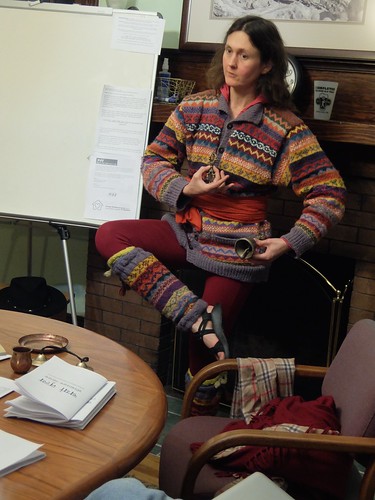
Lindsey Walker is discussing her research in Newar Charya Nritya, a form of meditation centered in dance.  The fact that Portland has a Newar temple on the same city block as the Linus Pauling House, does figure in to this narrative.

She's tackling the Newar language, in conjunction with the Buddhist tradition, as the priests and gurus who know the disciplines tend to be native Newar speakers.  Many of the texts are in this language.  Newar is Sino-Tibetan, though rendered in Sanskrit.

She's working through Oregon State University.  Charya Geeti is the musical aspect, which she's studying through the Anthropology department.  She's also doing religious and international studies, with a boost from her credits at Florida State.  Kinesiology looks at the dance aspect.

Quakerism, as I've experienced it, includes a cast of mostly women who appreciate the relevance and power of movement, and they would lead workshops in this area, but if you want deeply rooted ritual practices, Vajrayana Buddhism is where to look.

The masters of Charya Nritya realized back in the 1950s that their at one time semi-secret practice was in danger of dying out.  A few experimental solutions were devised and Lindsey is involved in some of them.

The North Indian raga system is complex and provides the basis for Charya Geeti.  The other basis would be the religious texts themselves (the "lyrics" or "verses").

We had some interesting discussions about low budget travel, such as Lindsey was doing on her first trip to Nepal.  She actually slept nine days in a forest, in addition to staying with random strangers who offered her shelter.  Barry reminisced about his Peace Corps experience.

Lindsey brought examples of the texts she's working with and sang a few notes.  We had some professional musicians in the audience.

Students of Synergetics would do well to map the dorje (or vajra, as held by Vajra Satto), to Fuller's "bow-tie" icon.

Thursday, December 24, 2015

Hannah Arendt (movie review)

Tara found a nifty wall projector I'd somewhat misplaced (as in lost) and the original plan was to hook that up, renting from Amazon (not my habit).

I'm trying to get out of my box, shake loose old habits.  However, just getting the DVD from the Germany section at Movie Madness proved simple as pie (I also made pie, x2 pumpkin) and we ended up watching Hannah Arendt on the Sony Trinitron, not even an HDTV.  Talk about stuck in a pattern (but one that works!).

Besides, if I'd rented it on Amazon would I get the lengthy extras, including the panel discussion at Deustsches Haus / NYU?  Maybe, I dunno.

Heidegger has been bubbling up in conversation.  I think I'll develop my narrative around Hannah and Ayn Rand as a kind of dynamic duo.  Checking with Google, I see that's hardly a new idea.  I'm entering a well-plowed field.  Excellent.

I've been chipping away at my own self portrait, the better to fit in as a puzzle piece.  Whereas I make direct ties to Vienna Circle figures (Ludwig Wittgenstein and Karl Menger for example, and lets throw in Jung and Freud), I'm somewhat distant from the Continental line, coming from Princeton, though my thesis adviser, Richard Rorty, did help me to tune in.  Walter Kaufmann was happy to send Heidegger to the back of the queue, in terms of readings we might choose.  So why not approach those thinkers through leading women instead?

I hadn't realized the Eichmann trial in Israel had occurred on my watch, much less that Hannah was there for the New Yorker.  I was still somewhat oblivious at age two or whatever it was.  By the time of the Kennedy assassinations, I was tracking, and when we got to Nixon's bombing of Cambodia I was fully aware, though still just in middle school.

So Hannah and I partially overlap on the timeline.

The movie makers underline the challenge that adds, as many in their audience will, like me, have lived through this period.  Affecting realism is harder when the judge has a practiced eye.  We know what a phone sounded like when ringing.  They got it right.

I think I'll add Margaret Fuller Ossoli as another thinker here, on assignment for the New York Tribune at one time, then editor of Dial, and Dora Marsden, the British "anarcho-feminist".  How these dots connect is for later.  The movie got me in the mood to link to thinking women.

Saturday, December 19, 2015

Wanderers: Winter Solstice 2015

Solstice 2015

Yesterday was high stress for me, for the same reason it is for many this time of year:  the miracle of jet travel and the possibilities that opens, for missed and cancelled flights (and of course disasters and broken hearts).

In Tara's case, car troubles and an optimistic schedule left her in tears at the ticket counter in Dayton, Ohio, with me likewise calling United for options.  We lucked out:  she arrived through Chicago instead of Denver, at 10:28 PM instead of 1:30 PM, same day, same ticket.

Lindsey, another former denizen of Blue House, now a full time student at Oregon State, doing her field work in Patan (Nepal), likewise had last minute issues, with China Southern suddenly deciding to yank the  Kathmandu-Guangzhou flight.

She was able to re-vector through Bangkok and Seoul just hours before flight time.  Patrick and I met her flight from Seattle.

So for me, December 18 was a milestone positive day with the Christmas gift of family and friends showing up as I'd hoped.  We celebrated the solstice at the Linus Pauling House.  Deke joined us as well.

Lindsey, forty hours traveling, ended up crashed out in the living room and Tara was still in route on UA 518 so neither was at our Wanderers party.  I went from the party back out to PDX, bursting with gratitude that I would be reunited with my daughter.

We had a classic solstice with Glenn bringing his signature chili, Barry the ribs, and I brought along my signature lentil dish.  Bob Boreman played some excellent electric jazz guitar.  He's been practicing a lot.  We were impressed.

Also going on down the street:  what used to be Blue Butterfly, run by Micheal (also at our party) is now called the Fernie Brae and was showcasing a new edition of Alice In Wonderland.  Dave DiNucci has played a role in this literary project and reminded us of this interesting cultural opportunity.

The pictures are all new (though in a period style), by David Delamare, one of the gallery's top artists.  The text has been revisited as well, in light of scholarship around this original tale by Lewis Carroll.  Deke was given some prints for his bedridden friend Suzanne Pardue.

Michael is now based in Bali, bringing his Southeast Asian wares to the basement of Gold Door for selling during the winter season.

Later today, Alexia, her friend John, Tara, Lindsey and myself, plan to see the new Star Wars at The Bagdad.