Thursday, April 30, 2015

Back At Work


I had full queues during the conference and the week prior, yet it felt a lot like a vacation, in the sense of so many experiences per minute, a kind of time dilation.  We got a lot done.  Having MySQL move to INNODB as the default engine is not a bad move, but the ripple effects were boat rocking in our little world.  ENGINE = MYISAM solves the problem.  The DBA track uses INNODB anyway.

My vector today was through Salt Lake City back to PDX.  I dined at Beaches, choosing a Cesar Salad (small) and seafood chowder, both good.  And IPA for a beverage, my standard.

The TSA folks were really professional in St. Louis.  I had a badass knife in my satchel which I thought was maybe OK, given my ethnic craziness, black Stetson hat ("gun club"), Fettuccini Alfredo colored coat.  The TSA pros are thinking WTF and offer I can check the knife instead.  She escorts me out, but first I express regret at tossing the after shave (bought for $1) and they fish that out too.  So polite and well trained.  I checked the knife and came through again, a sweaty mess by this time, so I bought a T-shirt on sale at a concession and voila, good to go.

On board Delta, I finally discovered the WiFi had free stuff and started watching Maze Runner, but my battery ran out before we did much.  Some poor dude got driven off, then Samsung tablet said good night.  Great machine, no complaints.

Hilton was fantastic as well.  Good job St. Louis with that white elephant post Train Age station, Union Station.  Portland has a tiny one, still functional.  Yours was a goliath.  So why not turn it into a destination in its own right, with a DoubleTree by Hilton?  Not a bad idea.  Hard Rock Cafe and everything.  I salute the city planners on this one.  Bold.

Speaking of bold, City Museum is truly pioneering and I stand in awestruck silence, before diving back in.  I made it down the multi-story slide (from 10th floor the 4th?) only once, whereas my co-workers, young and slim, scampered around the circuit at least thrice.  I squeezed through one of the airplanes and went down a couple other slides, including that "Monster" one to the foyer.

Cities want to be proud and it hurts when the world sees one as off course.  Baltimore is hurting.  Her Mayor was on CBS this morning and spoke directly and with heart, in my view.  I respect these great cities and what they're trying to do.  Portland is one of them.

I used TriMet back from the airport, the corollary of Metrolink in St. Louis.  Both are highly professional operations.  That doesn't mean I don't have critical thoughts from time to time.  Being a fan of an institution doesn't mean being a mindless zombie.

Wednesday, April 29, 2015

Rethinking Equity

I'm in a talk entitled Rethinking Educational Equity in the Digital Age, which will focus on Albion School District, I'll find out where that is.

Someone from DETC (now DEAC) is here, who Debra (our school principal) caught up with a little on Monday at the Awards ceremony (we eventually decided not to continue seeking DETC accreditation in order to free up more resources for our pioneering work, which does not fit any cookie cutter mold).

Another attendee works with tribal schools in the area, meaning the N8TVs, who also connect to overseas universities, being sovereignties in their own right.  We're a small, intimate group.

There's a tendency to dump technology into a school and leave it to the locals to figure out what to do with it.  Laptops and tablets are exciting, but when the mindscape is impoverished, taking advantage of the tools is far from an automatic process.  Intuition supplies the real upgrades, combined with practice, trial & error.  Error is expected and a part of the feedback cycle.

The introductory Youtube was uncited, I wonder if I can find it anyway.

Albion is in Michigan with 55% drawing down less than $33K.  We're talking about Flint and so on.  Much of the car industry died a flailing death around here.  Nearly 1 in 4 of Michigan children lives in an impoverished household.  A proud school district divvied up the schools, moving 9-12 out of Albion, leaving only K-8 to take advantage of the Title I grants as a feeder.  Marshall High is mostly privileged, with kids bussed in.  K-8 inherited the building (with a swimming pool) that used to be Albion High.

ESEA passed in 1965 by the Johnson   Dinner as well as lunch is offered, as many kids would prefer to stay at school versus return home in the evenings.  Families may prefer that too.  They have a Prometheon board, a music lab, underwater robotics, slate tables, drones, video editing and conferencing equipment.

STEM is a focus, with "STEM Geekends" a kind of Saturday Academy.  Parents get involved in this sometimes, joining the kids in playing with all these great toyz.  Many kids who wither in the classroom, thrive when allowed to develop skills.  One of the 8th grade girls, with "issues" being stuck in a chair, became the video conferencing avatar.

Any student who completes grades 6-8 at Albion also has a ticket to Albion College.  That works as an incentive.

"Education is the pathway to opportunity" according to a prevalent ideology, advertised as a gap closer.

Geeks are attracted to work in schools with lots of toys.  Getting some server racks in the school, and allowing multiple operating systems for those eager to dive into C language underpinnings, is what Earlham College offers.  That's prototypical of tomorrow's high school perhaps.  With distance education, it's easier to bootstrap the student body.

Distance Education allows over-achieving kids, frustrated with being held back, to move a lot faster if given the opportunity to do so.  A primary function of classroom based learning is to discourage both ends of the Bell Curve and pander to the middle.  The curricula they need are out there.

Sunday, April 26, 2015

Climatron


Friday, April 24, 2015

Quaker Communications

The bold faced quotes come from:

FRIENDS AND EMAIL: Guidelines, Concerns and Reflections, offered by the Committee on Ministry and Counsel of Claremont Friends Meeting, revised and approved in CFM Meeting for Business on 27 January 2013.

My thoughts are interspersed.  An earlier version of this posting was share via the npym-it-discuss listserv.

===


Email is a poor medium for corporate discernment.  Lines on a computer screen or down-loaded page cannot convey the full range of communication —facial expression, tone of voice, body language, etc.  Thus emails can easily be misunderstood.

The thing about written communications, of which emails form a subset, as well as books, pamphlets, scrolls, documents of all kinds, is they allow us to interact with people who may have recorded their views long ago and now don't get to have facial expressions or body language.  John Woolman,  George Fox...

Telephone communications privilege the still-living.  Organizations with strong staying power do not dismiss the elders / ancestors so easily i.e. we still read and attend to past writings.

Face-to-face meetings are even rarer and even more of a privilege.  I really appreciated our getting together in Tacoma on April 11, but then that cost huge amounts of time and fuel.  Any lean / efficient organization with a dispersed crew cannot rely on such expensive events occurring often.

My day job is the same way:  our crew is all over the country and we're lucky to see each other but once a year.  I'm at Earlham College at the moment thanks to my company paying my way to-from St. Louis for a conference, which we use as an excuse to also meet as a company.  I came out a week early and rented a car on my own dime so I could drive to Richmond IN to visit my daughter.

My day job involves having Skype open so we can have a scrolling chat window, plus we have voice meetings, like conference calls, every week.  I meet with my super by voice once a week as well.  I can do my work wherever there's WiFi.  We use email a lot, including to / from groups (named CCs).

The telephone is a 1900s invention that revolutionized everything and Friends now take conference calls for granted.  They may be less experienced using written communications, but journaling used to be a primary way for Friends to communicate across time and distance.

I recommend that Friends seriously encourage blogging as what we used to call journaling or keeping a journal.  These were kept with the idea that others would read them.  Friends stay accountable through journaling, a form of written communication.

What I don't appreciate about the one-sided Guidelines is the disadvantages are primarily a result of unskilled use (we don't get better but with practice) with the conclusion that skillful / sensitive conference calls should take priority where corporate discernment is concerned.  This assumes high level phone skills.  The guidelines stack the deck:  experienced phone users trump inexperienced writers.

No individual takes responsibility for this view.  It gets encoded as some Meeting's guidelines and before you know it, those attitudes and biases will have spread to other Meetings, unchallenged and anonymously promulgated.

If more of this debate were done by journaling (in the blogosphere) we would see more clearly who was behind what viewpoint.  Quakerism is not about hiding behind masks of anonymity.

Whenever possible, corporate discernment should be conducted face-to-face, or when that is not possible, by means of sensitively-managed telephone conference calls.

I completely disagree with this conclusion and think the authors of this document spend way too little time discussing how the shortcomings of email, such as misunderstanding the writer's meaning, or not being able to open attachments (phone calls don't have attachments), may be addressed.

If the meaning of someone's communication is unclear, ask for clarification. Get into a dialog.  Others may jump in.  The process is asynchronous and allows for reflection and consideration.  It's also more accountable. 

So in my view listservs are more ethical than conference calls on many levels. 

Those dismissing emails and listservs in favor of conference calls should not be given free rein to dictate these views as somehow already a fait accompli in our Faith & Practice.

Backgound:  M&O clerks in the NPYM region are preparing to have a conference call on this issue which may lead to strictures ("guidelines") that put a damper on listserv use, whereas I think Quakerism is happier with the written word than with ephemeral telephonic vibrations in the ether, not anticipated when Quakerism was forged.

Sunday, April 19, 2015

North Circuit

North Circuit
:: north circuit ::

Quaker business took me to Tacoma Friends Meeting, originally constructed as a church more than a meetinghouse.  Friends shared the building at first, then purchased it, and still share.  I'd never been here before.

About 25 of us met that April 11 from all over the region as what's called the Coordinating Committee for North Pacific Yearly Meeting.  Clerks of Outreach and Visitation, Peace and Social Concerns, Finance, and Information Technology (a committee I co-clerk) were among those present.  I sat next to Linda, NPYM Secretary, comparing notes on laser printers given her office needs a new one.

One highlight from that meeting, which I didn't include in my notes (filed on npym-it-discuss) was our brief discussion of David Chandler's work during the PSCC section of the meeting.  Rose Lewis is quite aware that the Multnomah Friends, like Humanists of Greater Portland, have been grappling with a concern of many Mormons as well:  the lack of credibility in the NIST report on what really happened on September 11, 2001. 

The NPYM PSCC is looking at ongoing Racism as a number one issue.  Multnomah's PSCC hosted David's presentation on April 12.

I continued on north that day though, visiting my Uncle Bill (actually my grandmother's sister's child, both my parents having ended up only children; Carol had a brother who lived until his teenage years then was killed in an accident).  I was missing much of the rest of the meeting, however Clint Weimeister, our web wrangler, was also representing IT Committee so my continued presence was not strictly required.

Bill was turning 90 that Monday and I was eager to see his new digs, which feature a comfortable reading chair.  Bill is pretty interested in history and has written a maritime history himself, of the submarine business in the Pacific Northwest even prior to World War One.  He had a history of the US Navy with a long passage about Quakers I photographed, their relevance having to do with ship-design skills.  Getting pacifists to buy into building warships required some twisted logic but such is in plentiful supply.

I joined Bill for supper downstairs from his apartment and might a gentleman in his 90s of Chinese heritage who had learned English from Canadian missionaries.  Given his accent was understandable to American English speakers, he'd been assigned as a translator for the US military in Burma during World War Two.

I pressed onward with my journey to a destination oft associated with Thanksgiving in these blogs.  I was driving "maxi taxi", Lindsey's escape pod from Savannah, signed over to me as part of our deal.  This 1997 Nissan Maxima is still going strong at well over 200K though sometimes the fuel mix is too lean and she conks.  She took me over the mountains to Terrabonne and thence to Big Bear Camp on the last long drive.  Lindsey herself is in Kathmandu Valley.

Les showed me a genre of Youtube I'd not yet tuned in:  Korean eating shows.  A single individual anchors the meal, chatting with the viewers while consuming large amounts of food in a single sitting.  He also had transferred his love of flying, as a former ultra-light pilot, into an eye-in-the-sky DJI Phantom Vision+ 2, a sophisticated device with on-board camera.  The family is looking at colleges, Ruth being a few years younger than Tara.

A highlight of the trip and a satisfying segue from watching Koreans eating, was our visit to a Korean BBQ in Lynnwood.  We cooked the meats right at the table, served with many side dishes.

The next day, I briefly toured the much expanded Angle of the Winds casino and hotel, where Les works in IT, on my way south back to Portland.  All in all, a productive experience.  Happy Birthday Bill.

Friday, April 17, 2015

Lifting a Boycott


:: esoteric campaign ::

Related reading on math-teach.

Tuesday, April 14, 2015

Horns (movie review)

This was in a living room setting in a home with Netflix.  Horns came up under Science Fiction / Fantasy as the category, but I'd say it should be at least cross-indexed under Horror.

Indeed, it's a classic Horror film in that psycho-sexual complexes get stirred up in the viewer with lightning rod characters in need of punishment (a computation), such that maybe the experience of watching the film is both enlightening and cathartic.

That's the theory, and this one had four stars, but we agreed at most two were merited.

But then how "good" a movie is, or how "good" the acting is, are just a couple axes, perhaps encouraged by the Academy behind those awards.  One might learn plenty from films that aren't really good at all.  Indeed, if needing some quick and dirty anthropology, new to a culture, sampling its lowlife, bottom feeding, may be your best bet.

The hero grows a pair of horns and become daemonic.  He becomes a kind of superman like Ken Kesey.  People tell him things.  There's a triangle.

If I wanted to intellectualize about this film I'd talk about all the allusions to other films, in terms of plot lines and stories, whether those were intentional or not wouldn't matter.

I didn't get the sense it was really helping or healing that much, in that it seemed to assist in the spread of homophobia memes more than counter 'em.  See if you think so, if you have any appetite for Horror.  Remember, four stars on Netflix.  A fantasy.

Wednesday, April 08, 2015

KirbAcademy

:: extrapolates to tetrahedron ::

:: guest speaker ::


Numerology: note the 24 is 42 written backwards! 24 is also the volume of the 2-F cube in the Synergetics concentric hierarchy.

Saturday, April 04, 2015

May Day Planning


Tuesday, March 31, 2015

Welcome to Wellville

Wellville

I like the concept of Wellville, which rewards communities wherein healing and health are considered normative, and health improvements are assessed by objective criteria.  The concept is reminiscent of the BFI Challenge.

Joining Wellville mainly means signing a contract to be open with data, though not to the personal level.  Whether one's community actually gets well or not depends on making the necessary investments, which Hiccup helps catalyze.

The seed or pilot projects, were a result of an application process.  Acceptance does not result in either paying or being paid, only in agreeing to be a part of an experiment, which involves being open with data.

Participants learn they're not helpless to self organize and implement strategies (such as healthier school lunches) and measure progress themselves (lower diabetes).  Just because you're not one of the original five doesn't mean you can't learn from paying attention.

Sounds simple, but grass roots self organizing tends to sound simpler than it is.

Esther Dyson has an impressive resume, and although she's oft introduced, as tonight, by the CEO of Mentor Graphics, as the most influential woman on the computer scene, basically she's a very influential and respected Elder, all gender talk aside.

She's a stellar activist and is not afraid to apply considerable mental skills.

People rally around her based on track record and discover their own ability to manage wisely.  She has an ex Marine as a sidekick on her Wellville project and he was on stage as well, fielding questions both from Terry Bristol (ISEPP president) and members of the audience, including me and Steve.

Clatsop County, on the Oregon coast, was one of the five districts of under 100,000 chosen to showcase results.  People are excited, but that's maybe hard to measure.  Audience members asked about sustainability and follow-through.  Many such efforts dissipate, good intentions notwithstanding.

Whether health indicators improve in the next five years is the critical question and the project is in an early phase, though beyond just starting.  Their leveraging existing communities and networks, not starting from scratch, is one of the factors in favor of success.

I'd been talking earlier today about the brain drain from the USG to the private sector, as if maybe I thought that was bad, but lets not forget the NGOs, which typically do what governments might have done but need nonprofits to really do for them.

In synergy with government, NGOs and their "nonprofit corporations" go a long way towards taking the edge off capitalism and making it seem possibly socially responsible.

Where corporations meet community wellness is where the rubber meets the road and Esther is certainly smart enough to see that.

I was proud of ISEPP this evening as it was living up to its Public Policy moniker, giving the microphone to stakeholders to ask probing questions about pilot projects.  We did a good job asking serious and challenging questions (me included) with some making statements.

I could tell that Wellville was getting a boost.  Portland was turning its wheels, and not without getting some work done.

I only half expected to wedge in for the dinner, as an expendable director in the process of bowing out.  I make the dinners more well attended if sparse but tonight our sponsors and funders were enthusiastic for more schmoozing time and I gracefully took my leave, swinging through Rogue Hall on my way back to the car, having had drinks with Steve Holden at Melting Pot both after and before.

The question is how to make public health -- not just expensive intervention (e.g. bypass surgery) against a background that takes ill health (poor eating habits, lack of exercise) for granted --  profitable to major players, such as providers of factory-made food stuffs.

Steve asked if poverty or inequality wasn't by definition the metric (good question) whereas I was more focused on whether organized religion would get between young people and wise advice on lifestyle planning.

How does one teach "the middle way" i.e. avoiding excesses, while not becoming some kind of abstinence zealot (another form of addiction)?

It's not like we don't think these questions are unanswerable.

I'm glad people are serious about even taking a look.

Clatsop County has a shot at better health and that's worth shooting for.  I wish them my best and offer my congratulations on being accepted into Wellville to begin with.

Saturday, March 28, 2015

Some Science Fiction

The Dog Planet

Per science fiction, or mythology as we used to call it, somewhere near Sirius, on the Dog Planet, the dogs live as long as we do. 

But because of relativity, and black holes, the dogs we get as projections, echoes, on Planet Earth, don't live nearly as long as we do. 

And yet when they get older, faster than we, they may also get wiser, so we have much to learn from them, thanks to relativity, and science fiction.

One maybe doesn't teach an old dogs new tricks, but they learn them, from whom it's hard to say.

Sunday, March 22, 2015

Insurgent (movie review)

If we have schools in the desert, remote villages, with time to watch films, we'll do Divergent and Insurgent as they're meant to be seen:  back to back, not a year apart.  Readers of Charles Dickens had to put up with getting his stories in magazine serial format, whereas nowadays one plows through a whole novel, no commercials, or did, when people still had time for reading.  In those high desert schools of Oregon or Arizona or New Mexico or Old Mexico, we might even have time for reading again.

What I wanted to remark on was Chicago's decay.  Leaving aside what is real and what is Memorex (old commercial), I was noticing all the partially imploded buildings and imagining some kind of violence, instead of benign neglect.   But now I realize they were just getting old.

When old buildings crumble, what does one do if the civilization no longer as new plans for the same real estate?  True story:  I'd been to a ReThink911 talk at Humanists of Greater Portland (HGP) that same morning and was already thinking about the life cycle of buildings.

Clearly the old gray towers of the original New York were built for some forever in which buildings never needed to come down.  The Empire State Building, for example.  People were not thinking in terms of its eventual retirement by solving the puzzle of how to keep it safe.  People leave these problems to future generations without really thinking that much about it.

But then people don't plan for the seas to rise or the poles to melt either, at least the north one to such an extent.

That thing about humans being fairly good adapting:  we're not done doing that, and may need to be better than fairly good.

Anyway, I won't psychoanalyze the whole movie or boil it all down for ya.  Just I appreciate that treatment of Chicago, more shocking even than JoBerg's treatment in Chappie, in part because further in the future, yet in a world wherein AI never really took off.

So many fictional realities to explore even if, as it is, we have just this Universe.

Friday, March 20, 2015

if Universe == "__main__":

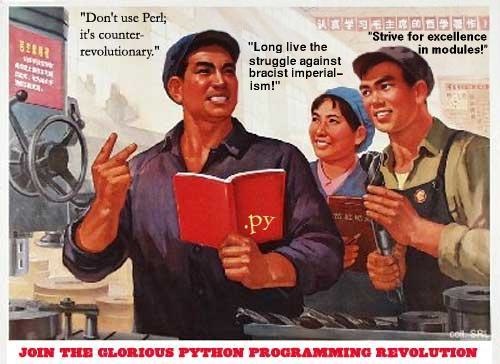
My title is Python jargon, where usually we'd put __name__ in place of Universe, meaning the name of "this module", which, when running top level, not imported, gets the string literal value of "__main__" for its value.  The Python interpreter tags a single module as "it", per process. with other modules brought aboard as additional cast members.

Bucky Fuller's Synergetics is designed with one Universe to call one's own, as in one's namespace or "world" as Viennese philosophers were prone to call it, around Wittgenstein's day.  Universe comes with chatter, commentary, verbal discourse.  Don't just picture the Grand Canyon in silence, sans narrator.  Universe oft contains someone with an opinion as well as a point of view.

"Partially overlapping Scenario Universe" was / is one of the stock phrases in that magnum opus, wherein we're represented as inter-subjective dharma tubes, rubbing up against one another, twisting past and/or sometimes convergent in various ways.  There's a difference between "coasting along with" (fellow traveler) and "falling in with" as perhaps a partner in crime ("crunchy Grunchy").

"Non-unitarily conceptual" is another stock qualifier in Synergetics, in that there's no one frame that is this Universe as some singular object or private sky.

One has the "__main__" namespace, which you may import, say from within timeit(), as in "from __main__ import write_it" just before its called, plus one has any number of imported namespaces, not built-in and not even necessarily native.

You'll be bringing a lot of namespaces on board per the constructivist model, in an endeavor to "construct your own reality" (good luck with that).

The Python Standard Library uses business English, fairly global by the 1990s, however 3rd party modules need observe no such restrictions.  Name your objects in Chinese or Sanskrit if you prefer.

Is Synergetics a work in English then?

I'd say "yes and no" in that "yes, English is a big help when reading it" yet the usage patterns are alien enough to set up sometimes dialectical if not antithetical relationships vs-a-vs "normal" usage.

Fuller imparts his own spin within a vocabulary that's deliberately remote, such that his "quantum" and his "gravity" might be kept at arm's length rather than be allowed into the "__main__" stream (a Pythonic pun) in some university discourse.

For example, Fuller's "dimension" concept, and "4D" in particular are not going to seem all that familiar in contrast with the four mutual orthogonal axes of hypercross dogmatics or related flavors of sacred geometry.

Many ethnic groups, many subcultures, have made use of the same exact words, but in namespaces that need to be spelled out (qualified). We need to anchor our words in their respective namespaces (discourses) if we have any hope of maintaining a high level of reading comprehension.

That's why the namespaces concept is so useful:  we're able to compartmentalize and tease apart the various meanings others might confuse (sometimes willfully), thereby avoiding a descent into empty babel.

Sunday, March 15, 2015

Nationalism and Jobs

Analysts often portray Russia as sharing the US aim of nonproliferation in Iran i.e. the prospect of nuke WMDs in Iran is in neither "superpower's" (to use the jargon) best interests.  In this respect, the US and Russia are allies, although Russia, a neighbor and contractor, is more vested in Iran having civilian nuclear power, having taken over completion of the Siemens plant (by now on-line for some years) with plans to add more.

However the assumption behind these analyses is always that Iran secretly wants nuke weapons, despite their low strategic value and despite the PR problems attendant thereon.  Nations with nuke weapons tend to be seen as cowardly and immoral.  India and Pakistan have recently lowered themselves, entering the circle of the depraved, as "little Satans" (the superpowers being greater Satans).

Iran has remained aloof, its good name not yet blighted by investments of billions in instruments of mass murder.  A "holier than thou" attitude pervades the Islamic world as a result.  Iranians feel morally superior to both the USA and Russia (according to recent polls).  Islam trumps Christianity and Judaism in the minds of many who keep score by who stockpiles what armaments.

Getting caught with a nuke WMD program would actually expose Iran to disgrace.  Why trade away the moral high ground then?

A nominally Islamic government has an opportunity to lead, rather than resist, the global effort to criminalize nuke weapons.  Pakistan has already sacrificed its historic opportunity to offer moral leadership in this sense, by following India into the club of the religiously inferior.

So I might put it differently:  Russia and Iran have a shared interest in an endgame leading to no nuke weapons, a Countdown to Zero as some call it.  They're on the same side in this respect, with the US choosing to project acquisition of nuclear weapons as somehow a desirable goal Iran must be pursuing in a clandestine manner.  For how much longer will the District of Columbia's narrative manage to hold water I wonder?

Greek nationalism, and nationalism in general, are playing a more reactionary role than most analysts describe.  Thinking of either Greece or Russia as managed by "leftist governments" tends to ignore older divisions going back to World War Two and before.  Nationalism is what the EU hopes to overcome, with the federation of the various states in North America, since the Civil War, seen as a role model.  Tensions around the financial meltdown in Greece threaten the EU consensus.

The US, Germany and France sell major amounts of armaments to both Turkey and Greece, under the "NATO" cover / excuse, whereas Russia's arms client remains Iran.  What cuts across national boundaries is the Arms Bazaar which profits from nationalism in selling to all sides, either openly, or under the table in the case of imposed sanctions.  Keeping old fears alive, as well as inventing new ones, is a primary goal of Arms Bazaar advertising (recruiting commercials etc.).

Israel's munitions industry, for example, is likewise profiting from regional aspirations couched in nationalist terms, selling arms to many players, including the Russians -- looking for better drones -- and Turkey (a major US client as well).

Much of Greece's debt is owing to loans from foreign powers underwriting the purchase and stockpiling of weapons by that nation, the Iron Mountain development strategy, pretty much proved to not create much work for civilians, but a way to keep soldiers and mercenaries semi-employed under arms.

We should remember that the military constitutes a jobs program in all of these countries, both in the manufacturing sector and in the form the the military itself.  Males without recourse to a military lifestyle would resort to hooliganism and gangsterism, is the theory, or help lead a political revolt.  The Iron Mountain solution is to provide ample toys for the boys, along with a regimented lifestyle (on base or off) organized by patriarchs.  The church, also patriarchal, is used to fuel patriotism and a sense of threat from without ("heathen", "Godless" etc.).

Theorists, more than analysts, will bring up gender wars at this juncture and argue that patriarchy itself is confronting an existential crossroads (no need to say "crisis").  The mostly male hierarchies that benefit from the endless doling out of props for the military theater no longer earn the respect of many financially literate spectators, who see their way of socializing wealth (through the military jobs program) as transparently wasteful and inefficient, a game for losers at best.

technogeeks of the world unite!
(click for larger view)

Tuesday, March 10, 2015

Sunday, March 08, 2015

The Girl Next Door (movie review)

DSCF6224

When I told Glenn S. I'd recently viewed a documentary compilation of Sex Ed films, USA / vintage (lots aimed at military men overseas), he immediately recommended The Girl Next Door as follow-on viewing.  He was on target as usual.

It's a coming of age movie aimed at vintage high schoolers especially, not just males but also females who study them and their competition, with the accepted stereotypes (remote Asian genius; stuffy oldsters who loosen up at the club) already ensconced.  Stereotypes are not a "no no", they're stock in trade in the movie industry.  Just because I run across a stereotype doesn't mean I'll think ill of a film.  Some films are all stereotypes and cliches.

The main stereotype this movie wants to explore is that of "porn star" and how the porn industry relates to Sex Ed, our could, if we'd let it talk about LGTHBQQI (H = hetero) in a classroom "driver's ed" style context (but maybe with fewer horror stories?).

The aforementioned documentary focused on how the Christian Right had used the Reagan years to preach abstinence, as this was the decade of the Church Come Back.  Or was it two decades of anti-liberalizing backlash puritanism?  Depends whom you ask I suppose.  HIV had a lot to do with both the need to be explicit, and to curb certain behaviors.  Biology is serious business, regardless of ethnicity.

For every hundred or so women you'll meet who chafe under patriarchal oppression,  you'll find a woman willing to boldly state that her side of the species is running the show.  Men are hopelessly outclassed by the fairer sex.  Is there a way it truly is, with only 1% getting the right picture?  Subjectivity trumps objectivity in this case.  The world is how one experiences it, but the higher levels are "what you're adding" as est put it; that's your "value added" in other words (the post-production cutting room is between your ears).

We had a guy at Wanderers recently, at a meetup I missed, claiming he'd developed the hypothesis of greater turnover among women i.e. they've been having shorter generations between birth cycles than men.  I'm not sure how he works the math, but the upshot is:  he thinks women have had that much longer to evolve and are literally a superior species to men, though sharing most chromosomes.

Speaking of chromosomes, now that DNA testing is not the super expensive undertaking it once was, a lot of data are coming in.  Things we thought were true may not be, such as that one's physical gender characteristics are XY- or XX-determined.  Nature is offering up more anomalies than the original theory could accommodate.  I won't advertise up to date knowledge of intersex phenomena.  Lets turn to the [web] pages of Nature.

Speaking of Glenn S., I heard from Glenn B. recently, another Glenn I know since our senior year together at International School, Makati.  We compared some notes about an upcoming conference.  He sent me this picture from when I was more like the high schoolers in this film (closer to their age).  Now I'm more like the principal, in age if not in demeanor or moral rectitude.  Actually the principal comes around in the end:  stodgy Sex Ed films don't do nearly the job the porn industry could, perhaps using animation.

I had a prom night and worried about colleges and stuff i.e. it's not like my high school experiences were without overlap with this fictional film.  Given I lived in the Philippines, I found my peers especially attractive.  My date was a nerd like I was (destined to be a geek) and from a strong Catholic background.  We had a lot of "moral fiber" back then, though like at any high school, the kids mature at different rates.  Karma is somewhat individualized, for all the stereotypes in play.

My teachers weren't that stodgy though, nor the principal.  As for Sex Ed, I think they left that to R-rated films we'd all see in the malls.  Plus there's always the encyclopedia.

Tuesday, March 03, 2015

Common Grounds


 I'm hanging out with my coven mates, at the local Coffee Shop.

We're enjoying Cyriak videos and talking about Hortonian Networks, Horton having invented hydrology, after Leonardo maybe (who was a Jack of All Trades).

Yarrow's birthday yesterday was really fun.  He's just turned one.  The first nine months is year 0 (starting from glimmer in someone's eye), then as a terrestrial one starts counting through consecutive integers.

Over on math-teach I'm boosting a kind of "Gnu Math" that draws on New Math but is not just a boring repeat of the 1960s and its Cold War.  The globe is not polarized in quite that way anymore.

For those just joining us, the associations between the Cold War and New Math were myriad.  As I was writing to a Friend recently:
Talking briefly about Vietnam, our friend under Ho during the push-back against the Japs (just evoking the lingo of the day, not attempting to be racist).

Ho was our friend.[1]   The a huge flip happened after WW2 and the fascists (Japs Germans Italians) were our friends (Marshall Plan) and Russia and Vietnam were now the enemies (it would take awhile for Vietnam to become that way, but Russia was bad overnight, behind an "Iron Curtain" of Churchill's invention -- Reagan's invention to tell them to take it down).

Very intelligent people in the OSS were a lot like "Hanoi Jane" a generation later (I've read her autobiography, Jane Fonda's, ex of CNN's Ted Turner).

Did you know some Americans fought on the side of the North in the Vietnam War?  That's a little known story.  Who can blame 'em, given their OSS history (the CIA would come later -- having lived in DC I would come to know some of them personally, another story, six degrees of separation, Kevin Bacon and all that).
I've been making some travel plans today, work related.

Anyway, when the Iron Curtain descended across Europe, it became important that the USA kids get up to speed on the kinds of maths that won the war, Turing's stuff in other words.  The University of Chicago started cracking the whip, getting us to turn into Bertrand Russells at a young age if we could.  Problem:  Bertie was actually a pacifist.  Einstein too. And Linus Pauling.

One of our number at been at the Economics of Happiness conference recently, where a fair amount of technology bashing occurred, making the Internet be the problem.  At least it's something people can gang up and gripe about.  What's more cathartic than a good gripe session?  We're thinking to have one at Annual Session this year, though the proposal is not finalized. Friends get phished a lot.

Thursday, February 26, 2015

Thirsters 2015.2.26


"A is for Anthropology in STEAM (enhanced STEM) not Art" has been my mantra.  I studied psychological anthropology at Princeton some, and knew about Clifford Geertz and his thick descriptions of cock fighting long before most people.  So I was glad to join Dr. Tag (on her way to see grand vistas), Christine, other friends (and Friends) tonight, for a free ranging discussion of International Development as its own ingrown subculture.

As evidence of its being ingrown, you'll find little talk of Iron Mountain, i.e. the Maslow anti-pyramid of military services that form the bulk of "foreign aid".  A lot of the best toys come in one color:  camo.  But development specialists are supposed to tippy toe around the big gorilla and just speak of civilian programs like health care and birth control.  And yet Anthropology cozies up to the military in HTS type programs -- you'd think there'd be more cross-fertilization in the discourse.

The USA pacifies its poor by giving them an option:  military service.  The bulk of foreign development work in North America involves Beltway Goons running the creaky old primary irrigation system, of defense contractors, into the ground.  They haven't the imagination for anything better, like ending poverty.  Starvation could have been eliminated as a major cause of death by 2000.  Humans chose the path of lower intelligence, afraid of what it might mean to grow into a next chapter.  Nostalgia for infancy is not just an ontogenic phenomenon.

The Millers, a father-daughter team (Peter also from Princeton, Kate a visiting anthro professor at Reed), did a great job reviewing an extensive literature spanning decades, and in that small annex to McMenamins we had people with development experience all over the world.  Comparing notes is important, reflecting on what we've learned.  My family lived in Lesotho, Bangladesh, Philippines, Egypt, Bhutan, Florida, Italy, Oregon to name a few.

Just as a racist is someone who believes in races, nationalists believe in nations.  I find it easy, as a 1900s baby, to slip into the old habits and think like a land lubber.  "When in Rome...".  However, even if Einstein was one of the first to think outside the box, he was neither the last nor the only.  We may want to avoid the prefix "post" as in "post-nationalist" as the next chapter involves a flood of new nations (domains), both physical and virtual (e.g. Rogue Nation).

One might call this chapter "making light" of sovereignty, i.e. accepting its more tongue in cheek aspects, the more farcical side (like those hopelessly gerrymandered districts).  But then role playing games were never not serious, given "role" is just an anthropology word for "whatever a person does in society" i.e. there's no other game in town.

Speaking of small world after all, I'd forgotten, if I'd known, that David Chandler, in our Quaker meeting, was born just outside of Bangalore, India.  Me?  Chicago, Illinois.

Saturday, February 21, 2015

Pay 2 Play (movie review)


Now this is one clever film.  I had no idea that Parker Brothers stole Monopoly from the public domain, ultimately from a woman who followed the economist Henry George and was communicating the opposite message.  That's hilarious.

A guy named Darrow learned it from a bunch of Quakers and then colluded with Parker Brothers on getting a patent.

This all came out when the inventor of Anti-Monopoly was defending his right to publish his game.

Now that's a story worth spreading far and wide.

The documentary is mostly about the broken US political system, further wrecked by the Supreme Court with its Citizens United ruling.

The links to a Banksy-like painter of "Monopoly guy" takes us to Occupy, where this symbol often appeared.  Mission:  Occupy.  From Occupy, we move to May Day.

I like using Monopoly Guy for Wanderers, mixing him with a lamp post on a chess board.  He's been drinking a lot and walks randomly as a result, the connotation being mathematical: osmosis, cellular automata and like that.

Well crafted, mixed with street art / PR.  Another good entry on the Corporate Personhood shelf.

Sunday, February 15, 2015

Jupiter Ascending (movie review)

We caught the Sunday matinee, Alexia and I did, on a very sunny afternoon, uncharacteristically warm.  We enjoyed excellent pizza and ginger-pear cider with our movie.

This movie contains many allusive elements:  a skating hero, a poor servant girl of humble origins, and inter-planetary intrigue among twisted royals, who see the peasant girl as their mother.

As I've been revisiting the Bay of Pigs and Cuban Missile Crisis chapter, I was imagining Jupiter Jones as poor Cuba, suddenly caught up in superpower chess.  When Khrushchev shared with Castro later how he got Kennedy to agree to remove the missiles from Turkey, as a part of the deal, that seemed oddly far afield, given Gitmo right next door.

But that was the Cold War for ya.  Castro didn't care about Turkey that much.  He was just hoping to kick the Yanks out of Gitmo (the western hemisphere's Abu Ghraib -- can't blame him for trying).

The movie alludes to Cloud Atlas, which in turn alludes to Soylent Green. An image of themselves humans have always found unattractive, oft posed by the angels, is of a self-parasitical beast, one that feeds on its own young (and on its old of course -- whatever is weakest (e.g. "undocumented")).

That which is healthy within feels called to end such a wretched existence, if that's what this is.  A character's heroism is quite often manifest in some fight to restore aesthetic beauty (aka humanity) to the humans' scenario.

I thought some of the best screen writing was when one of the royals explained how "time is the only dimension worth paying for" (paraphrase) or "time is the only dimension" for short.  Space is a given, and once you add hyper-drive and wormholes, effectively infinite as a permutation space, even if it follows a strict physics.

One also has to add, in addition to a physics, a string of incredibly good luck events in the face of impossible odds but there's a reason they call it fiction, wherein only the impossible happens.  That's what makes it so action-packed and suspenseful.

I'd say there's real depth to this movie once you juxtapose the foreground plot (servant girl) with the fantasy (the day dream).  That's a Jungian world, pregnant with archetypes, worthy of college-level essays and such.  No reason to blow these movies off as footnotes.  They're works of art, worthy of comment, no less complex and textured than Cinderella or Snow White.

I don't claim to do them justice with these quickie blog posts, which serve as bookmarks in the sand, bread crumb trails to treasures.

Back to the Castro / Kennedy story, I'm not casting JFK as mad King Ludwig of Neuschwanstein fame, far from it.  He had some great advisers (like his brother), like King Ludwig never had.

The parallel I'm drawing is a clandestine service fighting for its political survival.  Ludwig to spies:  "go kidnap so-and-so high level diplomat in Vienna and hold him for ransom, anonymously of course, so I can get money for more castles."  Spies to Ludwig:  "sure Ludwig, sure, whatever you say boss". Cut to spies enjoying themselves in Vienna for a week, expenses paid. "Dang it boss, we nearly had him, but the clever dude picked the lock and got away."  Ludwig:  "Dang it!  Maybe next time then."

The mad King Ludwig in this film is one of the twisted sibling royals, even more twisted than the other two.  I thought he (the actor) did a marvelous job being twisted, and as Alexia pointed out later, it's not like the others were refusing the currency i.e. the soylent substance that bought more time -- the unobtanium in this Universe.