Sunday, July 24, 2022
Friday, July 22, 2022
Campus Recruiting and Logistics

I've got my fishing pole in this lake, but don't expect many nibbles. I consider it free advertising for my company, which has a footprint in education. What about American Transcendentalism as a literary tradition? How about as a philosophical one?
Transcendentalism is not usually acknowledged within any taxonomy of philosophies, although some of its leading lights get a tacit nod, in the case of Emerson, from Nietzsche. As a literary phase, it fits between Romantic / Dark Romantic (Gothic) and Realistic, on the way to Modernist and Postmodernist.
I'm looking to do business with education institutions.
Perhaps we'll devise a standard practice, based around bizmo fleets, where they travel from campus to campus, because they're outfitted to perform scholarly research.
Some do bug counts (insect populations), some focus on testing soils. The universities and other bases need both the data, and the science trained personnel.
An active bizmo fleet keeps ideas in circulation, literally.
For those just joining us, I've been planning around truck stops and the lifestyle of truckers, both long and short distance haulers. I'm not an expert. I'm not a trucker.
I'm interested in these truck stop hubs for various reasons. I have prototype dwelling machine villages in mind, designed for transport by shipping container, meaning trucks along the way, trains also.
Some truckers are in like PhD programs where they stay awhile in these remote lands, allowing the payloads to go on without them. Learn the history, some of the language, become more familiar with the local ways.
Live in some yurt-like pod on a utility pole, surrounded by yak herds or peacocks. Then move on. In this global university model, students and faculty are not necessarily shy about operating heavy equipment, including long haul rigs.
A bizmo (business mobile) is a smaller more agile vehicle that scouts the routes and tends to business, without hauling a big load.
One might say these bizmos gather and relay intelligence about an area, but that sounds like a suspect activity, unwelcome spying perhaps. However your average bizmo is most welcome in most cases, wherever it goes, because there's nothing especially clandestine about how or why it operates.
There's nothing necessarily wrong with monitoring local conditions, especially by locals themselves, perhaps as mentors with apprentices, themselves on tour. Keep the databases up to date. Think of Google Street View or one of those.
Think of tour guides too. We want and expect them to guide us through, especially in tricky situations.
The work comes under the heading of citizen diplomacy in many ways.

Saturday, July 16, 2022
Tracking a Vlogger
I thought she totally caught the train experience, in her low key way. Nervousness about missing one's stop. Trains delayed. Trains being right on time. Scenes out the window. The car interior. Reflections.
The trope of getting ready to leave one's country, and saying good bye to cities in past videos, contains instant and seemingly infinite nostalgia for what now is, not the future. I find her fascination with the mundane matches my own.
Freedom is to exult in nothing special, which is ever special, not to mention ubiquitous.
I've followed this channel for awhile now, and have said in the comments I appreciate the editing. The story is bravely autobiographical, and offered with an open heart. I know she has a ton of fans. Count me one of them.
Thursday, July 14, 2022
Regarding World Game
[ from TrimTab Book Club listserv ]
We've had Model United Nations for some time now. High schoolers join as an extracurricular activity. When I joined my daughter's debate team going to Indianapolis for national championships, I learned about another activity high schoolers could sign up for: Model NATO.
Would we consider these to be implementations of World Game? Not in any trademarked sense.
Will World Game, as developed so far, be able to give rise to multiple implementations, all different from one another? We shall see. In the open source world, it's quite common to fork a project and develop along a new branch.
As I mentioned earlier, I know at least one guy (related to Bucky himself he claimed -- different last name though) who was very put off by the fact that an earlier World Game version had it scripted right into the program, that no matter what participants did, those poker chips would come out andspill across that map, representing nuclear holocaust.
That was supposed to be a sobering moment. But it could just as well be interpreted as a teaching about the ultimate fruitlessness of any efforts to avoid Armageddon.
I'd at least be up for debating that point. I don't take it for granted that this earlier design was a work of inspired genius. Bucky didn't go the poker chip route did he? That came after he died on the timeline, am I right?
True, I'd like to see versions of World Game that aren't so ultimately predictable. Given I think this is all world game right now, one can see why.
Monday, July 11, 2022
Magical Incantations
The rulers scour the landscape for whom the true believers are following. Having zealots and fanatics on one's side is a double edge sword, but there's always postponing the day of reckoning. No one is really ready for Judgement Day, when it comes.
Wittgenstein was more of the "every day is judgement day" school, but you couldn't say that quiet part out loud a lot. I've followed Wittgenstein since first exposure in the 1970s (he died before I was born).
How do we ceremoniously and with gravitas create more autonomy for ourselves, whoever we are? Many ethnicities would enjoy their own nation, or so they tell themselves, or at least one of the tribal kind from which the concept first emerged ( in conjunction with "race" in Social Darwinism).
The "tolerant" nation of many tribes working together is more an adaptation of the Iroquois Federation and Roman Empire memes, with the UK on the template of the latter. Arab empires also allowed for local folk religions and even stole (borrowed, appropriated) the best ideas (likewise the Catholics are known for this).
Many who long for a nation are hearkening back to something tribal, not a federation of any kind. A federation comes across as more abstract, more aloof, and more secular, in the sense of not being programmed exclusively by the locals, of any region where it occurs. That's often what the independently minded are seeking to escape, just such an aloof and removed government.
When it comes to joining a Federation, topological questions of contiguity enter the picture. The United States counts a smattering of non-state members, such as Puerto Rico and the military base at Guantanamo. What if another far flung island wants to join the federation, not as a state, but as another protectorate? What if it's not an island? What if the District agrees the new territory would be a welcome addition? What is the process and are those wheels too rusted, in this day and age, to ever turn?
The anthropological question before us is one of invocation and declaration. On the one hand, you have schools telling us the nation state heuristic is inevitably fading, given the only logical dimensions to this puzzle are planetary, whereas on the other you have elaborate mechanisms, steeped in ritual and ceremony, designed to do social engineering, as an official responsibility. What is reinventing itself, and what is breaking down more permanently? This is always the question at the institutional level.
We may be clearer on what it takes to "break away" versus "join" e.g. the two republics at the center of the current military fiasco. When a central government is shelling your civilians on a daily basis, one may seek a diplomatic solution, or declare independence, find allies, and choose war. Given the close proximity of an existing federation (the Russian one), the phenomenon of breakaway republics is no surprise. The other side did not want diplomacy either, trusting in its military advantage.
We also talk about centrifugal forces within the North American federation, of Lower48 + the Canadian provinces + Belize & Baja, Mexico. The sanctions imposed by the District, on its western states especially, has criminalized most of the population (think Prohibition) and forced the entire cannabis economy to short circuit the banking system.
Various accommodations with the tax code were negotiated, as what rusty old machine is going to turn down more fuel (revenue)? Obviously no one in "power" has the power to stop this particular runaway train. People notice these things.
An effect of the Drug Wars has been to motivate a psychological breakup that has no real mirror in the paper trail. The melodrama of everyday television hints at these chthonic tensions, but no narrative snowballs, gathering inertia.
This has the effect of melting whatever snowballs are already out there, as the message internally is "how can those snowballs matter if mine never does?" i.e. "what makes their narrative so privileged?", typically a precursor question to some upsetting of the apple cart. Viewers tune out whole networks, when the content producers never focus on the relevant stories. They vote with their remotes.
If you check an atlas, you'll likely find that Oregon ranks highly in both Russian and Ukrainian speakers. Migration patterns are such that we have very old school in a mix with newcomers. The same goes for ties to the tribal nations of Japan, Korea, China and so on.
I think of Portland as a Pacific Rim city, a gateway to Eurasia (or just call it all Asia) if you're coming from the American side, where the American side includes all the Americans (from Canada, Mexico, Panama, Brazil and so on).
What this means is a lot of de facto citizen diplomacy (aka university collaborations, businesses), not only between Oregon and the Americas, but between Oregon and Asia. Like any world municipality, Portland is a switchboard, a router, even a CPU / GPU on Motherboard Earth.
Finally, for this blog post, let me remind readers of the focus on Virtual Nations in the 21st Century. These are nation-like self governing semi-autonomous, but without the contiguous borders that would make them United Nations style nation-states. Some may have a Vatican-sized campus here and there, and may fly a flag, but they're not agitating to issue passports in most cases, or do so as a sales gimmick, without monkeying in international law.
Will future VNs do more with ID? Naturally. Behind VNs are webs of blogs, logs, vlogs and databases, and maybe even a currency or two.
If you think this idea of VNs is unrealistic, consider Shell and Nestles, consider Disney (when it comes to Vatican-sized campuses or bigger). Consider that VNs go way back by other nomenclature.
Consider universities going forward, and the federations they may form.
Supranational circuitry is nothing new. Global shipping companies have a similar sheen, in that their logos show up everywhere, yet few imagine them on a world map.
Given these many circuitry overlays, facilitated by more of a shared file system, the question becomes whether bureaucracy itself needs a new space in which to operate. I'm not talking about global government (science fiction) so much as global infrastructure (a fact).
What's chipping away at the power of the old guard, while empowering an avant-garde, is the unwillingness of the old ideologies to think globally, a limitation designed in on purpose. The District refuses to consider the security concerns of rival federations as a foreign policy guide. That's what "self interested" is supposed to mean (to them).
But at what point does the bureaucracy itself discover it couldn't force itself to think that way even if it wanted to? The bureaucracy has gone global even if the chief functionaries stick to obsolete rhetoric.
When I say "systems have a half life" I'm not saying "because other systems will destroy them". On the contrary, the model of radioactive decay is a "from within" phenomenon. Alpha and beta particles leak away. Atoms do in fact change species. They "fall downhill" in a way that major stars counteract.
Star cookers will fuse together atoms of very high atomic number. But at a certain size, they're not really meant for this universe, and they start to break down.
Ideological systems display similar limitations, in coming up against laws of physics, more than anything man made.
I make this distinction because it helps counter the "commie under every bed" boogeyman paranoias that seek to explain systemic degradation of one kind or another. Circling a natural process prompts the realization that nature herself plays a role, and yes, humanity is a part of nature.
The circuity in question encompasses the ecosystem, not just the human "value added".
The erosion of nation-state aesthetics need not trace to a tiny cadre of committed activists or anything like that. No one has to lift a finger with that specific intent. On the contrary, the predominant intent has been to foster and bolster nationhood, in the face of mounting odds.
Thursday, July 07, 2022
A Parable

Some in DC must be tone deaf to how "fight to the last Ukrainian" is bringing the Bear and the Christian closer together.
I'm talking about the NATO-Roman coliseum, with the assembled voyeur masses there for the show.
The Emperor says: "we must drag this out for as long as possible, to weaken the Bear, thereby to make its fight with the Lion more exciting (check your programs)".
However the Bear has more empathy for the Christian than the Emperor does (they go back a long way), and it comes to seem, given how it's no longer a cliffhanger fight, that they have much in common in how both are being exploited.
If the Bear and the Christian resolve their differences and focus on rebuilding, maybe they can finally end the rule of Rome.
Tuesday, July 05, 2022

Friday, July 01, 2022
Philosophizing
Have empathy for the role of the nonfiction screen writer, where the stage in question supposedly mirrors reality in high degree, meaning the author is a somewhat of an authority, or has reliable sources at least, where reality is concerned.
But then how does one allow for reality checks? How does one pass along error corrections?
In cultures unable to admit error, the possibility of self correction is less probable, by definition. The narratives don't change, and one starts to hope reality is invented anyway, in high degree.
Just keep making up new facts. Isn't that how the other guy maintains traction?
Too much cynicism with regard to there being a real reality out there, may lead to many pathologies, mostly having to do with the malleability of said reality. The screen writer learns that made up fiction works in place of reality to patch up obvious plot holes. But maybe only imperfectly.
Once you've added to the pool of fiction, and seen it stick as true, you may assess yourself to be powerful, and you are. You're right to wonder how much history telling is bogus storytelling.
Lets remember that those with high regard for fiction may see it as encoding important principles with no hope of any literal expression. Fiction is their only guise, and yet these principles guide reality as well. If we think fiction is the best we can do, then why not say so outright?
I've been inclined in this direction: "there's science fiction, and there's nothing" is a bumper sticker I've at least imagined. "All realities are virtual" was another. However I admit a ratio of science to fiction, and in saying they're all virtual I'm closer to talking about the limitations of language in the face of reality, than to reality being faceless.
Most of us are not at the point of surrendering the reality principle to that degree. Stories tracing back to testing, experiment, lived experience, have an edge over those that were purely made up, precisely for that grist in the mill. Fiction has a sub-genre called realism. Back to square one. What makes it realistic?
As time goes on, holes in a story start leaking juice and the narrative starts needing an infusion. Maintaining the believability of a narrative is sometimes a tricky business, as the verb "to believe" applies to what in retrospect were dreams or fantasies. Our own beliefs may likewise be qualified, by some degree of confidence.
One way a narrative gets tested is when its true believers decide to take it on a road test. A good question is, will it hold up under stress? Again, the mere fact of stresses and strains is not necessarily experienced as checks and balances for "reality" per se. One suspects a little man behind the curtain maybe, if not a cabal. But don't we agree there's a physics to this physics engine?
Yes, this is some kind of philosophizing. One may not share these concerns, but most will.
The reality-minded will feel reassured that reality doesn't need to be believed in to work its course, meaning what we learn to be the facts of nature are not amenable to alteration by mere belief. That's all tantamount to a belief in a reality "out there" which some have their doubts about.
I think most nonfiction screenwriters (historians?) will admit to encountering reality checks from time to time. That goes with the territory. Those who can't stand to be wrong would find the continual flow of corrections intolerable. These reality checks may come across as chastisements from other people, with an independent sense of right and wrong.
Reality has a different way of letting us know we're misguided, than by speaking to us directly. Humans may voice their concerns or offer deterring views, or they may simply frustrate. Reality is closer to creating frustration i.e. plans simply do not work out. Reality, like a god, may be more forgiving because of its overwhelming power. Error is permitted and the consequences are not punishments. Moralizing comes later, when humans make up their semi-fictitious narratives.
Tuesday, June 28, 2022
The Easy Way
Once gun violence is normalized as the Way of the West, by way of Spaghetti Westerns (cowboy movies made in Italy), then plot resolutions become easier. You get to blow away certain characters, and you don't have a strong afterlife consensus, so the screen writer gets away with some not-haunted future. Yet one lives every day with one's memories.
Chances are, I'm going to find a gun-centric plot line rather too boring to encourage, in the sense of produce. My audiences are hungering for scalable models (both up and down) wherein people get along without resorting to the Easy Way. That's just too predictable, as in mechanical.
We've already seen that scene in every detail. Murder mysteries help get the ball rolling. Our deductive Sherlock Holmes powers get more of a workout that way.
This is not a screed about banning guns from movies. I'd be more into reintroducing ballistics in other guises, as I've been enjoying on Youtube, with the pressure gun shot at giant jars of mayo.
There's serious calibration going on, but then we have the opportunity for some throwaway special effects, especially with those slow motion cameras.
We start to learn a lot about physics, as in First Person Physics. The roller coaster teaches about kinetics, Newtonian mechanics. Imagine a world in which most physics majors were also skydivers.
Likewise the science of trajectories and explosive events is nowhere more developed than in the civilian fireworks industry. The colorful and highly designed bouquets, timed to music in many cases, teach as much about the generalized principles as some of that cruise missile stuff.
Decouple the physics from weaponization and you're in a whole new world. Physics is cool again, vs enslaved by the hotheads.
In geek circles, "learning X the hard way" became a thing, one could say in backlash to the "for dummies" books, although I'd argue it's plenty hard either way, i.e. "for dummies" took on the tough topics. However some object to the whole style of dumbing it down to make it accessible. The point is to keep it as inaccessible as necessary to not be considered diluted or watered down at all.
"The hard way" was code for "undiluted" like when a tourist asks for a meal just like the locals are eating. They're doing anthropology more than trying to cater to or pamper their own personal tastes. If personal taste had been a priority, then why not restaurant hop and write Yelp reviews? Those with a similar palette will learn to follow you around. No, the intrepid tourist is honest and sincere in wanting a clone, a carbon copy, of what the natives are getting. "Don't dumb it down for me just because I'm an outsider" the pro might convey.
On the other hand, lets leave the door open for more defensive methodologies, as sometimes "going native" is a recipe for disaster. As an outsider, untrained, not prepared, they'd be cruel to obey your directives and take you on their walk.
They'd also hurt their own chances, in taking you on as their burden. You being a sensitive anthropologist who understands there's a healthy balance between professional curiosity and taking foolish gambles.
We know from the movies that the reporter trying to "embed" in this or that police force or military, or lets say gang, is likely to encounter others not in the know and unsure of the agreements. The tribe that encounters your tribe sees they have you as an ostensive member. How does that impact inter-tribal calculations? As an anthropologist, it's not your intent to spark new tensions. The observer's role cannot honestly be erased in most cases, but it can be low profile.
Having spent time in Quarter World again recently (in walking radius), and thinking arcade games = language games (Wittgenstein's influence), while also keeping in mind the Coffee Shops Network charitable giving arcade palace (a place to see and be seen?), I'm back to designs for serious simulators, like pilots get, and maybe some truckers.
You get a lot more time on a simulator before they hand you a real car. But we're talking brainwashings of all types, and whom do you trust to brainwash your brain? I'd use hypertoons in mine. I'd be my own first subject, Guinea Pig K.
Time in a high bandwidth pod might prove mind altering but in a good way.
These would take human subject experiments, which in some cases would mean tinkering with in-house prototypes and letting friends sign a waiver. They're just arcade games, enhanced to teach organic chemistry or calculus or one of those.
They don't replace what we've already got going, but for some prove an invaluable (as in valuable) supplement.
Get more attention slices focused on risk-taking for charity, and practicing for professions, and you will have fewer attention slices left over for Easy Way screen writers.
Compete for a slice of the attention pie and wedge it bigger, with quality programming that doesn't happen to hinge on firing projectiles at one another. That's more TV-14 through R. Imagine a new rated MN for Mature Nonviolent, very triggering to some viewers. "What about deductive thinking, wouldn't it go out the window?" As if great powers of deduction were on display today. Guns Dumb Ya Down (or at least there's that risk).
Monday, June 27, 2022
Round Robin
I like the country bumpkin sound of "round robin" -- or perhaps this is a more genteel kids' book by an Englishwoman. What I'm thinking though, is "operating system" and time sliced attention. The idea of slices or intervals in particular. The scene: it starts and stops. On to the next frame (sequence).
For my part, part of my tour are my own pages on Github and how ship shape are they. Today, I was looking at VolumeTalk.ipynb, one I've touted here and there, only to notice many unexecuted code cells. When I dredge up the localhost original, and re-ran it, the code cells were inconsistent with expected results. I was stumped.
As I posted later to Synergeo, the issue was with the E module and my failure to input its six edge lengths in the right order, to any of the volume-from-edge computing algorithms. Once I switched edges e and f, the volumes popped back into place, with the E mod's equal to 2nd root of 2 times (1/phi) to the 3rd, all over 8. Yeah, funny. About 0.041731316927773675 with the option to run it out further.
You may be thinking "no one in the world cares about what you call E modules, so this is all very Yellow Submarine, very Nowhere Man". I get the sentiment, however "no one" is an exaggeration given I'm someone and I care. Plus I know of a bigger fan base that appreciates my gold mining in Synergetics, or maybe minting, as D.B. Koski has been more the miner, of golden mean based relationships.
That I was able to afford enough attention, is not something I take for granted. Earlier, I was taking an applied mathematics practice test, doing pretty well. As a curriculum developer, I get saddled with doing assignments made in other shops. Indeed, there will always be way more of them than I, so it should come as no wonder that I spend at least as much time learning as teaching. Ideally, I'd be able to afford a lot of learning time. That's something I look for in a job.
A real scheduler is sensitive to all sorts of priority cues, and no, I'm not the expert. Operating System Design was not one of the courses I took at Princeton.
However I get it about Operations Research (a context for PERT analysis) and how that fed the timeshare model. How do we efficiently virtualize the experience of working with a mainframe, such that each user gets the experience of running a virtual mainframe? You have cylinders, you have tapes, you have printers. A round robin like process keeps each user in the loop with a responsive set of GUIs + APIs.
Turning back the clock by several orbits, I'd likely be in the basement of Princeton Inn, abutting the golf course, a short walk from the Dinky, the short electric train out to the mainline, the Northeast Corridor for Amtrak and Conrail, next stop Trenton, to the south (Princeton Junction is its own station).
I'd be typing in APL, A Programming Language. This is the 1970s and IBM has gone gaga for APL, engaged in two way conversation. I'd later follow Kenneth Iverson onto J and even had the benefit of his corrections when I web-published Jiving in J.
Logo would be similar, and likewise my dBase (II, III and IV) and its signature "dot prompt".
dBase II became Foxpro, and I became employed, as a Visual FoxPro (VFP) developer, for quite some time (many years). I'd written some FORTRAN for my main client before that. This was back at CUE (Center for Urban Education).
At OSCONs, I'd meet people from like HP and OpenStack who really did understand schedulers in the computer science sense.
From there, it's but a short jump to an appreciation for news cycles and public attention, and managing the carnival or theme park or whatever. Not that anyone really does manage the circus, just we have many partially overlapping circuses being managed, each one a Greatest Show on Earth.
The point of view of the OS designer is one of maximizing efficiency while giving each user a sense of privacy, as in security, and reliable performance.
User processes are administrated by a combination of human judgement and automation, with each user process getting its allotment of storage and CPU time. Let us pray admin is appropriately transparent, and breaches in security are both reported and rare.
This was the UNIX architecture, but also that of OSes in general.
There's still room for human admins to mess it up. However much is automated.
The solo human operating a laptop is typical, even if, upon zooming out, we see that human + computer as a component within a much larger circuitry, which it is, as a node in a network. The parallel computing that goes on daily is what keeps the world turning, so to speak.
A world turning is another picture of an operating system getting work done, by turning slowly around its own axis. Or picture an IBM Selectric ball for your type head. Something spherical leaves trails that seem linear, even if not exactly straight.
Sunday, June 26, 2022
Ethnicity Theory
Since no one is using this ("Ethnicity Theory"), I'll just grab it for my necklace next to GST. Maybe I boarded GST too much in pirate fashion and the others scattered? General Systems Theory had had a following.
An Axiom of ET is: we're each, in theory, an Ethnicity of One. There never was nor will ever again be, the unique ethnicity you embody. But like Wittgenstein's "private language" or Bucky Fuller's "one frequency", it makes no sense to have but one of something you need at least two of just to have a case for whatever label ("ethnicity", "language"). One record for training, a next for testing. I'd be more comfortable with at least four. Dot dot dot dot.
For example consider my ethnicity: born in Chicago to university types, transplanted to Portland, then Rome. Bradenton, Florida for a first half of 9th grade (i.e. the start of high school in K-12), then Manila for the balance. "But that's just biography not ethnicity". Precisely, as "ethnicity of one" is too full of contradiction and paradox. Yet we posit it.
The child in a nuclear family observing the intra-adult behaviors between adults, is getting a database not of grins and grunts, but an imprint regarding coping strategies. "Here are ways those whom you will become have managed to navigate and negotiate, pay attention"... and the infant does.
The main thing I want to emphasize about ethnicity is that an individual has a hand in making and defining it over the course of a lifetime. It's not assigned by the state or even tracked by the state in the sense that ethnographers mean it. Your psychology, in the sense of personality, has not been nor presently can be, saved, given the state of technology. But isn't that the whole point? To save it? We have a jumping off point into Christianity at this juncture.
The anthropologists will not allow an individualized ethnicity (the private language one) to be the sole invention of a single human neurosystem or avatar. Individuals in that sense do not reinvent entire cultures from scratch in the course of a lifetime. They need to be born into a culture, a going concern, at least a family or a parent, to have a chance. That's reasonable to claim. To say one is possessed by one's ethnicity, as if by ghosts, sounds too much like fiction, but by programs (televised, broadcast, retrieved) sure. We're each products of programming, what could be more true? Sources too.
In contrast, the old dogma of "race" involved assigning some low bit number, like a brand, like a QR code. Admin needed these. They were not allowed to change. Immutable tokens. Based in the Bible. "Ethnicity" was a nicer more polite way of talking about it. There was no way to rescue this system intact. We wake up in a museum of mementos yet are expected to operate it as a viable business. The job at hand may seem uncanny. "How are we expected to make this work?" is the complainants cry. Like Prohibition. What occurs under those conditions is of course "corruption" which tends to be a stop gap word. "We won't get into details as then we'd start accusing people, giving examples, and that's not wise in a glass houses village, if you want to have a village".
Clearly I'm exploring the border between within and outside the law, the "what is legal" question. That's a great entry point into the ruled by rules games, and ways of governing. But then they show you the rule books and they be mountains high. Abiding by rules is apparently a full time occupation. Why didn't they say so in the first place? We're talking about grammar, in the way Wittgenstein meant it, i.e. forms of life.
Tuesday, June 21, 2022
Back to the Races
We were talking in my backyard about curriculum matters, once again. I'm against making authoritative textbooks be of paper, i.e. I'm publishing in electronic formats that store as energy, but not as wood or as heavy objects in need of boxing and trucking.
That doesn't mean I disrespect the collectibles, the classics, in their original non-electronic form. It's just that textbooks in particular need to be current in their fields and some fields (more than others) are especially volatile.
What to include about "races"? The dice get loaded as soon as I substitute "pseudo genetics" as that's a finger on the scales, a put down.
Lets establish there's no need for any "color blindness" in terms of peoples' skins having literal RGB values, a range of tones. The technicalities of screen rendering, as with POV-Ray (a ray tracing program) mean attention to detail is rewarded, when it comes to designing screen avatars.
A lot of Sunday School posters go with a Genesis version wherein God is looking for ways to guide His humans in a less punishing, more effective manner. There's a learning curve, a feedback loop. Lizard brain acquiring knowledge of good and evil was a real curve ball but the fun and games hadn't ended. Noah and family took the signs seriously and made the necessary investments in a great ark, leading to their making it through a bottleneck almost as strict as in the Garden of Eden. Creation Part 2, we could call it.
The issue, God learned, is groupthink. Small numbers (say a couple or more) all thinking the same way aren't necessarily sufficiently balanced by those with different experience. The average of all experiences would be great, but too strong a bias makes for groupthink, a whole school gone down some rabbit hole, a cult, a quagmire (negative terminology). Who sees all that from the inside though? Usually it takes the benefit of hindsight to see the dead end, and by then it's too late.
You see where this is going: the Tower of Babel.
Thanks to humans starting over with a very low diversity quotient, they immediately started off on a wrongheaded track again: building some tower to the sky to be closer to God.
What could be more insane, right?
This time God came back with a far less punishing solution than in earlier testimony, and applied a psychologically healing technique (we can see it this way in retrospect, along with the other course corrections, such as expulsion from the Garden in the first place).
What we call "the confusion of tongues" was more like "putting tongues in their place" i.e. a demotion of so-called "rational thought" (everyone assumes they're rationality personified). Shoptalk alone, bureaucratese of any flavor, was not going to cut the mustard.
The Tower of Babel was having funding problems as the engineers increasingly realized the limitations of physics. How that translated was as increasing entropy in the bureaucracy. The impossible doesn't happen just because the memos will that it must.
Why have I digressed into that whole Babel story again?
Because this is when the so-called "races" dispersed around the globe, no longer held, spellbound, by their glorious plan of action. That all seemed so meaningless in the rear view mirror.
However, what replaced that doomed project was the growing realization of something rather more miraculous: that the spaceship was already built and we were already its not so passive passengers (ecosystem co-designers -- with physics still a limitation).
Our perspective is now more like God needs it to be, for our own sakes. It's not just "thinking globally" but "thinking cosmically" (we've long heard from universalists and universities) that's expected of us.
Expected of us by whom though? Exactly. No other human that any of us knows.
The democratizing aspect of thanking God for one's assets, including one's intelligence, is that one is not thereby compelled to accredit to some human authority or bureaucracy as the source of all one's wealth.
"Not of human origin" is what's written invisibly all over nature, meaning we're free to enjoy it without necessarily giving our peers all the credit. To some extent, the world happens without the benefit of human management, at least at the superficial level. Praise Allah.
You will notice I did not go down the rabbit hole of what exactly are those "races" that Noah's family (i.e. wife) begat.
That whole family tree and the book containing it need not be the anchor for our story, if what we're doing is genetic science. Humans have not been animal husbanded into certified breeds except by the self appointed. We're free to ignore their taxonomy. But that doesn't mean dropping skin color as an adjective. Pronouns may continue as before.
My point is more anthropological: if you sincerely wish to know where many Texans and/or Floridians got their ideas about race, don't look to anything in the public school curriculum.
The private religious academies have been telling the most compelling myths in that department for centuries.
The "races" are more likely courtesy of your neighborhood religion. We call that folklore, with no disrespect. The race of giants accepts the right of hobbits to think as they do about supposed subspecies. I'll hazard geeks are less likely than nerds to indulge their concerns about racial taxonomy (as if the patriarchy's latest taxonomy were of great interest).
Thursday, June 16, 2022
One Wonders...

One wonders at how alike are Elon and Donald (Musk and Trump respectively). Neither comes across as brilliant in any conventional sense. They're both intuitive weirdos, channeling the Zeitgeist, telling powerful echo chambers what those chambers most want to hear echoed. They're like sonar.
One wonders how far the Hillary camp was planning to push Russia as a scapegoat, even if she had won the election. Ukraine has been seen as a top prize by New American Century types for awhile.
The FBI, having helped their queen win, would have proved unaccountable and could have smeared Trump with Russiagate lies ala British intelligence indefinitely, either way, just to make an example out of what happens to upstarts. The CIA, in the meantime, was quick to inform the Russians what was going on (according to some officers, not necessarily chief ones).
I got the sense at a pre-covid OSCON that Cal Tech California engineers were lining up to blame Russia somehow, for any grid problems, including fires. We were supposed to forever buy a brand of science fiction, based around CrowdStrike type narratives, wherein hidden actors performed as gremlins, worse then elves.
I think the public sees through these shams faster than supposedly clever people can concoct their new prevarications. Bottom line: we're getting the point where if lying and fooling the public is a big part of your long term strategy, your people will start to bail, because other gigs won't ask that of them, even if the payoff is less in the short term.
Friday, June 10, 2022
Pacific Summit

We had our own little Bilderberg style summit, with high security, an exclusive guest list.
Having my face on the HDTV, yakking away about RSA, reminded me of that Chomsky movie, where his face shows up in stadia, on billboards and so on, telling us about the exigencies of capitalism.
Of course the real Bilderbergs were meeting in DC recently, guests of the Hong Kong government or one of those. A lot of the guests are those Easterners I talk about, the transplant transatlantics, with their EU/UK mindset. Yukes turned Yanks.
Out here on the Pacific Rim, we might be a tad less Atlantic-minded. We spin it differently.
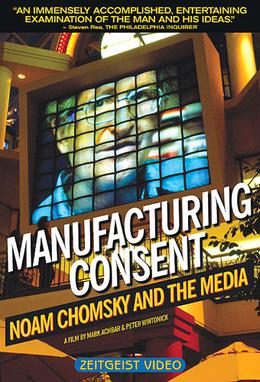
deemed fair use by Wikipedia in accordance
with non-free copyright rules
Tuesday, May 24, 2022
Concluding Meetup

I know what my theater critics might say, but I thought my exit was pretty good, having already said my formal good-byes. I scrolled frantically through the last code cells of a Notebook, one they already had (the students did) and could easily run themselves any time.
"I have so much I still want to show you..." -- I consider that a great fade out line, from a screenwriter PV (PoV).
We were getting towards the bottom of an example Capstone Project, looking over the shoulder of your typical boot camper, a fit Portland cyclist who comes to code school on a bicycle, perhaps a shared bicycle. Our data was from such a program.
Lets use a cooking analogy, factory based, making cookies. We've all seen those shots of cookies, neatly arrayed, smoothly traveling on a conveyor belt, the staple of factories (we always show assembly lines, cars, whereas so much about factories revolves around moving belts, like at airports).
In this cartoon, the cookies move swiftly into the face of a Machine Learning model maker, a kind of "pagan god" (no disrespect) figurine, somewhat Tiki House / Disney, aka Polynesian per the lens of Anaheim. The cookies are the records, the X.y, the rows of features. The eyes of the goddess (duo-sexed) spin wildly, as a model emerges. Given enough cookies.
Out pops a cartridge, like an 8-track, containing the finished model. You can predict stuff with this, screen, filter, gather your gold. You have your "precious" (giphy Gollum). How much did it cost ya?
However our work as data analysts and visualizers was to meticulously clean and patch the rag doll data on its way in. We were preparing food for the gods, baking cookies, sewing rags back together to form a picture in numbers and categories, with weather data from one database, number of bicycle checkouts from another. We were like archeologists, curators, studying civic behavior patterns.
In Portland I know Nike had something to do with the system becoming established. Having an athlete-oriented company step up to the plate made sense to people.
Nike as in the pagan assistant to Athena, daughter of Zeus. A python is another familiar, through a tangled web of tales. The version I favor: the python was the source of the omen-ous vapors under Mount Parnassus, making Delphi famous, but then Apollonians moved in, a somewhat hostile takeover involving zero tolerance.
Apollo himself chased down the Python (and here's where I diverge in my telling), however said magic dragon escaped to Nashville, with its Temple to Athena a fresh take on the heritage. Python: Just Use It.
Anyway, we had our last meetup after a lot of sessions, going back to "what is numpy?" and the like. I kept referring to the broad wake of a ship, helping them visualize how far we had come. Part of what makes these journeys satisfying is what they leave in their wakes.
Monday, May 02, 2022
Checking Avatars
Episode 1730 Scott Adams: The Golden Age Is Upon Us,
Trump Was Right Per Chomsky. Wow. What A Show
I don't think Scott will mind if I refer to his Youtube screen image as an avatar. I'll be my own avatar too, on your screen. That's not the Hollywood TV studio vocab exactly, as we're admittedly a different ethnicity here in Weird City (or Crow City), but a neighboring one.
As Scott lets us know, he has a war chest thanks to his Dilbert characters, who charmed our lives for decades in comic strips, and will continue to do so. More avatars, but subsidiaries of Scott's psyche, insofar as office archetypes are anyone's personal property. Scott applies the final spin, Homer Davenport style (but with a different type of penmanship).
I know from Dr. Potkin that Scott Adams likes to play for the Righties, the ones with a home advantage in English, as Leftie sounds more sinister right out of the gate. That gives Lefties their own kind of edge, and opposites attract, and in this vid Adams is up to singing Chomsky's praises, because the latter has the intellectual honesty to point to Donald Trump as a voice of relative rationality, when it comes to taking sides, or not, in the Game of Global Gangland.
Scott reveals some of his intellectual honesty too, in crowning Chomsky his King of the Lefties.
Then he serves to clarify the "by mistake on purpose" rhetoric of the Democrats. Joe Biden was excoriated for letting slip those various signals that the deployment NATO forces was in the cards. He was seen as senile and divulging his fantasy life. The spin doctors learned their lesson, and commentary on Nancy Pelosi's "slips" were more deviously circumspect. We'll be eating ice cream in the Kremlin soon, right? Nod nod wink wink.
Scott is clearly a mainstream establishmentarian in holding up DC's celebs as high ranking. Many of us in the frontier lands grew up distancing ourselves from the Hunger Games capital, so to speak, seeking our own destiny, more like citizens in Alaska or even Texas, potential "seed states" for tomorrow's version of Global Gangland.
Scott's notion of "affordable speech" is enlightening and spelled out clearly, but are we all in agreement it's somehow preferable to our "free" ideal? "Affordable speech" sounds more like "affordable air" with only a minority able to buy enough oxygen.
To my ears he's asking us to drastically lower expectations if we're neither rich nor geezers, by becoming minions for the privileged oligarchs we best like. Play on Browder's team or Putin's, for example (not an example he gives). The two are supposedly at loggerheads, but also have enough in the bank, respectively, to engage in risky speech, not to mention other undertakings, in which speech plays a vital role.
I guess I shouldn't worry though, as he clearly sides with "smart people" in wanting the censorious "we know best" folks to dissipate back into the woodwork or wherever they came from. That's typical of how elitists with considered opinions see the lower half of the bell curve, and those who get by with cookie cutter beliefs they want universalized, or at least seconded by a mainstream.
Most main streamers by definition hate finding themselves holding esoteric views that put them in the spotlight as unique individuals, or worse.
Better to say best what everyone else is already saying.
Show them how it's done. Win the beauty contest, be a star. Stand with Ukraine.
Speaking of Ukedom, and warring oligarchs (remember CrowdStrike?) and their proxies, Scott goes into the question of Putin's sanity etc. perhaps expressing a peculiarity of his ethnicity. The same question came up in the car today, me driving. Did I imagine Putin was crazy? So far she couldn't see that he was.
My focus is more the masses, one could say the movements, catalyzed by PR and advertising, with lots of think tanks just beneath the surface. I'm more into Cambridge Analytica style collective psychology than any kind of Freudian style psychoanalysis of lone individuals, although I did go through a phase (around 8th grade) wherein the latter would have interested me a lot more.
But hey, this is a blog post about Scott and his views. We can talk about me some other time, like when and if I make another Youtube. I have some hundreds of hours of those on file already, an acquired taste I'd imagine, but great for those enjoying my style of "spherical pinball machine" didactic discourse.
Wednesday, April 27, 2022
Buckaroo Bizmo
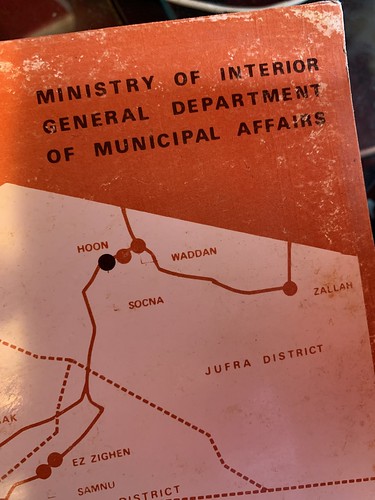
The meme of "truck stop" figures in these writings with strong echoes of "oasis" including a surround "oasis community". I'm thinking of Hoon and environs, where I've never been. I have some maps from dads old shelves, as a regional planner.
I think of truckers as "citizen diplomats" with a polymath's skill set, on top of driving, involving algorithms and data structures one could call it. Like airplane pilots, they follow a rule book in order to safely share the public skies and public roads. You don't want your pilots or drivers asleep at the wheel, either figuratively or literally.
I've been test piloting a kind of truck or van, a somewhat Buckaroo Banzai bizmo, that gathers intelligence about a route for the benefit of trucker simulators, kind of a Google Street View. However the anthropology trained personnel are scoping out more than road conditions and bottlenecks. They're more like Michelin, in the sense of tour guides. Their product tends to be software delivered and runs inside other trucks.
Since "man is the measure of all things" i.e. since we empathize with our own engineering, I'm fine with pretending to be my own bizmo, puttering about. Bucky played similar mind games, being the phantom captain of his own meat puppet ship. Through the power of metaphor and analogy, I'm able to combine my being human with other experiences to make some pretty detailed mind's eye science fiction about Trucker World of the future. Pause to make truck noise and operate my ghost steering wheel.
What's a "bizmo"? Business Mobile, duh. No one calls them that. They could be double deckers, sure, but might only stay within North and South Dakota, per terms of the contract You might have several workstations. You might have a caravan, with sleeping quarter bizmos a different type. Traveling circus. We're talking gypsies here. As always.
Tuesday, April 19, 2022
Rendering Unto Caeser
Tax time tends to be problematic for Quakers, especially the relatively well off ones, and these are numerous, given the conservative investment and savings strategies of their ancestors. Paying lots of money into Empire coffers looks bad on one's resume.
On the other hand, one wants to do social good, so one goes the route of the big money people: earmark for charity, so that your own judgment stays a part of the picture. Fund the NGOs you choose (many of whom get government contracts, so one ends up on the same side of the fence in many cases).
I'm a big believer in institutional wealth, and not sticking out like a sore thumb as one of the affluent. On a battleship, or say a pirate ship, maybe everyone feels rich and that they're cooperatively sharing responsibility for a socially owned asset.
Some would call that military socialism and indeed, many a career military office has never had to find a job in the private sector.
Indeed, unless one knows how to keep mobilizing wars, it's hard to stay employed as a full time soldier. Job number one is to make wars seem not only necessary, but admirable. Cheerleaders line the sidewalks and encourage those marching towards destiny with brave resolve. We've seen it a million times, in the movies if not in real life.
I dutifully paid my taxes but realize I haven't tied up all the loose ends, such is by filing by business tax exemption with the city (a formality for small timers with no employees I think they told me). I go to H & R Block for tax advice.
So like this Bizmo idea, where we have this fleet of utility vehicles helping out with the Trucker Exchange Program, gathering intelligence on the routes and facilities. They have other uses too, in terms of recruiting for universities or other academic programs that include bizmotica. Ecologists in the field already have their mobile lab trucks.
Without being the personal owner of such a fleet, without being the Elon Musk of Global Data, I could see tooling around in an institutional shared asset. Or call it non-military socialism. Think of the various port authorities and the airport and harbor facilities these maintain. These are not private sector institutions with oligarchs at the top, unless we're discussing the case of Robert Moses or some other outlier.
Robert Moses, for those who don't know his story, figured prominently at the beginning of the freeway era, which was all about providing vast numbers of private cars, most of them suburbia based, with access to, and parking within, central business districts (CBDs). In Robert's case, the CBD was NYC itself.
Friday, April 08, 2022
Shooting the Breeze

This book came by UPS today.
You'd think I would have read this by now.
We're coming up on Carol's 93rd birthday. She is the eye of one hurricane, I another.
Glenn was over. He's our Chauncey Gardener if you've seen Being There. But he's a lot more world savvy. I give snippets of his biography throughout my blogs.
I'm going over the pandas and numpy syllabus yet again, not forgetting matplotlib. These are in the toolkit of a high school student these days, at least in my curriculum writing. Jupyter Notebooks? Why wait until college.
Speaking of Jupyter Notebooks, there's some thought of linking to one of mine from the BFI / Synergetics page. Although I was a first webmaster for this institute, working in cahoots with Kiyoshi Kuromiya to snag the domain name and create a cyber footprint, I haven't had anything like direct access for decades, and that's still the case today.
If that circuit closes, and I get the new web traffic to my Github site, I'll likely jump back onto Youtube and record that it happened. Until then, I'll adopt a wait and see attitude.
Another focus: those USA Olympiad training exercises and past solutions. My students want more specific muscles in the puzzle-solving by program genre. I did a couple for practice and others I've yet to code are haunting my brain.
Happy Birthday Matthew (belated, March 29 is the real date). I took him to lunch at the Barley Mill, one of the original McMenamins. I hadn't known about the new Ken Burns documentary series on Ben Franklin. I brought him up several times in the conversation today.
Were the French foolish to take the USA's side in the war versus the United Kingdom? One could argue they won that war. On the other hand, ideas about democracy, equality and so on were proving infectious and would France itself be spared the fires of revolution?
The common wisdom is nation-states act in their own self interest. I'd like to keep this truism filed under "debatable" instead. "In the perceived self interest of the nation per some inner circle or cabal that considers itself in charge" would be closer to the truth.
One could say such an example is the quasi-state of Ukraine, too important to allow for the petty pace of democracy by the look of things. The weak gravity that holds peoples together, by common ancestry, language, habits (in sum ethnicity), is often no match for the separating polarities that drive these same peoples apart.
One seeks a balance, not the ultimate winner-take-all triumph of the will that the greedy are always going for. The art, in statecraft and war alike, is to rest content with world domination without turning that into a mandate to vanquish one's foe, once and for all.

Friday, April 01, 2022
April First

I don't have anything especially foolish or foolhardy to say on April Fools' Day. I will acknowledge "clowning around" from time to time.
Today, on my way down from Mt. Tabor, I dropped by QuarterWorld, a local arcade game palace now for those aged 21 and older, or maybe it was always that way? There's a bar.
Given the pandemic, I haven't stuck my head in that place for years.
Dr. D. joined me, his first time in that place, and promptly scored top score for the day one of his old favorites: Joust.
I didn't play any games this time, but I did have a couple beers, including this brand I'd never tried before: Game On! from Level Beer.

Subscribe to:
Posts (Atom)
