So I'm back in propane-ville, by which I mean nomad land, except this destination trailer is very stationary and I'm not sure the propane is on. I'm fine though, with full connectivity and a heavy navy pea coat I got at Andy and Bax, the famous Portland army surplus store. Sy is fine too. She turned into a puppy briefly yesterday, cavorting and running full tilt.
They heft the bottle to see if there's propane left, which seems primitive. My evidence is that the burners don't come on, whereas on pervious visits, propane was working fine, but no hot water. The hot water issue turned out to be the in-tank heating element, and is not an issue this time. I showered yesterday after oiling all the wheel line sprinklers in preparation for replacement. Since my last visit, the farm has taken delivery of lots of wheel line segments, but "the movers" (the motors that advance the wheel line periodically) aren't here yet.
There's also a small electrical heating unit in Zone 2. However we're in burgeoning spring and a lot of heat builds up during the day. Oregon's far west climate is rainforest coastal and water intensive agricultural. This farm has water rights up to about two wheel lines at full throttle, which is not a limitation at the pump necessarily. Water is metered (measured, monitored). Not a new idea.
You might think that, as a Truckers for Peace guy (Trucker Exchange program, swap routes around), I'd be working on getting a license to drive an eighteen wheeler. However I dodged that responsibility by making the BizMo (van sized or smaller) a troubleshooting reconnaissance unit, giving real truck drivers a lot of advance notice about this or that situation, meaning opportunities and unexpected benefits, not always dangers (surprises don't have to be nasty).
My training seems more oriented towards remote base testing of stationary tech, not rolling stock. That doesn't mean I'm not on the road, but that I'm more a customer user-base driver than a construction team freeway developer, say working China to Turkey (multiple routes). The yurts I'm studying, SolarPunk projects, are off road and perhaps only reachable by electric ATV, with solar charged batteries.
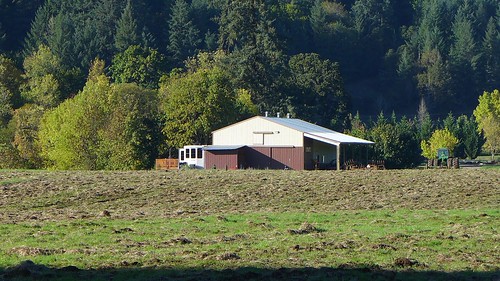
However in this case I'm very close to Springfield, Oregon, which is happy to be where the Simpsons is happening (the cartoon), you can read about whether why. I'm in a destination trailer adjoining a pole barn, but a luxurious pole barn, a museum of C6XTY and other Flextegrity items (as is my place to some degree).
Only 12 were made for a traveling science exposition.
They were originally built 1939-40 and then remodeled in 1953.
More info at:
www.futurliner.com/index.html
I haven't been as conscientious about blogging reviews of all the movies I've seen. Just this week, I took in Dune Part 2 a second time, this time with someone who knows all the books and other movie versions. A librarian in other words. From my Thursday circle. Deke and Dr. D. likewise joined the party.
For Civil War, however, I was by myself way up in the back on the 2nd level in The Bagdad (not a typo) with no food or drink this time (I've partaken self indulgently over the years). The place was crowded and quite a few folks were having their evening meal in the movie theater, a commonplace format in the Pacific Northwest, popularized by destination breweries.
The way the Press hovered closely with the troops, taking close-ups in pitched battle, seemed like a caricature, but I was willing to suspend disbelief given the circumstances. I'm thinking of The Postman here: in an apocalyptic setting, roles from the old days may get distorted and reprojected. Journalists became daredevils on steroids who like to jump back the forth through the windows of speeding vehicles, while the old school journos look on, bemused.
My attitude towards the Jessie character, which some reviewers found "unrealistic" was hey, this is fiction for kids her age i.e. this is a coming of age film and as other reviewers point out, she's our eyes and ears into a violent world to which her elders have become jaded.
These elders have evolved their psychological defenses, but are still mortals, and still crack and/or die or both. The lead character is coming to the end of her ability to take any more, and she passes the torch. There's a kind of wordless transition, as both know this is where that torch gets passed.
The film is about breaking taboos and exploring the psychology of a true militarized battle for control of the White House, although it's unclear going forward what that icon will mean. The film purposely withholds context, creating distance between ourselves, the viewer-voyeurs, more journos, and the senseless action. The premise, Texas + California united against the rest, more or less, is designed to throw us off balance.
One scene suggests a kind of racism is motivating the soldiers, but again, there's too little context to help us puzzle things out. We've fallen into a world of violence without enough internal coherence to help us find a way out of the quicksand. Sound familiar?
At first I imagined turning off the music and heading up to the office, because prompted by an idea. Then I thought: "nah, lets queue it". This is a core movement in consciousness: to put off, to delay.
We get mixed messages at this point, as "procrastination" is considered a primary obstacle to success in life. On the other hand, "think before you act" reminds us of the common criticism regarding a failure to plan, to think it through, to accurately judge consequences, before acting.
One has to think of circumstances. Chances are, when you have a great idea for something, you have to add it to the queue or stack, because right now you're on the bus or mowing the lawn or... a lifestyle based on "drop everything; I just thought of doing something else" would be interesting to study, from afar. Most of us learn to "delay gratification" except it's not always "gratification" we put off.
The brutal truth is there's no time or space for everything to develop in tandem or all at once. Events need to be queued, sequenced, timelined. That's not really a choice. Why does the hourglass narrow? What does "to bottleneck" mean?
So here I am, later, implementing my earlier idea: to write about scheduling again.
We introduce the theory, as from computer science, and the reality, as from getting out of bed in the morning, and combine them in a seamless picture of needing to treat the present like a narrow pipeline, which it is, when we're talking of an individual consciousness.
Time to date myself, meaning this blog post, by syncing with contemporaneous events. Tucker was in Russia a few weeks ago, yakking with Vlad, and has more recently been comparing notes with Tulsi. Apparently these two bots are running the same viral Kremlin app eh? Just kidding. I'm trying to think more like a "Russians under every bed" DNCer (we've seen both Qanon and Blueanon bedevil the two parties).
That Baltimore bridge was hit this week, a couple days ago, by a container ship rendered unsteerable by a loss of power, resulting in deaths and the structure's collapse.
Speaking of conspiracy theories, there's this scifi fantasy entitled The Jew of Linz, wherein Ludwig Wittgenstein, the Austrian philosopher, is really a Russian agent, diverting the good boys of Oxford from their God-ordained duties as servants to the Crown or whatever it was.
True, LW was cosmopolitan and didn't see the Brits as especially civilized compared to other peoples i.e. as likewise capable of genocidal cruelty. He did consider taking up a situation in Russia at one point, but that wasn't considered strange for a European back then, given Moscow's long term role as a Euro capital.
The main theory of The Jew of Linz is that young Adolf and Ludwig knew each other, as they both went to the same boys' school and were but a year or two apart, and that Adolf's hatred for Jews (not a religion the Wittgenstein's outwardly professed, but by heritage...) germinated around his hatred for Ludwig in particular, a hatred borne of jealousy of the latter's wealth and privileged upbringing, not to mention smarts and better looks.
The book makes more sense when you tune in the Spanish Civil War, which many don't, and link in Hemingway. Which side was he on? What is the painting Guernica about? What was the history here?
Wittgenstein, for those less familiar with his story, was indeed born within a wealthy family and he stood to inherit a hefty chunk of that wealth if he were to follow in the footsteps of his father. Actually the expectation was he and his sibs would at least uphold the family name as some kind of prodigy. He could be a great inventor or something.
He moved to England to study aeronautical engineering. Only to discover his love of Logic. He transformed himself into a philosopher instead, becoming a protege of Bertrand Russell.
Philosophy is a profession that does not require lots of money for heavy equipment, or to supply a lab. He chose freedom and mobility over comfortable establishment bourgois living, disbursing his fortune among his siblings and I presume arranging for a meager stipend. He worked as a school teacher in rural Austria for awhile.
I believe his sister paid him a commission for designing her a house (somewhat proto Bauhausy in flavor? I'm not the expert).
When duty called, Ludwig joined his Austrian compatriots to serve as an artilleryman. His understanding of language and how it works was shaped by his time in the military, with its emphasis on giving orders. Language is sometimes about commanding (it partitions into a gazillion namespaces). In these language games, those of higher rank boss those of lower rank. One ends up with an entire form of life, and not just "a grammar" in the narrower sense of the word. But in the broader sense...?
A lot of thinkers vested their intellectual capital in Wittgenstein's first pillar work, the Tractatus Logico-Philosophicus, which Bertrand Russell helped make world famous. The positivists leaned on his reputation as a rising star (like a Tulsi, a new face in social circuits), as did those vesting in the emerging field of propositional calculus, newly vogue within the English speaking world especially, but not exclusively. The Vienna Circle was based in Vienna after all.
So when LW later made a sharp turn, echoing what Richard Rorty would call the Linguistic Turn, prefigured back to Nietzsche at least, a lot of his fans felt thrown for a loop. The plot twisted. Their guy was now off on a new tack, with what would posthumously get published as Philosophical Investigations, a collection of aphorisms that chain together in various expository sections, while criss-crossing a metaphorical landscape, as suggestive sketches.
His points are hard to just say, but are amenable to showing. In this sense, his two philosophies have something in common: they challenge us to "see" in a different way (or to "breath a different air").
His new style of remarking, developed live in front of small cliques of earnest students, was remarkable, rocketing him to fame a second time, but at the cost of losing many from his first wave of early admirers. Bertrand Russell, for example, never got back on the Wittgenstein bandwagon. The new stuff was too alien, and insufficiently calculative and/or computational by his reckoning.
The later Wittgenstein wished to fork the philosophy of language, taking issue with both Nominalism and Platonism, carving out what some would call Operationalism. It's not that words point to either specifics (Nominalism) or general forms (Platonism), but that they don't point at all (despite the appeal of that image). They're closer to musical notes, but shall we say better at inspiring shared mental imagery. Kierkegaard likewise saw music and language on a kind of spectrum, the latter capable of coming closer to God (whatever that meant to him).
The word "horse" associates with what the philosophers call a horse made from "sense data", but as more sense data at the same level, not as higher or lower, not as symbol versus signified. The object points to the word as surely as the word to the object, once the connection is made and "pointing" accepted (arrows, dots and circular blobs being the essence of the "abstract nonsense" known as Category Theory, a more diagrammatic Logic than Russell's or Frege's).
We gain a psychological sense of aloofness with self referential recursivity, and Ludwig is happy to acknowledge our sense of vertigo, but only as a sign that it is language that is making us dizzy, and that's what makes philosophy "deep". It's about the grammar, and the (sometimes novel) gestalts it may induce.
I'd say that the grammar of "being a victim" is somewhat like a musical scale, or maybe a tense, like the past and future are tenses, in some languages anyway. We shift in and out of this victim tense, kind of in the same way we get to invent an evil "them" where convenient, the "them" that controls everything, through clickbait and targeted advertising.
Experiments with social media have been interesting and for the most part legal by default. The Internet Research Agency was well within its rights, doing research on what this brave new world might portend. No law of the jungle prevents posting such and such political content, just some critter might take it into its head to counter your thoughts. Said critter might seek to get some new laws passed, upholding banning and/or deplatforming those considered "bad actors" (defined how again?).
I'm sure there was fine print forbidding sharing personality test scores with Cambridge Analytica, if that really happened (it made a good story), but engineers of a pragmatic frame of mind just see data, big data. Of course it makes sense to aggregate it. Get those OCEAN scores and pretend we know how to use ML to flip elections (we talk a good game anyway). Or maybe we do know how, and just got caught, so we deflected the story onto Facebook and the Russians.
I was myself in the medical data aggregation business for quite awhile. Yes, in the medical field, confidentiality is a big deal. What if social media were seen as extensions of mental health services... what a science fiction world that could be. We might have more privacy at least. Or would we have less?
In any case, our clinical data resulting from heart procedures was scrubbed of any identifying information, so statisticians could still see which age group and weight combination were having the most heart attacks, if that was even the question (I wasn't an analyst, just a harvester of this data), without needing to pry into anyone's private life as a patient. The focus was actually more on the treatments and which were proving the most effective over time (which required follow-up; "outcomes research" we call it).
Sure, I was cleared to see patient names in order to perform my role in the institution, which was to provide software running on monitors during a procedure, albeit off to the side. I wrote applications for both the cath lab (CLAIR) and operating room (CORIS), but I had no incentive, financial or otherwise, to do anything but withhold and eventually erase any personal data. The hospital itself kept the medical records, not me the lowly consultant (on nobody's payroll) and application developer (the hospital system was always one of several clients).
Our conversation this evening (Thirsters) was about taking control, and who was taking it.
What controls were missing that should be imposed? What about TikTok? What about X? A lot of people like to vent about TikTok without ever spending a few hours checking it out, taking in the experience. Find out what it is before you condemn it like the bot that you are.
Is using YouTube shorts or Facebook reels really a "bad" way to let the news filter in? It's all chopped up for sure, but you get a lot of the same segments. TV shows work their way in, with today's news.
How different is YouTube from television? Different but not that different. Physically, it's likely the same device. In both cases, the human capacity to take in, through a screen, remains finite.
I took the line, somewhat for debating purposes, to keep the conversation going, that everything was fine as it is. But "as it is" includes all the change vectors i.e. "as it is" is not now, and never was, something static. There's no static "status quo" where "social media" is concerned -- especially once you throw in broadcast media (still social) like radio and television, not forgetting the telephone, with both party and private lines.
The line between a government and the private sector is always wavering, in part because there's no agreement on what measurement we're even talking about. What line? How does one separate public from private? I'm not saying it can't be done.
Which brings me to the title of this blog post: Babel Syndrome.
There's something intrinsic in language that keeps us from all being on the same page, and frustrating though that be, there's the implication this is how God ordained it oughta be. Why?
The alternative was to embark on some hopeless and endless sysiphysian project: to build a towering space elevator to the exalted realm of the Almighty, a stairway to heaven in other words. Our resources would get poured into this endeavor and we'd be done for, fooled by our own mirage of eventual success, when in actuality there was never a victory in store down that road.
Our salvation from all this silliness was precisely our confusion and mutual unintelligibility. Genesis teaches this was a feature, not a bug.
Humanity escaped from having a hive mind, harmonious and uniform, with this courageous (on God's part) injection of a little chaos, just enough, like a kind of antifreeze. Perfect conformity is the kiss of death in a wondrous world.
Were we to all freeze into the same Matrix, the loss in diversity would make us moribund.
Instead, we're provided with incommensurability, irrationality, the unsettling, the insoluble.
The chaos is enough to jar us awake and make us aware of own programming, whatever it may be. We appreciate how mechanical "it all" is, and without recoil or judgement. It's an experience that may prove rattling, perhaps a tad eerie, but maybe comforting as well, given our magnificent capabilities.
Which brings me to a bigger question regarding Cognitive Frameworks: to what extent might we swap out "the individual actor" as the subject of a progression (e.g. taking a stand -- follow-up -- reflect) and swap in "the organization"?
If we do this, how do the frameworks adjust?
What does it look like for an organization (even a nation) to "take a stand"?
Quakers write "minutes" (pithy paragraphs), as a result of a consensus process. Friends Committee on National Legislation (FCNL) then lobbies Congress based on what Yearly Meetings record, which minutes in turn reflect the consensus of the Monthly Meetings (the meeting we visited in Portland is a Monthly Meeting -- worship is weekly, but worship for business is monthly).
I'm heading over to my tax accountant this evening, with my 1099(s), writer royalties and so on; fairly meager on paper but it still feeds my ego (eggo, whatever). On the expenses side: two internet domains, cell service, two web hosting agreements (one with GoDaddy), MVP chauffeuring service expenses, various office supplies. Again, it's a meager "begging bowl + mattress" level of a living (I exaggerate, I own a home).
Getting my taxes done costs more than I owe the two governments, both the federation (nominally run from DC) and the local state (Oregon, run from Salem). We say Cascadia is the bioregion, which is weight-bearing, psychologically speaking, but nothing the UN needs to worry its little head about.
Because I need this yearly statement of income and expenses to come together, I'm busy going online and consulting all of my various services. The MVP thing has to do with M4W and took place in August of last year. For the most part, I was working for Clarusway as a much-needed swap in. I lucked out.
Just today I modified my LinkedIn banner page to say I was available for a 2-3 session workshop (actually I didn't specify the number) likely over Zoom, and hosted by the institution I'm visiting (so B2B). That hasn't been the basis of my business so far, so who knows how it'll go. I'm still "the Python guy" to people around me. My multi-part class for Wanderers, Allen Taylor present, was prototypical, if in person.
My orbit gets projected ahead in science fiction using "business mobile" terminology, as if I'm already enjoying this futuristic lifestyle, versus being more sedentary. In reality, I'm pretty sedentary although I did get up Mt. Tabor yesterday and to Laurelhurst Park the day before that. I'm an armchair bizmo pilot doing Truckers for Peace between my ears. Look ma, no goggles.
Back to 4D Solutions: I pinned a tiny org chart of my business on Medium, for those caring to dig down. The reason I file over such meager amounts is I want to stay in the game as an independent, one of those entrepreneurs everyone talks about. But as a Quaker, I'm not expected to grow uncontrollably or "go viral". Our business models do not assume open-ended growth is a good thing. Maybe it is. Just sayin'. Case by case, know what I mean?
4D Solutions got started (and remains) as a DBA (business alias) of Dawn Wicca and Associates, but that was a partnership, so when Dawn died I had to start filing as a sole proprietorship. So we're talking a 1040, but with a track record. Dawn and I were both active players in Greater Portland's nonprofit community, she as a bookkeeper, me as a consultant-programmer. Yesterday was an anniversary of Dawn's death, March 17, 2007. We became a business partnership well before we got married.
Addendum: since I didn't drive to work sites so much in 2023, I swapped out claiming mileage in favor of filling out the home office form. My home office could declare a percentage of home expenses as business expenses, thereby lowering my taxable income by a tad.
Getting that info together required quick footwork, as my appointment had already started yet I wasn't thinking to go the home office route. My preparer gave me some time to dash home, export bank statements as csv files, read them in with pandas in Jupyter, and search on strings in the name column to isolate utility payments (water, heat, electricity). I dashed to her office in the car, numbers in hand, plus my home's square footage which I remembered I could get from Zillow (the app).
I wound up with self-employment payments only, which I'll hope to get back out in the form of Social Security income, once I sign up for it eventually, plus a kicker from the state (Oregon has that). I also pay TriMet and the Arts Tax. Federal and state taxes were electronically filed, I just need to follow up with my payments. I have until April 15 to do that (Rosalie's birthday), but won't wait until then.